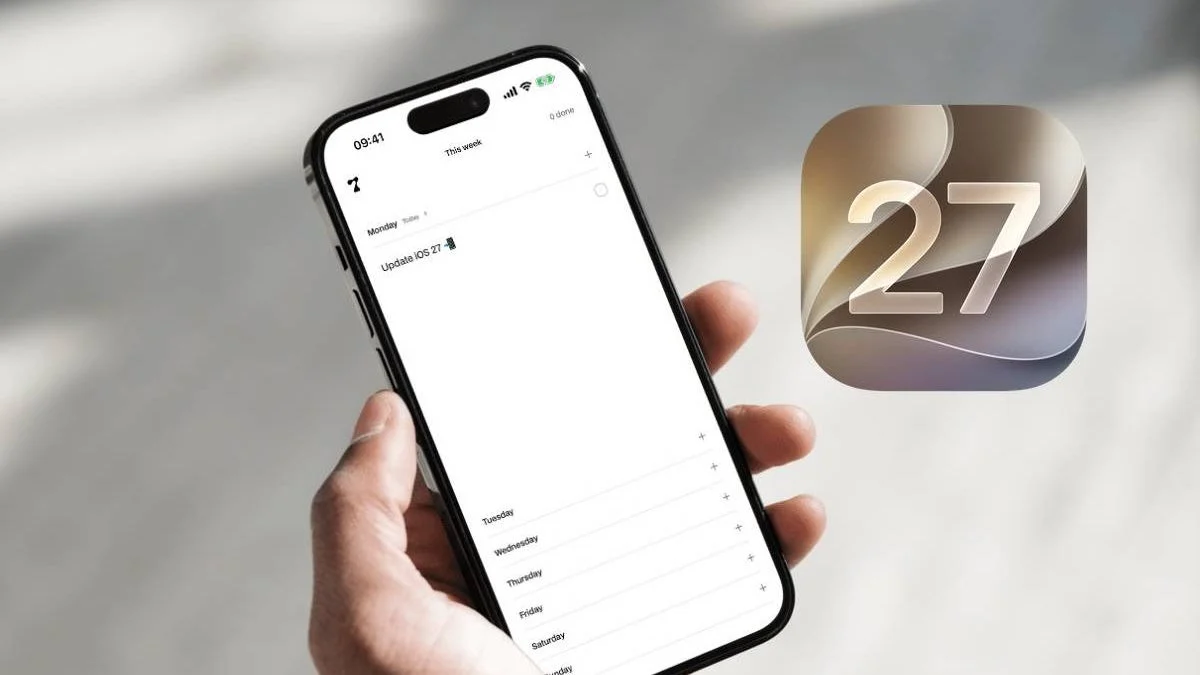
Apple has officially ushered in a new era of mobile computing. On September 14, 2026, the tech giant released iOS 27, the latest iteration of its flagship mobile operating system. More than just a collection of incremental patches, iOS 27 represents a structural shift in how users interact with their devices, primarily driven by the deep integration of "Apple Intelligence."
As the update rolls out globally—having launched at 12:00 p.m. in Peru and across international markets simultaneously—the tech community is buzzing with anticipation. From the groundbreaking capabilities of the new Siri AI to significant performance enhancements, this article provides a deep dive into the transformative power of the latest iPhone software.
Main Facts: What Defines iOS 27?
The hallmark of iOS 27 is the integration of generative AI directly into the operating system’s core. Apple has prioritized privacy-centric machine learning, ensuring that the heavy lifting of data processing occurs on-device, or through the secure "Private Cloud Compute" infrastructure.
The Siri AI Revolution
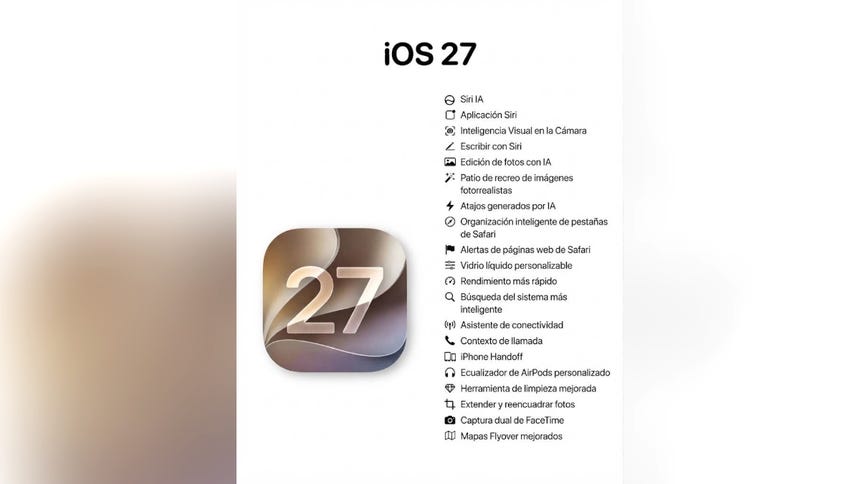
The most anticipated feature is the revamped Siri, now powered by Apple Intelligence. While the beta version launched with primary support for English, the company has confirmed that expanded language support—including Spanish, French, Japanese, Korean, and Portuguese—is slated for an October rollout. This evolution transforms Siri from a simple command-line assistant into a proactive agent capable of understanding context, managing complex multi-app workflows, and performing natural language processing that feels eerily human.
Visual and Creative Intelligence
iOS 27 introduces a sophisticated suite of creative tools. Users can now leverage "Visual Intelligence" within the camera app to identify objects in real-time. Furthermore, the photo editing suite has been overhauled with generative AI, allowing for professional-grade edits, the creation of photorealistic images from text prompts, and the ability to manipulate complex visual data with simple natural language descriptors.
A Chronology of the Release
The journey to iOS 27 began with months of speculation following the announcement of the iPhone 18 series and the experimental iPhone Duo.
- June 2026: Apple teased the underlying architecture of the next-gen OS during the Worldwide Developers Conference (WWDC), emphasizing the "Liquid Glass" interface and neural engine advancements.
- Early September 2026: The official unveiling of the iPhone 18 Pro and the foldable iPhone Duo confirmed that the hardware was being built specifically to support the demands of the new software.
- September 14, 2026 (Launch Day): The global rollout began at noon. Apple servers experienced high traffic as millions of users sought to experience the integration of the AI-enhanced ecosystem.
- October 2026 (Forthcoming): Apple is expected to push a secondary firmware update (iOS 27.1) to activate multi-language support for the Siri AI engine.
Supporting Data: Compatibility and Performance
One of the most frequent questions regarding a major OS update is hardware longevity. Apple has ensured that iOS 27 is accessible to a wide range of devices, though the most advanced AI features are hardware-dependent.
Supported Devices
The operating system is compatible with the following hardware:
- iPhone 11 series and all subsequent releases.
- iPhone SE (2nd and 3rd Generation).
- iPhone 18 Pro/Pro Max and iPhone Duo (Optimized for these models).
Performance Metrics
Apple engineers have touted a 30% speed increase in system-wide navigation compared to the previous version. This is achieved through a leaner kernel architecture and the implementation of the "Liquid Glass" interface, which dynamically adjusts UI elements based on user interaction habits and device temperature, ensuring thermal efficiency during high-compute tasks.
Official Responses and Strategic Implications
Apple’s leadership has framed iOS 27 as a "foundational update." In a press statement, representatives noted that the goal of this release was to "democratize advanced intelligence while reinforcing the digital fortress of user privacy."
The "Liquid Glass" Interface
A significant point of discussion is the new "Liquid Glass" regulator. This feature allows for a fluid, adaptive interface that changes its transparency and responsiveness based on the lighting environment and the user’s focus levels. Analysts suggest this is a precursor to a more immersive, AR-integrated mobile experience that will likely define the iPhone 19 and beyond.
Safari and Productivity
Safari has received its most significant update in years. Beyond the 30% performance boost, the browser now includes:

- Intelligent Tab Management: Automatic categorization based on browsing intent (e.g., shopping, research, entertainment).
- Change Alerts: Real-time notifications when a tracked webpage undergoes significant structural or content changes.
- Custom Extensions: A more robust sandbox environment for developers to create personalized web tools.
Implications: A New Era for the Ecosystem
The arrival of iOS 27 signals a transition in the smartphone market. For years, the industry had been accused of plateauing in terms of innovation. By pivoting toward a "Neural-First" architecture, Apple is effectively forcing the competition to reconcile with the fact that hardware is no longer the sole differentiator; software intelligence is now the primary battlefield.
Security and Parental Controls
Security remains a cornerstone of the Apple brand. iOS 27 introduces a unified, encrypted password management system that allows users to cycle through multiple credentials with greater ease. For families, the new parental controls utilize the same AI engine to monitor screen time and filter content with higher precision, moving away from simple time-based locks to context-aware restrictions.
How to Update Your Device
For those eager to experience the future of mobile intelligence, the update process is straightforward but requires preparation.
- Backup Your Data: Before initiating the update, ensure you have a complete iCloud or local backup of your iPhone.
- Verify Battery and Storage: Ensure your phone is charged to at least 50% and has at least 8GB of free space to accommodate the installation files.
- Navigate to Settings: Go to Settings > General > Software Update.
- Automatic Updates: If your phone does not show the update immediately, ensure you are connected to a stable Wi-Fi network and toggle the "Automatic Updates" setting.
- Installation: Select "Download and Install." The device will restart automatically. Please note that the initial optimization phase following the restart may consume battery life at a faster-than-normal rate for the first 24 hours.
Conclusion
iOS 27 is more than just a software update; it is a declaration of intent. By weaving Apple Intelligence into the fabric of the iPhone, the company is attempting to redefine the relationship between user and machine. Whether it is the intuitive nature of the new Siri, the power of visual editing, or the refined agility of the Safari browser, iOS 27 offers a glimpse into a future where technology is not just a tool, but an anticipatory partner.
As users worldwide begin to explore these features, the true impact of this update will manifest in how we work, create, and communicate. For now, the verdict is clear: Apple has succeeded in making the iPhone feel new again.