Introduction: A Diplomatic and Financial Offensive
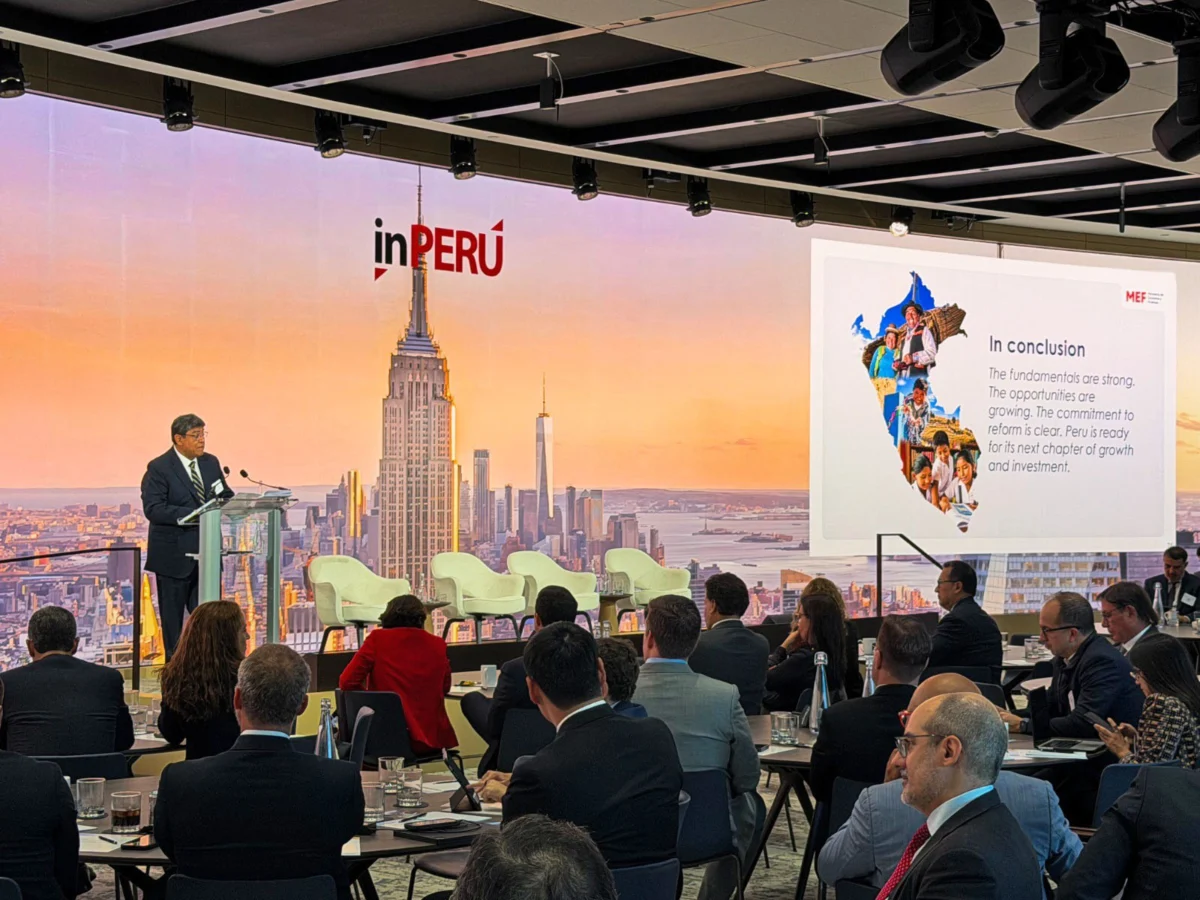
In a calculated move to solidify Peru’s position as a premier destination for global capital, the Peruvian government has launched an intensive high-level diplomatic and financial outreach campaign in New York City. This strategic initiative, spearheaded by the Minister of Economy and Finance, Elmer Cuba, and the President of the Central Reserve Bank of Peru (BCRP), Julio Velarde, is part of a broader effort under the inPerú roadshow umbrella.
The primary objective of this mission is twofold: to reassure international markets of the country’s macroeconomic stability and to catalyze new investment flows into sectors critical to long-term national development, such as infrastructure, energy, and sustainable production. As Peru navigates a complex global economic landscape, this mission serves as a vital signal to institutional investors that the Andean nation remains open for business, underpinned by robust fiscal policy and a commitment to legal security.
The Chronology of Engagement: A Two-Day Financial Marathon
Day One: Engaging the Titans of Global Finance
The delegation’s arrival in New York signaled the start of a high-stakes series of engagements. The inaugural day was defined by a roundtable discussion involving some of the world’s most influential investment managers and financial institutions.
The assembly featured representatives from powerhouse firms, including American Century, Baron Capital, Buffalo Thorn, First New York, Gemcorp, Itaú Asset Management, Lazard, Morgan Stanley, PGIM, and VanEck Global. During this session, Minister Cuba and BCRP President Velarde articulated a clear vision: Peru is not merely recovering; it is evolving. By detailing the intricacies of the country’s monetary framework and its historical commitment to inflation targeting, the Peruvian representatives sought to de-risk the perception of the country in the eyes of these global asset managers.
Day Two: Targeted Outreach and Sector-Specific Dialogues
Following the general roundtable, the agenda transitioned into more granular discussions. A focal point was the presentation hosted by the investment bank JP Morgan, which provided a platform for Minister Cuba to address a broader assembly of corporate leaders and institutional investors.
The latter part of the mission involved a series of bilateral meetings with global heavyweights such as BlackRock, BTG Pactual, Ninety One, PIMCO, TCW Group, and EIG Partners. These meetings were highly specialized, focusing on specific asset classes—particularly within the energy and infrastructure sectors—where international capital is essential to bridge the investment gap in Peru’s development agenda.
Supporting Data: Why Peru Remains a Compelling Proposition
To understand the rationale behind this roadshow, one must analyze the fundamental economic indicators that form the bedrock of Peru’s investment thesis. Despite regional volatility, Peru has consistently maintained one of the most stable fiscal environments in Latin America.
Macroeconomic Resilience
The Peruvian economy is characterized by a low debt-to-GDP ratio, a hallmark of the fiscal discipline maintained by the MEF and the Central Bank over several decades. This has allowed the country to maintain investment-grade ratings, a vital credential for accessing international credit markets at competitive rates.
The Pillars of Investment
During his address, Minister Cuba highlighted four distinct pillars that make Peru an attractive prospect for Foreign Direct Investment (FDI):
- Macroeconomic Foundation: A history of fiscal responsibility and a strong central bank that operates with absolute autonomy.
- Trade Liberalization: Peru’s extensive network of Free Trade Agreements (FTAs) allows it to act as a bridge between South American resources and global markets, particularly in Asia and North America.
- Natural Resource Abundance: Beyond traditional mining, the country is positioning itself to be a leader in the energy transition, offering vast potential for renewable energy and critical minerals.
- Infrastructure Pipeline: The government has identified a substantial portfolio of "shovel-ready" infrastructure projects designed to modernize logistics and connectivity, providing a stable return-on-investment horizon for institutional investors.
Official Responses and Strategic Vision
The dialogue between the Peruvian officials and the investment community was not merely one-sided. Investors sought clarity on the regulatory environment, labor market reforms, and the government’s stance on long-term project viability.
Minister Elmer Cuba provided a robust defense of the Peruvian legal framework, emphasizing that the government is actively working to streamline bureaucratic hurdles. "Peru gathers favorable conditions to attract foreign investment, thanks to its solid macroeconomic fundamentals, its trade openness, the diversity of its natural resources, and the opportunities to develop large infrastructure projects," Cuba noted.
He further emphasized that the current administration is focused on "legal security" as a non-negotiable aspect of the investment climate. By providing clear guidelines and protecting the sanctity of contracts, the Ministry aims to create a "virtuous cycle" where foreign capital drives job creation, which in turn fuels domestic consumption and sustainable growth.
Implications for the Future: A Path to Growth
The implications of this roadshow extend far beyond the immediate meetings held in Manhattan. For Peru, the successful engagement of these institutions is a litmus test for its economic policy trajectory.
1. Strengthening the Sovereign Credit Profile
By maintaining face-to-face contact with global portfolio managers, Peru ensures that it is "top-of-mind" for future capital allocations. In an era where investors are becoming increasingly selective, direct communication with high-level officials helps to mitigate "country risk" and fosters a deeper understanding of the local economic reality.
2. Catalyzing Infrastructure Development
Infrastructure projects in Peru, particularly those related to transport, water management, and energy, require long-term patient capital. The meetings with firms like EIG Partners and PIMCO—which specialize in long-term debt and infrastructure equity—are essential for securing the financing necessary to move these projects from the drawing board to the construction phase.
3. Boosting Employment and Productivity
The ultimate goal of this mission is the translation of capital into jobs. By attracting FDI into productive sectors, the government aims to diversify the economy away from a sole reliance on raw commodity exports. This diversification is essential for creating high-quality, sustainable employment opportunities for the Peruvian workforce, particularly in the tech-enabled and renewable energy sectors.
Conclusion: A Measured Optimism
The inPerú roadshow in New York represents a sophisticated attempt by the Peruvian government to navigate the challenges of a post-pandemic global economy. By leveraging the credibility of the Central Bank and the fiscal planning of the Ministry of Economy, the administration is betting that transparency and proactive engagement will yield dividends in the form of increased investment.
While external factors such as global inflation, commodity price fluctuations, and geopolitical tensions remain variables beyond the control of the Peruvian government, the message delivered in New York was one of stability, consistency, and opportunity. As the global investment community continues to scan the horizon for markets that offer both security and growth, Peru is positioning itself as a reliable anchor in an unpredictable world.
For the Peruvian government, the work has only just begun. The task now shifts to translating the interest expressed by firms like Morgan Stanley and BlackRock into binding commitments and tangible project groundbreakings. If the energy of this New York mission is any indicator, Peru is prepared to enter a new chapter of economic expansion, one defined by global integration and strategic long-term development.