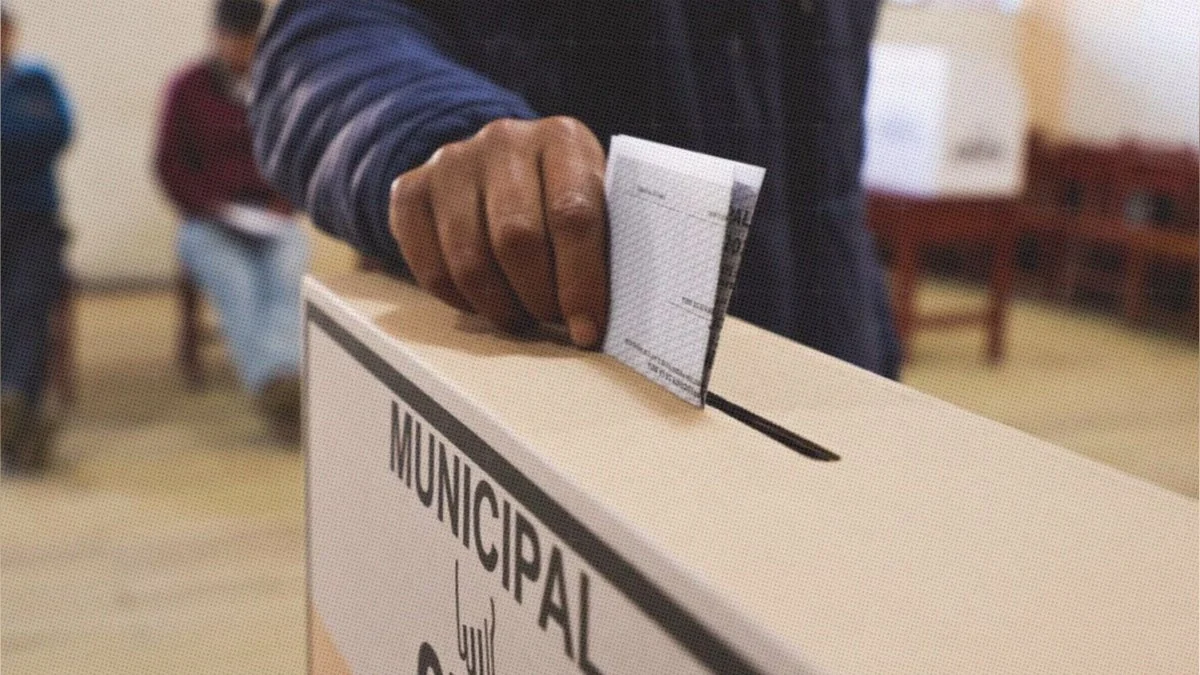
Three weeks after the October 4, 2026, Regional and Municipal Elections, the democratic process in five Peruvian districts remains paralyzed. What should have been a routine transition of local power has devolved into a complex legal and social crisis, as the Jurados Electorales Especiales (JEE) have declared the votes in these jurisdictions null and void.
The reasons for this unprecedented situation are as varied as they are alarming: the systematic destruction of electoral material by mobs, intense outbreaks of political violence, and, in at least one instance, a profound failure of civic participation that exceeded the legal thresholds for legitimacy. As the dust settles, the affected populations—numbering over 30,000 potential voters—find themselves in a state of administrative uncertainty, waiting for the Pleno del Jurado Nacional de Elecciones (JNE) to issue final rulings that could pave the way for supplementary municipal elections.
The Anatomy of the Crisis: Key Facts and Figures
The current electoral deadlock is concentrated in three regions: Piura, La Libertad, and Loreto. According to an extensive review by El Poder en tus Manos, the primary driver of these nullities is the total breakdown of the chain of custody for electoral materials. In districts like San Juan de Bigote and Urpay, the incineration of ballot boxes, tally sheets (actas), and ballots has rendered the task of counting votes not just difficult, but legally impossible.
Under the Peruvian Law of Municipal Elections, there are three definitive triggers for nullifying an election:
- Gross Irregularities: Actions that violate electoral norms and fundamentally alter the integrity of the results.
- Excessive Absenteeism: When more than 50% of the eligible electorate fails to cast a vote.
- Void/Blank Vote Thresholds: When the sum of null and blank votes exceeds two-thirds of the total votes cast.
Ernesto Rosales, spokesperson for the JNE, has emphasized that while nullification is the "last resort" in the defense of the popular will, the sanctity of the vote must be protected. "If the integrity of the ballot cannot be guaranteed, the legitimacy of the outcome is compromised," Rosales noted. When a JEE declares an election null, the decision is not necessarily final; it triggers a cascade of appeals that eventually land before the JNE’s Pleno. If the nullity is upheld, these districts will be forced into supplementary municipal elections, which will follow a separate calendar and require the same rigorous preparation as a national general election.
A Chronology of Conflict: District-by-District Breakdown
San Juan de Bigote (Morropón, Piura)
The case of San Juan de Bigote serves as the most prominent example of a failed electoral process. On October 8, the JEE of Morropón nullified the district election following an appeal by Alianza para el Progreso. The party reported that a group of individuals had stormed the sole voting center, destroying urns and ballots across all 23 voting tables.
The situation took a procedural turn on October 15, when the JNE Pleno initially revoked the nullity, ordering the JEE to attempt a reconstruction of the vote using recovered materials. However, after an exhaustive audit, the JEE concluded on October 25 that the recovered ballots and partial records were compromised and unreliable. The district, home to 6,710 eligible voters, remains without a certified municipal government.
Pataz (Pataz, La Libertad)
In Pataz, the crisis is defined by a lack of participation rather than physical destruction. On October 19, the JEE of Pataz declared the election null ex officio because absenteeism reached 52.5%. Out of 6,978 registered voters, 3,664 stayed home. While Podemos Perú had secured a lead, the party argued that the high absence rate was a direct consequence of criminal violence in the region and a massive landslide that blocked the primary access road to the district. The JNE has scheduled a final hearing for October 27 to determine whether the circumstances justify an exception to the 50% rule.
Urpay (Pataz, La Libertad)
Urpay experienced one of the most violent episodes of the cycle. On October 22, the JEE of Pataz nullified the election after roughly 300 individuals, incensed by delays in the publication of results, invaded a voting center and burned all electoral materials. Despite efforts by party agents to present copies of tally sheets, the JEE ruled that the lack of proper sealing and the broken chain of custody made it impossible to verify the results.
Balsapuerto and Santa Cruz (Alto Amazonas, Loreto)
In the remote districts of the Loreto region, the pattern of destruction was repeated. In Balsapuerto, the JEE declared the election null after an organized mob burned materials across two voting centers, impacting 8,475 voters. Similarly, in Santa Cruz, the JEE identified incidents in all three local voting centers. Most alarmingly, officials were reportedly coerced under threat of violence to sign a document declaring the election null. The JNE has already declared the appeal against the nullity in Santa Cruz "unfounded," effectively confirming the destruction of the process.
Official Responses and the Legal Conundrum
The JNE has faced significant criticism for the duration of the resolution process. However, the institution maintains that it must balance the urgency of establishing local authorities with the legal necessity of due process. The "reconstruction" of votes is a delicate legal operation. When the chain of custody is broken—meaning the movement of ballots from the hands of citizens to the counting table is not documented and secured—the legal standard for an election is lost.
For the JEE officials on the ground, the decisions are often made under intense local pressure. In Santa Cruz, the fact that election officials were forced to sign documents under duress highlights the precarious security environment in which these elections are held. The JNE’s role, therefore, is not just to count votes, but to ensure that the environment of the election allows for the free and secret exercise of the vote.
Implications for Peruvian Democracy
The implications of these nullities extend far beyond the affected districts. First, there is the fiscal cost. Conducting supplementary elections is a significant drain on public resources, requiring the mobilization of personnel, security forces, and logistics in areas that have already proven to be volatile.
Second, there is the political impact. The nullification of an election effectively disenfranchises the voters who did show up to exercise their right. In districts where the margin between candidates was narrow, a nullification can be seen by the losing side as a tactical victory, incentivizing the use of violence to sabotage processes where a candidate is trailing. This creates a dangerous precedent: if a group feels their candidate is losing, they may turn to arson or violence to force a "reset" of the election.
Finally, the security crisis in rural provinces—as evidenced by the events in Pataz and Loreto—suggests that the state’s ability to guarantee the peaceful administration of elections is being directly challenged by criminal elements. When civil society and electoral authorities cannot protect the ballot box, the legitimacy of local governance is fundamentally hollowed out.
Conclusion: The Path Forward
As the JNE deliberates on the remaining appeals, the citizens of these five districts are in a state of political limbo. The potential for supplementary elections is high, but the JNE must first ensure that the conditions that led to the violence and the failure of the vote are adequately addressed.
For the Peruvian state, the challenge of 2026 is a wake-up call. The integrity of future elections will depend on the state’s ability to secure voting centers, address the root causes of voter apathy in high-risk zones, and firmly prosecute those who use violence as a tool to subvert the democratic process. Until these issues are addressed, the "void" in these five districts will remain a stark reminder of the fragile state of local democracy in Peru’s most vulnerable regions.