The province of Córdoba, Argentina, is currently witnessing a comprehensive transformation of its logistics and urban mobility landscape. Driven by the provincial government through the state-owned enterprise Caminos de las Sierras, a massive public works initiative is currently underway, focusing on four strategic corridors. These projects, which involve an investment of significant magnitude, are not only reconfiguring the physical topography of the region but are also acting as a vital engine for the local economy, currently sustaining over 1,050 direct and indirect jobs.
The scope of these interventions ranges from the completion of the long-awaited Route 19 Highway to complex urban bypasses and vital sanitation infrastructure. These projects share a singular objective: to bolster provincial connectivity, drastically improve road safety, and facilitate the commercial flow across a region that serves as a critical junction for Mercosur trade.
Main Facts: The Four Pillars of Córdoba’s Modernization
The current development portfolio in Córdoba is categorized into four distinct, high-impact projects, each designed to resolve specific bottlenecks that have hindered regional development for years.
1. The Route 19 Highway Completion
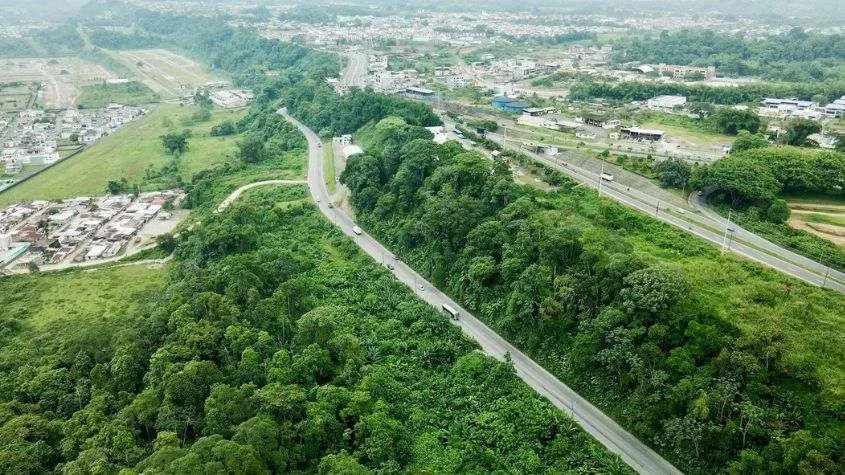
The transformation of Route 19 into a full-scale highway is perhaps the most ambitious undertaking in the current portfolio. Spanning 62.9 kilometers, this project aims to create a secure, high-capacity link between the capital city of Córdoba and the productive heartlands of the Rio Primero, Rio Segundo, and San Justo departments, extending all the way to San Francisco. With 610 workers currently on-site, the project is 30% complete and is recognized as a vital artery for the regional agro-industrial sector.

2. Malvinas Argentinas Altonivel (Grade-Separated Junction)
Located strategically on Route 19, this high-level interchange addresses the conflict between through-traffic and local urban movement. The project features an 850-meter-long viaduct designed to separate long-distance heavy traffic from the urban daily circulation of Malvinas Argentinas. With an 80% completion rate, the structure includes dual carriageways, New Jersey-type concrete barriers, and a sophisticated ground-level layout featuring dual roundabouts to ensure efficient urban connectivity.
3. Avenida Vélez Sarsfield Altonivel
Situated in the southern urban sprawl of Córdoba, this grade-separated interchange is critical for the flow of traffic toward the southern part of the province. By building a 607-meter-long viaduct over the urban section of Route 36, the project separates commuters heading to the Córdoba–Río Cuarto Highway from the local residents of Villa El Libertador, Coronel Olmedo, and Inaudi. This project is also at the 80% completion mark, providing 170 jobs.
4. Avenida Enrique Bodereau: Connectivity and Sanitation
Unlike the previous projects, the intervention on Avenida Enrique Bodereau is a multi-faceted urban renewal effort. Spanning 3.7 kilometers between Villa Allende and the capital, the project involves duplicating the road surface to increase capacity. Crucially, it incorporates essential civil infrastructure, including 5,300 meters of new drainage systems and nearly 13,000 meters of total sewage infrastructure (collectors and residential lines). This project, at 50% completion, directly addresses the growing urban density of the metropolitan area.
Chronology of Development: From Planning to Execution
The timeline of these works reflects a phased strategy adopted by the provincial government to manage fiscal responsibility while ensuring continuous progress.

- Early 2025 Phase: Initial mobilization for the Route 19 expansion, focusing on site clearing, drainage, and the establishment of base layers for the highway. Simultaneously, the tender processes for the urban altoniveles were finalized, allowing for the rapid deployment of equipment by mid-year.
- Mid-2025 to Early 2026: The focus shifted toward the structural phase. The viaducts in Malvinas Argentinas and Vélez Sarsfield saw the majority of their concrete pouring and girder installation. During this period, the provincial government increased the workforce, peaking at the current 1,050 employees.
- Current Status (September 2026): The projects are in the high-intensity finishing phase. For the altoniveles, the emphasis is now on signage, road lighting, and the completion of pedestrian access routes. For the Route 19 project, work is distributed across multiple simultaneous fronts to ensure that the 30% advancement rate accelerates toward completion by 2027.
Supporting Data and Technical Specifications
The technical complexity of these works underscores the provincial government’s commitment to modern engineering standards.
- Employment Impact: 1,050 workers are engaged across all sites. The distribution is heavily weighted toward the Route 19 highway (610 workers), followed by the Velez Sarsfield interchange (170 workers), the Bodereau corridor (170 workers), and the Malvinas Argentinas interchange (100 workers).
- Engineering Scope:
- Route 19: Covers 62.9 km of roadway.
- Viaducts: Totaling over 1.4 kilometers of combined elevated structures, designed to separate transit flow.
- Bodereau Infrastructure: A significant investment in sanitation, including 5,900 meters of main sewer collectors and 7,200 meters of residential connections, highlighting the project’s secondary role in improving public health and hygiene in the northern metropolitan corridor.
Official Perspective: Infrastructure as a Catalyst
Government spokespersons from the Ministry of Infrastructure have emphasized that these works are not merely "paving projects" but rather "development corridors." The official position maintains that the safety of the citizens is the primary driver. By separating high-speed through-traffic from urban commuters, the government expects a significant reduction in accident rates—particularly in high-conflict zones like the entrance to Villa El Libertador.
Furthermore, the provincial authorities highlight that the Route 19 project is a strategic pillar for Mercosur. By facilitating a smoother transit for heavy cargo between the port regions and the productive hubs of the interior, Córdoba is reinforcing its position as a logistics center of Argentina. The economic ripple effect—ranging from reduced fuel consumption for freight carriers to lower logistics costs for agricultural producers—is viewed as a long-term return on the capital invested today.
Strategic Implications: Future-Proofing the Region
The broader implications of these works go beyond the immediate physical changes to the landscape.

Economic Competitiveness
For the agro-industrial sector, the Route 19 completion is a game-changer. Reduced transit times and safer road conditions are essential for maintaining the competitiveness of Argentine commodities in global markets. The improvement of the logistics chain is expected to attract further private investment into the region, as businesses look to locate near these high-capacity corridors.
Urban Integration
The projects in Vélez Sarsfield and Malvinas Argentinas address the "urban barrier" effect, where major highways cut off residential neighborhoods from the rest of the city. By creating grade-separated crossings and integrating pedestrian walkways and rotondas, the government is effectively "stitching" the urban fabric back together, improving the quality of life for thousands of residents who previously dealt with hazardous crossings and constant traffic congestion.
Sustainable Development
The integration of sewage and drainage infrastructure in the Avenida Bodereau project reflects a more holistic approach to urban planning. It acknowledges that road works cannot be considered in isolation from the underlying utility needs of growing suburban populations. This proactive approach prevents the need for future road excavations to install pipes, thereby preserving the integrity of the new pavement and saving public funds in the long term.
Conclusion: A Vision for 2027 and Beyond
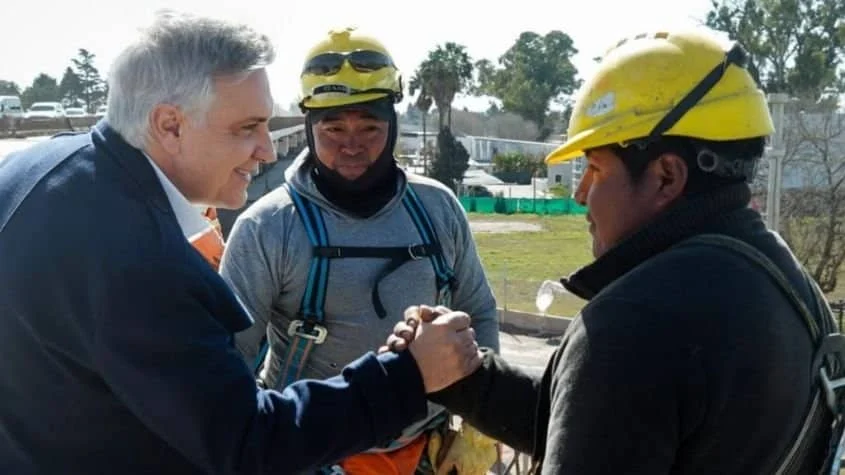
As the work continues through the latter half of 2026, the province of Córdoba stands as a benchmark for infrastructure management in the region. The balance between large-scale highway development and critical urban sanitation proves that the provincial government is focusing on a sustainable model of growth. While the physical completion of these roads and bridges is the immediate goal, the true objective is the creation of a seamless, safe, and efficient province, ready to handle the commercial and demographic challenges of the coming decade. The ongoing construction sites, with their hundreds of workers and heavy machinery, serve as a tangible promise of a more connected and prosperous Córdoba.