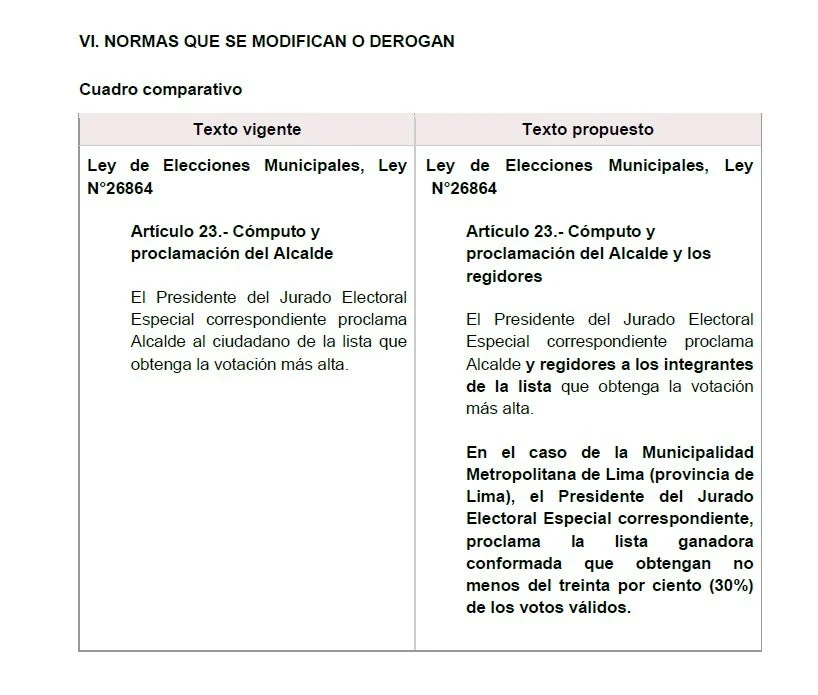
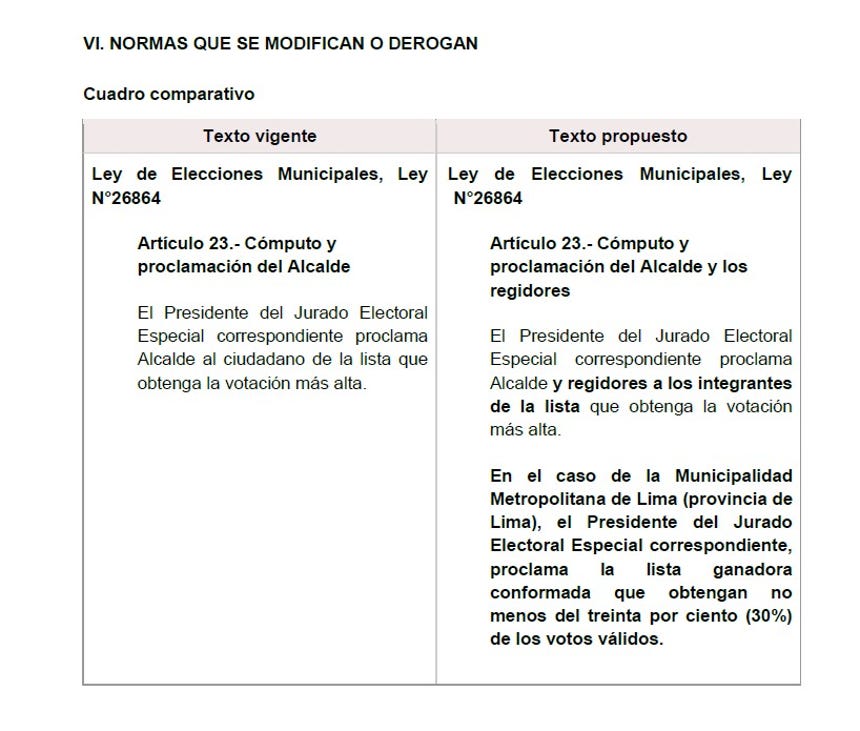
In a significant move aimed at reshaping the electoral landscape of Peru’s capital, Congressman César Muedas Balbiese, representing the Ahora Nación party, has formally introduced a legislative proposal to the Chamber of Deputies. The initiative seeks to amend Article 23 of the Municipal Elections Law, introducing a mandatory second-round election for the office of the Mayor of Lima Metropolitan Area if no candidate secures at least 30% of the valid votes in the first round.
This legislative bid, which has sparked intense debate among political analysts and civil society, argues that the current system lacks the necessary democratic "legitimacy of origin" required for a city of Lima’s immense demographic and economic scale.
Main Facts: The Proposed Electoral Reform
The core of Congressman Muedas’s proposal is straightforward: to modernize the electoral standards governing the Municipalidad Metropolitana de Lima (MML). Under the current regulations, the mayor is elected via a simple plurality, meaning a candidate can theoretically win the municipal seat with a very small percentage of the total vote, provided they maintain a lead over their rivals.
Key Provisions of the Bill:
- The 30% Threshold: If no candidate reaches the 30% mark of valid votes, a runoff between the top two contenders will be triggered.
- Timeline: The second round must take place within 30 calendar days following the official proclamation of the results by the National Office of Electoral Processes (ONPE).
- Regulatory Framework: The bill mandates that the ONPE, in coordination with the National Jury of Elections (JNE), must establish a new regulatory framework for the distribution of council seats following a second round, with a deadline of 120 days from the law’s enactment.
- Homologation: The proposal seeks to bring the municipal election standard for Lima closer to the regime governing regional governments, acknowledging Lima’s status as a special territory with regional-level competencies.
Chronology: The Evolution of Lima’s Electoral Challenges
The debate surrounding the legitimacy of Lima’s mayors is not new. To understand why this bill has been introduced now, one must look at the recent historical trajectory of municipal elections in the capital.
The Fragmented Landscape (2010–2026)
Over the last decade, Lima has seen a proliferation of political movements, leading to a highly fragmented voter base. In several recent cycles, winners have assumed office with electoral support that barely surpassed the 20% mark.
- The 2018–2022 Cycle: During these years, the winning margins in the capital were increasingly narrow. The absence of a majority support system meant that mayors often struggled to form stable coalitions within the municipal council.
- The Current Legislative Session: Throughout 2026, there has been a growing consensus among various legislative factions that the "winner-takes-all" system at the municipal level has facilitated the election of authorities who lack a broad mandate.
- November 2026: Congressman Muedas presents his proposal, citing the recent electoral data from the latest municipal count as a catalyst for immediate reform. The submission of this bill marks the culmination of months of internal discussion regarding the city’s governance crisis.
Supporting Data: Why 30%?
The statistical argument presented by the proponents of the bill is rooted in the concept of "representation density." When a mayor is elected with only 22% or 25% of the vote, nearly 80% of the electorate did not vote for them. This creates a significant gap between the authority’s platform and the public’s mandate.
Electoral Volatility
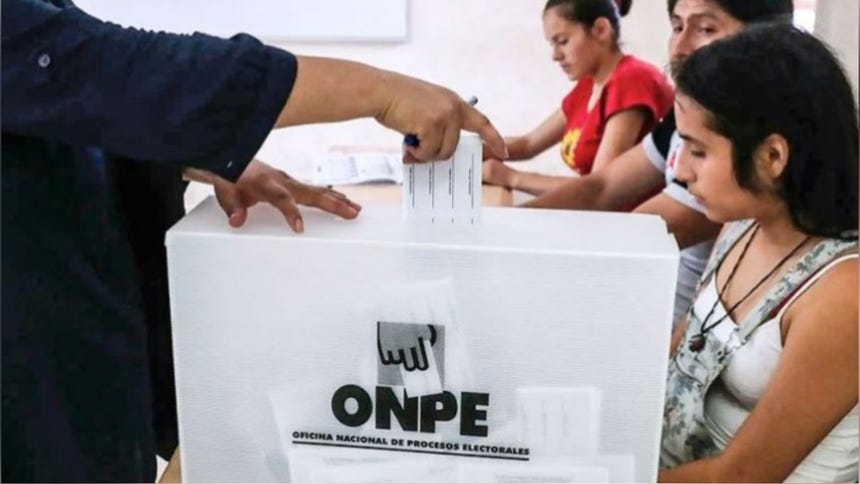
Data from the ONPE indicates that in recent municipal elections, the winning percentage for the Mayor of Lima has hovered between 24% and 28%. By contrast, regional governors—who possess executive powers comparable to a municipal leader in terms of infrastructure and regional development—are held to a higher standard of consensus-building through their own specific electoral regulations.
The "Legitimacy of Origin" Argument
Congressman Muedas emphasized that the goal is not merely to change the date of an election, but to improve the quality of governance. "The present law aims to provide greater political representativeness, democratic legitimacy, and citizen backing to the elected authorities of the Metropolitan Municipality of Lima," the document states. By forcing candidates to seek broader appeal beyond their base, the second round would, in theory, discourage extreme populism and force candidates to build wider, more inclusive coalitions.
Official Responses and Perspectives
The reception to the proposal has been mixed, reflecting the divided nature of the current Peruvian political climate.
Proponents’ View: Strengthening Democracy
Supporters of the bill, including members of Ahora Nación, argue that a runoff will force a "second look" at candidates. They contend that it provides the citizenry with an opportunity to choose between two clear visions for the city, rather than being forced to settle for a candidate who emerged from a crowded field of a dozen or more contenders.
Critics’ View: Logistical and Fiscal Concerns
Critics, however, have raised valid concerns regarding the fiscal cost of holding a second round in a city as large as Lima. The logistics of organizing an election for over 7 million voters are immense.
- Budgetary Impact: The Ministry of Economy and Finance has yet to provide an official estimate, but critics suggest that a second round could cost hundreds of millions of soles.
- Voter Fatigue: Some political analysts warn that holding a second election within 30 days could lead to decreased voter turnout, effectively nullifying the very "legitimacy" the bill seeks to create.
Implications: A New Era for Lima’s Governance?
The passage of this bill would represent one of the most significant changes to local governance in Peru since the decentralization process began in the early 2000s.
Impact on Political Parties
If a second-round mandate were to become law, the "fragmentation" model of political parties would become obsolete. Parties would be forced to form alliances before the first round, or risk being shut out of the runoff entirely. This could lead to a more consolidated party system, which many political scientists believe is essential for long-term stability.
Implications for Municipal Management
The most profound impact would likely be felt in the municipal council. A mayor elected with over 30% of the vote—and likely having forged a second-round alliance—would theoretically have a stronger mandate to push through ambitious infrastructure projects and policy reforms. Currently, mayors often face gridlock in the council, as opposing factions hold enough seats to block major legislative initiatives.
Challenges Ahead
The bill must now navigate the legislative committee process. It will face scrutiny regarding its constitutionality—specifically, whether such a change can be implemented via an amendment to the Municipal Elections Law or if it requires a constitutional amendment. Furthermore, the coordination required between the ONPE and the JNE to restructure the election calendar within the proposed 30-day window is a monumental technical challenge.
Conclusion
As Lima continues to expand, the question of how its leader is chosen becomes increasingly vital. The proposal by Congressman Muedas is a bold attempt to address the "legitimacy deficit" that has plagued the city’s administration for years. Whether or not the bill succeeds, it has successfully placed the issue of democratic quality at the forefront of the national conversation.
For the citizens of Lima, the prospect of a second-round runoff is not just a procedural change; it is a fundamental shift in how they engage with their city’s future. The coming months will determine if the legislature is willing to invest in a more robust democratic process, or if the status quo—with its inherent risks of fragmentation and weak mandates—will persist.