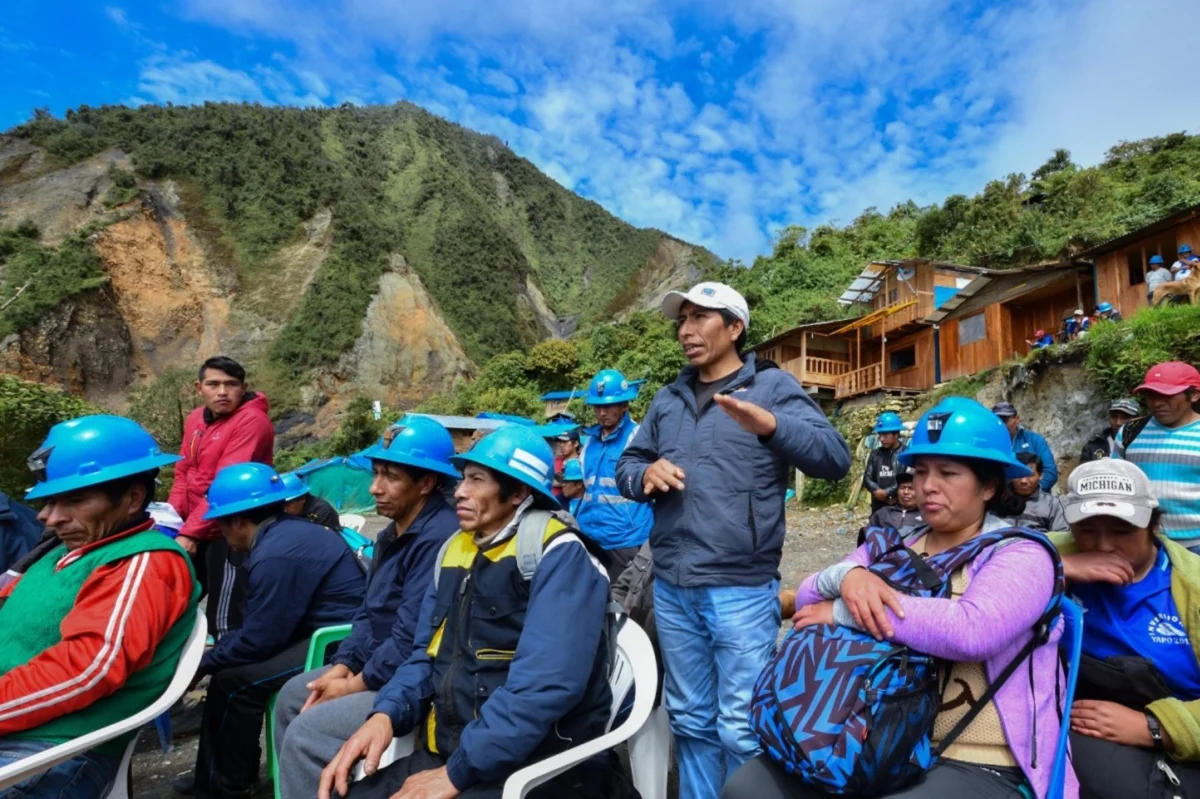
The legislative corridors of Lima are currently the epicenter of a high-stakes political and economic battle. At the heart of the controversy is the Registro Integral de Formalización Minera (REINFO), a tool originally designed to bring informal miners into the legal fold, but which now faces an uncertain future. As the clock ticks toward December 31, 2026, the Peruvian Congress finds itself divided between extending a controversial safety net and implementing a new, more rigorous regulatory framework.
Main Facts: The Legislative Tug-of-War
The debate was reignited by the Juntos por el Perú (JPP) party, which officially introduced bill 00744-2026-2031-CD. Spearheaded by congresswoman Analí Márquez, the proposal seeks a two-year extension of the REINFO, pushing its expiration date to December 31, 2028. This move is not merely a request for more time; it proposes a structural shift in how small-scale mining is managed in Peru.
The JPP proposal suggests a comprehensive roadmap:
- The Completion of a National Census: A definitive count of small-scale miners to identify who is truly operating in the field.
- Verification of Obligations: A rigorous audit to ensure miners are meeting safety and environmental standards.
- Reversion of Idle Concessions: A controversial proposal to reclaim mining titles that have sat dormant for over a decade without production or investment, even if the titleholders have kept up with administrative tax payments.
This bill aims to modify articles 39 and 40 of the General Mining Law, specifically targeting how "idle concessions" are defined and penalized. By tightening the requirements for holding mineral rights, the JPP argues they are incentivizing productivity over land speculation. However, this legislative maneuver has met fierce resistance from the executive branch and rival political factions.
Chronology: From Tool to Conflict
To understand the current tension, one must look at the evolution of REINFO over the last decade.
- 2016–2017: The Peruvian government creates the REINFO as a permanent registry to facilitate the formalization of artisanal and small-scale miners. It was intended to be a pathway to legality, offering temporary protection from prosecution while miners navigated the complex bureaucratic requirements of the state.
- 2020–2023: As the administrative burden of formalization proved too great for many, the registry underwent multiple extensions. Critics began to argue that the registry had become a "legal shield" for illegal mining operations, as many actors used their registration status to avoid law enforcement while continuing to operate outside environmental and tax regulations.
- 2025–Early 2026: The discourse shifted toward the "MAPE Law" (Mining of Artisanal and Small-scale Enterprises), a proposed framework intended to replace the REINFO with a more robust, 18-month consolidation regime.
- June 2026: The bancada of Obras introduced a counter-proposal suggesting an extension until 2028 or until the MAPE Law is fully implemented.
- Present Day: The Juntos por el Perú proposal has set the stage for a legislative showdown, with the Energy and Mines Commission—led by Yenifer Paredes—poised to decide the fate of thousands of workers.
Supporting Data: The Scale of the Crisis
The challenge of formalizing the mining sector in Peru is monumental. Estimates suggest that hundreds of thousands of individuals rely on artisanal and small-scale mining (ASM) for their livelihoods. However, the data surrounding REINFO is notoriously opaque.
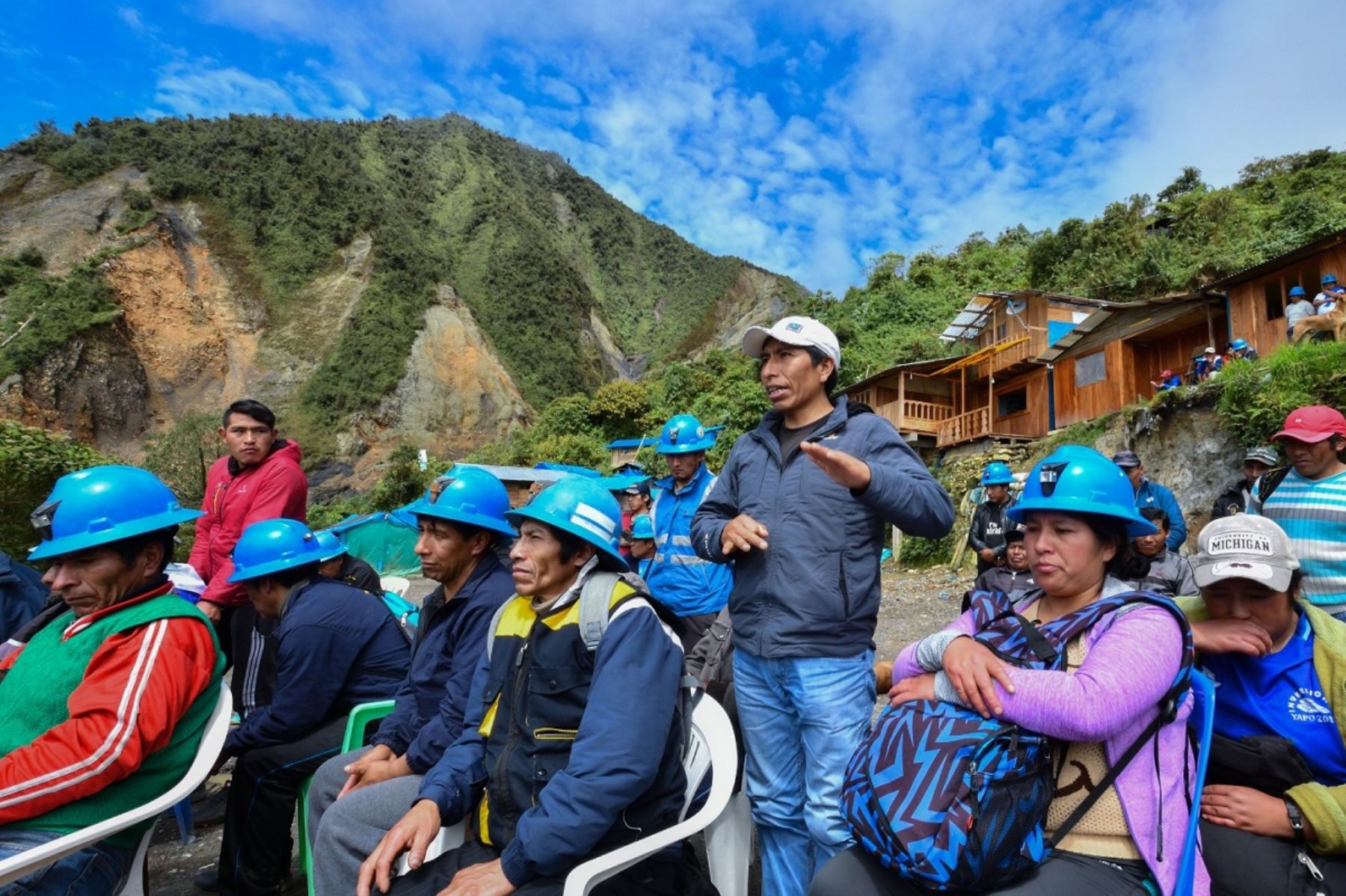
According to government reports, the vast majority of those currently listed in the REINFO have failed to complete the formalization process. This has created a "permanent state of transition," where miners remain in a legal grey area indefinitely.
Furthermore, the issue of "idle concessions" remains a sore point. Industry analysts note that a significant percentage of mining titles in Peru are held by entities that have not moved to the extraction phase in over ten years. By proposing the reversion of these titles, the JPP bill seeks to redistribute land to active, albeit smaller, operators. However, critics argue that this could undermine legal certainty and property rights, potentially discouraging large-scale investment in the mining sector.
Official Responses and Political Polarization
The executive branch, led by Minister of Energy and Mines Guillermo Shinno, has adopted a firm stance: no more extensions. Minister Shinno has repeatedly signaled that the REINFO, in its current form, has outlived its utility. The Ministry’s position is that the registry is being exploited by criminal networks to launder gold and bypass safety regulations.
"The REINFO as it currently exists is a failed experiment," said a spokesperson for the Ministry. "We need to transition to the MAPE Law, which provides a clear, time-bound path to legality. We cannot continue to grant extensions that merely prolong the problem."
Conversely, political parties like Juntos por el Perú and Obras argue that terminating the REINFO without a fully operational replacement will lead to the "criminalization of poverty." They contend that thousands of artisanal miners will be pushed into complete illegality, leaving them vulnerable to exploitation and organized crime.
The opposition, most notably the Renovación Popular party, has rejected the extensions entirely. They have demanded that the Energy and Mines commissions of both chambers of Congress go into "permanent session" to finalize the MAPE Law immediately, thereby avoiding the need for any further extensions of the problematic REINFO system.
Implications: A Sector at the Precipice
The implications of this legislative struggle extend far beyond the halls of Congress.
1. Environmental Consequences
Informal mining is a leading cause of deforestation and mercury contamination in the Amazon basin. A failure to replace the REINFO with an effective, enforceable regulatory framework will likely lead to an increase in environmental degradation, as unregulated miners continue to use primitive and harmful extraction methods.
2. Social and Economic Stability
Small-scale mining is a vital economic engine in remote Andean and Amazonian regions. A sudden, chaotic closure of the REINFO without a viable alternative could lead to social unrest and the displacement of thousands of families who depend on mining to survive.
3. Legal Security and Investment
The debate over "idle concessions" touches on the broader issue of property rights. Should the government move forward with the forced reversion of titles, it could send a chilling signal to the global mining community. Investors look for stability and the sanctity of contracts; any move perceived as an "expropriation" of mining titles, even if aimed at idle land, could have negative repercussions for Peru’s attractiveness as a mining destination.
4. The Path Forward
The path forward appears to be a narrow one. The solution likely lies in a compromise that addresses the immediate need for formalization while setting a "hard stop" for the transition. This would involve:
- Expediting the MAPE Law: Focusing all legislative efforts on the implementation of the new regime.
- Targeted Formalization: Differentiating between truly artisanal miners who are attempting to comply and large-scale, illegal operations masquerading as artisanal.
- Enhanced Enforcement: Ensuring that once the grace period ends, the government has the capacity to enforce environmental and safety laws against those who refuse to formalize.
As the Energy and Mines Commission prepares to deliberate, the eyes of the nation are fixed on the outcome. The decision will determine whether Peru can successfully integrate its artisanal miners into a sustainable, legal economy, or if the country will remain trapped in a cycle of informality and environmental ruin. The window of opportunity is closing, and the stakes for Peru’s most vital industry have never been higher.