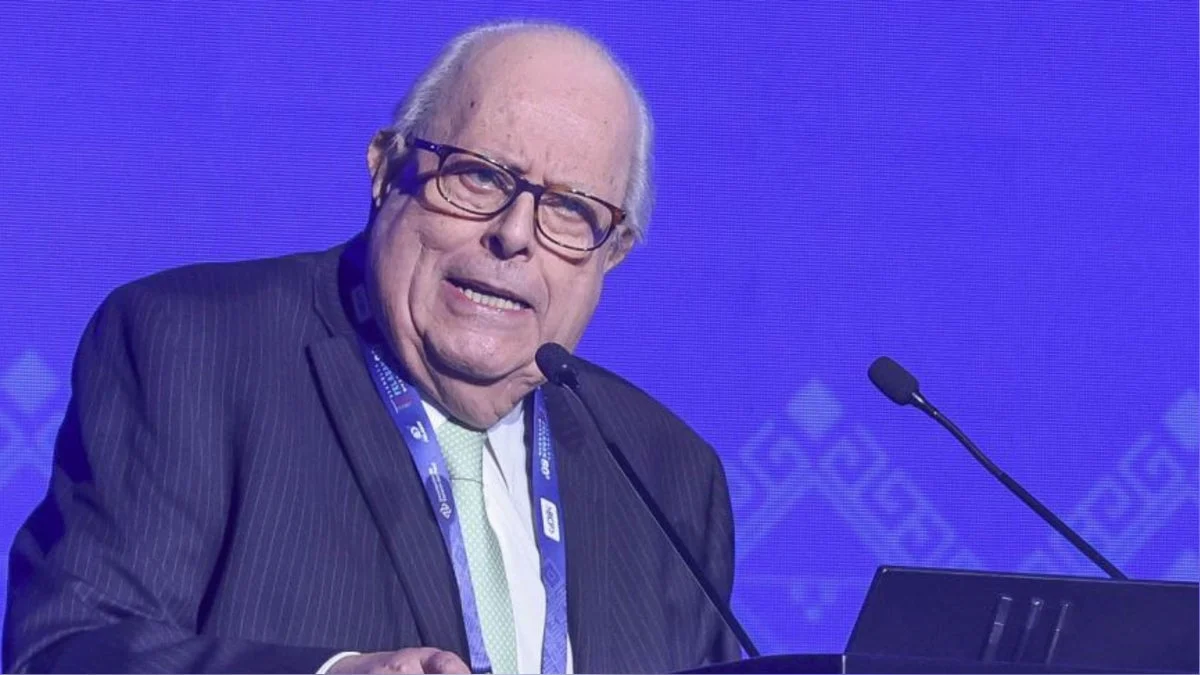
In a high-stakes assessment of Peru’s macroeconomic health, the Governor of the Central Reserve Bank of Peru (BCR), Julio Velarde, has provided a nuanced outlook on the nation’s trajectory. Addressing the 60th Assembly of the Latin American Federation of Banks (FELABAN), Velarde acknowledged that while the looming El Niño phenomenon poses a significant threat—potentially shaving up to 2% off the national GDP—the country possesses a bedrock of resilience capable of averting a full-scale recession.
The Core Challenge: Estimating the Impact of El Niño
The El Niño Southern Oscillation (ENSO) has long been a source of volatility for the Peruvian economy, primarily due to its disruptive impact on agriculture, fisheries, and infrastructure. During his keynote, Velarde did not shy away from the severity of the projections. He estimated that the climate phenomenon could impact the economy by as much as 2%, a figure that would be daunting for a less stable economy.
However, Velarde emphasized that the current economic landscape in Peru is fundamentally different from the crisis-prone environments of previous decades. The BCR maintains that the current structural strength of the nation—characterized by robust fiscal discipline and a diversified industrial base—will act as a buffer against the climatic shock.
"If we look at the trajectory of our current indicators, despite the inevitable negative impact of El Niño, the economy is coming from a position of such significant strength that a recession is highly unlikely," Velarde asserted.
Chronology and Context: From 1977 to the Present
To understand the weight of Velarde’s warnings, one must look at the historical parallels he drew. The BCR Governor explicitly compared the current climate outlook to the episode of 1977. That year remains a benchmark for meteorologists and economists alike, as the climatic shifts led to widespread global disruptions, with particularly devastating consequences for agriculture in India and price stability in emerging markets.
The 1977 Benchmark
In 1977, the global economy was significantly more fragile. Debt-to-GDP ratios were higher across the developing world, and food security mechanisms were underdeveloped. The resulting supply chain shocks created a cascade of inflationary pressure.
Why 2024 is Different
Velarde was quick to pivot from the fear of historical repetition to the reality of modern economic structures. He noted that the global and local financial systems have evolved significantly in the last 47 years.
- Debt Management: Unlike the late 70s, Peru’s current debt profile is manageable, providing the state with the fiscal space necessary to deploy emergency relief and infrastructure maintenance if the worst of the weather models come to pass.
- Institutional Maturity: The Central Bank’s mandate and operational autonomy have provided a layer of stability that did not exist in the 1970s, allowing for more precise monetary policy interventions.
Supporting Data: The Pillars of Growth
Velarde’s confidence is not based on mere optimism; it is rooted in a robust dataset from the second quarter of the current fiscal year. By examining these indicators, the BCR has identified the "hidden" strengths of the Peruvian economy that many observers might overlook.
1. Employment Growth
Perhaps the most telling sign of economic health is the labor market. The BCR reported that employment is expanding at an annual rate of 6.5%. This growth indicates that businesses are not merely surviving but are actively expanding their capacity, signaling confidence in the medium-term outlook despite the climate threat.
2. Private Investment Surge
Private investment, often the most sensitive barometer of business confidence, grew by over 17% during the second quarter. This is a crucial metric, as it suggests that the private sector is continuing to deploy capital into projects that will drive future productivity, rather than retreating into a "wait-and-see" mode.
3. Construction and Internal Demand
A proxy for long-term economic expansion is the consumption of cement. In the second quarter, cement usage increased by more than 13%. This suggests a sustained momentum in private construction, infrastructure development, and internal trade. As Velarde noted, "We have a very strong economy, one that perhaps the average Peruvian doesn’t fully realize is performing as well as it is."
Official Responses and Strategic Implications
The implications of Velarde’s report are twofold: they serve as a warning to prepare for climate-related supply shocks while simultaneously providing a vote of confidence in the nation’s internal market.
Global Commodity Pressures
Velarde highlighted the link between climate-induced agricultural disruption and global inflation. Specifically, he pointed to the price of sugar. Because India serves as a critical node in global sugar production, any reduction in their output due to El Niño weather patterns immediately ripples through international markets, driving up costs for Peruvian consumers and manufacturers.
Policy Implications for the BCR
The Central Bank’s strategy remains one of vigilance. By acknowledging the risks early, the BCR allows the private sector to adjust supply chains and inventory levels. The message to the banking sector at the FELABAN assembly was clear: while the climate is a variable outside of human control, the economic response is within the realm of policy.
The BCR’s focus remains on maintaining price stability. If food prices spike due to global shortages, the bank is prepared to use its monetary policy tools to prevent temporary price shocks from becoming entrenched inflation.
Looking Ahead: The Resilience of the Peruvian Economy
As Peru prepares for the full impact of the current weather cycle, the narrative from the top of the Central Bank is one of tempered confidence. The "shock" of El Niño is real, and the potential for a 2% GDP drag is a serious policy challenge. However, the underlying growth in employment and private investment provides a cushion that was absent in previous decades.
A New Era of Economic Management
The modern Peruvian economy is characterized by a higher degree of integration and a more sophisticated financial sector. The fact that the economy continues to post growth figures in the double digits for key investment sectors suggests that the nation’s "economic immune system" is functioning.
Final Assessment
Julio Velarde’s assessment serves as a reminder that economic strength is often tested in the face of external crises. By grounding his analysis in the 1977 comparison, he effectively frames the current situation as a challenge of scale rather than a structural crisis.
For investors, policymakers, and the general public, the takeaway is clear: the road ahead will be bumpy due to the climate, but the foundation of the economy is built to withstand the turbulence. The 6.5% growth in employment and the 17% jump in private investment are not just numbers; they are the evidence of a resilient nation that is, in Velarde’s words, "stronger than people realize."
As the country moves forward, the focus will remain on the intersection of climate resilience and fiscal responsibility, ensuring that the progress made in recent months is not lost to the temporary volatility of the coming weather cycle.