Introduction: A Fragile Equilibrium Under Siege
The political landscape in Peru has entered a period of heightened volatility following the tragic assassination of Susy Aponte Polo, a prominent candidate for the governorship of Áncash. The incident has acted as a catalyst for a burgeoning confrontation between the legislative and executive branches, specifically centering on the tenure of Interior Minister César Astudillo.
As calls for a motion of censure against the Minister gain momentum, the leadership of the Congress has issued a stern warning against what it describes as "confrontational maneuvers." The dispute exposes a deep-seated disconnect between the legislative focus on political accountability and the executive’s urgent plea for structural tools to combat a national crime wave.
The Catalyst: The Assassination of Susy Aponte
The recent murder of Susy Aponte Polo has sent shockwaves through the national political establishment, bringing the issue of citizen security to the forefront of the congressional agenda. Aponte, a vocal and active participant in the regional political sphere, was targeted in an act that many are labeling as an assault on democracy itself.
Following the news of her death, Ernesto Zunini, the spokesperson for the Juntos por el Perú (JPP) parliamentary bloc, announced on Sunday that his party would formally introduce a motion of censure against Minister of the Interior César Astudillo. Zunini’s justification for this drastic measure is twofold: the perceived inability of the Ministry to prevent the escalation of violence and a failure to provide swift justice in the wake of such high-profile attacks.
"We need results, not excuses," Zunini stated, further calling upon all parliamentary benches to expedite the repeal of laws that he claims currently "hinder the fight against crime."
Congressional Leadership Defends the Status Quo
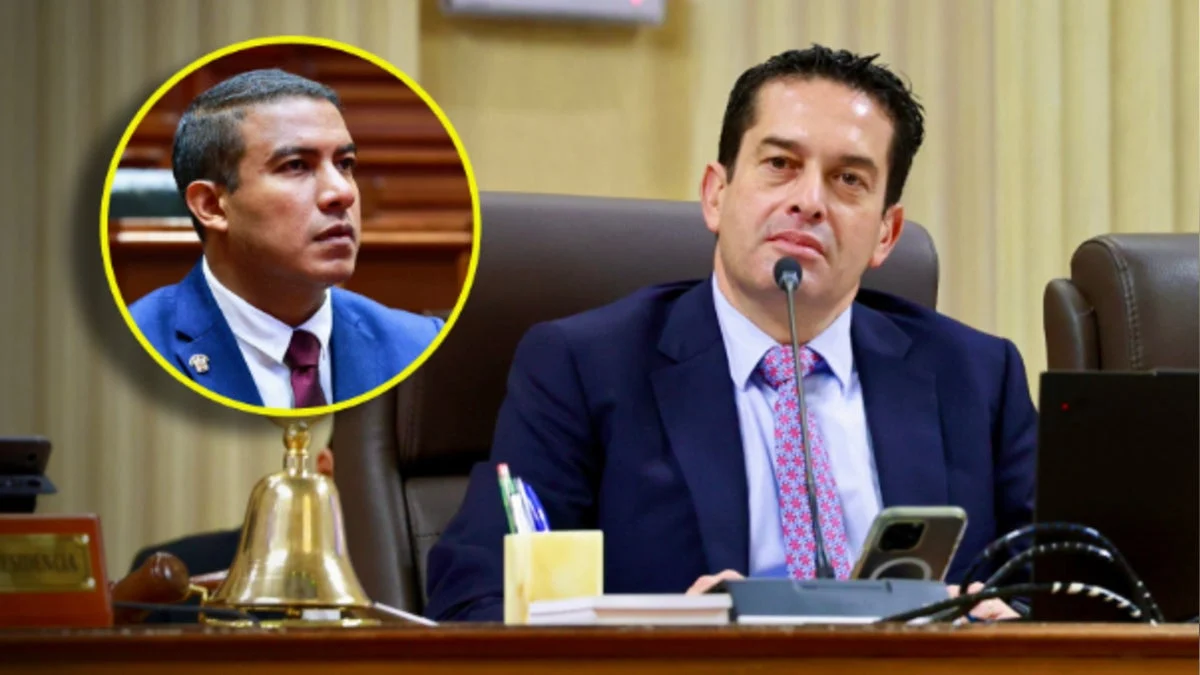
Miguel Torres, President of the Senate and head of the Congress, has emerged as the primary defender of the government’s security strategy. In a series of sharp rebuttals, Torres criticized the opposition’s eagerness to move toward censure, framing the move as a superficial political maneuver rather than a genuine attempt to address the root causes of insecurity.
"It is incredible," Torres remarked during a press conference. "Parliamentarians are very quick to interpellate and very quick to demand censures, yet they show little speed when it comes to what Peru truly needs: the delegation of legislative powers to the Executive."
The Argument for Legislative Delegation
Torres emphasized that the Ministry of the Interior is currently operating under a handicap because the legislative branch has yet to approve the Executive’s request for special powers. He defended Minister Astudillo’s record, citing specific metrics that he argues justify the current administration’s approach:
- 180 criminal organizations dismantled: A figure representing a significant tactical victory in the war on organized crime.
- 1,800 criminal gangs neutralized: A testament to the effectiveness of police operations when they are properly funded and authorized.
Torres’s core argument is that the legislature is effectively shooting itself in the foot. By withholding the necessary legal tools for the government to act, the Congress is preventing the very "results" that the opposition claims to be seeking.
A Divided Legislature: The "Obras" and "Buen Gobierno" Perspectives
The potential for a successful censure motion remains uncertain, as the parliamentary landscape is fragmented. Several key factions are currently weighing their options, balancing public pressure against institutional stability.
The Position of the "Obras" Bench
Víctor Piñán, spokesperson for the Obras party, has adopted a "wait-and-see" approach. In a public statement following the assassination, Piñán confirmed that his group had sent a formal inquiry to Minister Astudillo demanding immediate results regarding the investigation into Aponte’s death.
"We are currently in the evaluation phase," Piñán stated. "We are in a representation week, with many members traveling to their regions. Once we reconvene, we will decide whether to adhere to the censure motion promoted by Juntos por el Perú." Piñán’s social media activity has been equally aggressive, demanding transparency and accountability for the threats that Aponte allegedly reported prior to her demise.
The "Buen Gobierno" Stance
Senator Susana Matute, representing the Buen Gobierno bloc, has offered a more critical assessment of the Minister’s performance. While she stopped short of confirming a vote for censure, she expressed a growing impatience with the state of national security.
"The situation in Peru is becoming increasingly grave," Matute remarked. "In just three weeks, we have moved from the abduction and murder of four individuals to the assassination of a gubernatorial candidate. If the Minister cannot improve his management of the sector, it is better that he steps aside."
Matute’s rhetoric highlights a growing sentiment among moderate legislators: that the patience of the public is exhausted and that the current window for improvement is rapidly closing. She noted that her caucus would likely reach a decision within the next two weeks, underscoring the lack of time available for the government to turn the tide of public perception.
Chronology of Escalating Tensions
- Late September 2026: A series of violent incidents, including the abduction and murder of four individuals, sparks initial debates in Congress regarding the efficacy of the Interior Ministry.
- September 20, 2026: Susy Aponte Polo, a candidate for the regional government of Áncash, is assassinated.
- September 21, 2026: Ernesto Zunini (JPP) announces via social media that a motion of censure will be filed against Interior Minister César Astudillo.
- September 22, 2026: Miguel Torres (President of Congress) condemns the move, labeling it a "confrontational" tactic and demands the approval of legislative powers.
- September 23, 2026: Víctor Piñán (Obras) and Susana Matute (Buen Gobierno) signal that their respective caucuses are evaluating whether to join the censure motion, effectively placing the Minister’s future in jeopardy.
Implications for the Future of Governance
The standoff between the legislative and executive branches carries significant implications for the stability of the current administration.
1. The Security Paradox
The primary risk is a "security paradox," where the political debate over who is to blame for crime prevents the government from actually fighting it. If the censure motion proceeds, it will likely lead to the resignation or dismissal of Minister Astudillo. While this may satisfy political demands for accountability, it would also result in a leadership vacuum at the Ministry of the Interior during a time of national crisis.
2. The Delegation of Powers
The government’s request for legislative powers is the crux of the current struggle. If the Congress continues to prioritize censure motions over the delegation of powers, the Executive will likely continue to cite a lack of legal tools as the reason for its failure to curb violence. This creates a circular logic of blame that is unlikely to result in improved safety for the citizens of Peru.
3. Institutional Erosion
The constant threat of censure is viewed by many political analysts as a symptom of a weakened institutional framework. Rather than engaging in substantive policy debates, the legislative process is increasingly dominated by individual political maneuvers aimed at capturing public attention during times of national tragedy.
Conclusion: A Critical Juncture
As the week of parliamentary representation draws to a close and lawmakers return to Lima, the decision regarding the censure of Minister César Astudillo will likely define the remainder of the legislative term.
For the government, the path forward requires a delicate balance of delivering immediate results on the investigation of Susy Aponte’s murder while simultaneously convincing a skeptical legislature that the requested delegation of powers is the only viable path to long-term stability. For the opposition, the challenge lies in proving that their actions are driven by a genuine concern for the security of the nation rather than the opportunism of a volatile political cycle.
The eyes of the Peruvian public remain fixed on the halls of Congress. In an environment where the security of the citizens is at stake, the rhetoric of "confrontational tufillos" (confrontational odors) described by Miguel Torres may soon be overshadowed by the cold, hard reality of a public that has run out of patience. Whether this leads to a productive legislative compromise or a total collapse of the current security strategy remains to be seen.