
Introduction: A New Era for Cusco’s Historic Educational Institution
In a significant stride toward bridging the educational infrastructure gap in Peru, the Agencia de Promoción de la Inversión Privada (ProInversión), operating under the Ministry of Economy and Finance, has officially announced the commencement of works for the contingency facilities of the prestigious Colegio Nacional de Ciencias in Cusco. This project is not merely a construction endeavor; it represents a comprehensive commitment to the future of 2,600 students, ensuring that their academic journey remains uninterrupted while their historic institution undergoes a complete, state-of-the-art transformation.
The project, executed through the strategic mechanism of "Obras por Impuestos" (Works for Taxes), underscores the power of public-private synergy. With a total investment of S/ 248.6 million, funded by the Banco de Crédito del Perú (BCP), the initiative sets a new benchmark for infrastructure development in the region.
The Strategic Importance of the Contingency Phase
The establishment of a "local de contingencia" (contingency site) is a critical prerequisite for any large-scale educational renovation. Recognizing that the main campus requires extensive modernization, authorities have prioritized the continuity of learning.
These temporary facilities are designed to meet all modern pedagogical standards, ensuring that students and faculty maintain a high-quality educational environment during the construction of the permanent campus. By providing secure, well-equipped, and functional spaces, the project prevents the displacement or academic stagnation of the student body, which is a common challenge in large-scale infrastructure projects.

Detailed Scope of the Permanent Infrastructure Project
The transformation of the Colegio Nacional de Ciencias is set to be one of the most ambitious educational infrastructure projects in the history of Cusco. The vision behind the design is to create a hub of innovation that respects the historical identity of the institution while integrating cutting-edge educational technology.
The final facility will boast:
- Academic Spaces: 48 modern classrooms equipped for diverse learning methodologies.
- Innovation Centers: Six specialized classrooms dedicated to pedagogical innovation and digital literacy.
- Vocational and Technical Support: 13 workshops designed for skill-building in various disciplines.
- Cultural and Administrative Infrastructure: A comprehensive library, an auditorium for events, a dedicated hall for historical exhibitions, and optimized administrative offices.
- Well-being and Recreation: Extensive sports facilities and dedicated spaces for student welfare, ensuring a holistic approach to education.
- Equipping and Furnishing: The project includes full furnishing and high-end technological equipment, turning the campus into a modern citadel of learning.
Chronology of Development and ProInversión’s Role
The road to this project has been paved with meticulous planning and regulatory alignment. ProInversión has acted as the primary facilitator, coordinating between the regional government, the private financier (BCP), and the Ministry of Education to ensure the project meets the required technical specifications and social impact goals.
- Initial Planning Phase: Identification of the infrastructure gap and feasibility studies conducted to assess the needs of the Colegio Nacional de Ciencias.
- Financing Agreement: The Banco de Crédito del Perú committed to the S/ 248.6 million investment, leveraging the "Obras por Impuestos" mechanism to offset their tax obligations against the development of public works.
- Stakeholder Alignment: Ongoing negotiations and technical reviews to ensure the historical significance of the school is preserved while upgrading the facilities to 21st-century safety and seismic standards.
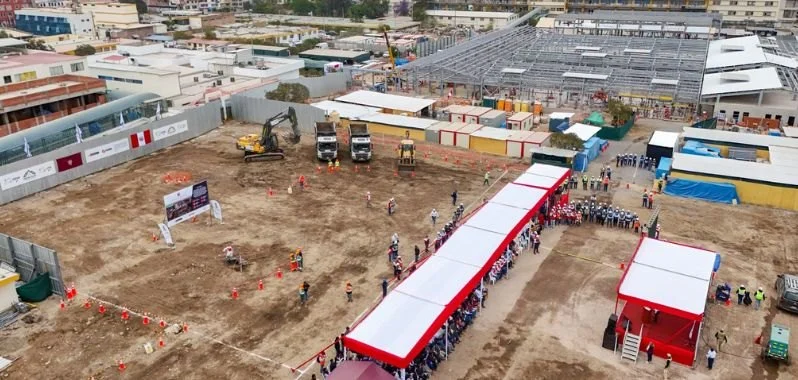
- Current Milestone (September 2026): Official groundbreaking for the contingency site, marking the transition from planning to execution.
Supporting Data: The Success of "Obras por Impuestos" in Cusco
The success of the Colegio Nacional de Ciencias project is part of a larger, positive trend in the Cusco region. The "Obras por Impuestos" (OxI) mechanism has proven to be a vital tool for local governments, allowing them to bypass traditional bureaucratic delays and partner with private entities to accelerate development.

Regional Performance Metrics
- Rapid Growth: By September 15, 2026, public entities in Cusco had awarded 65 interventions via OxI, totaling a staggering S/ 1,201 million.
- Year-over-Year Comparison: This represents a massive leap from the S/ 230 million recorded in the same period in 2025, signaling a fivefold increase in private-sector confidence and government efficiency.
- Historical Context: Since the inception of the mechanism in 2009, Cusco has accumulated 197 awarded interventions with a total investment of S/ 3,010 million. These investments span across education, sanitation, transport, and health sectors, illustrating the profound impact of this model on the region’s socio-economic landscape.
Official Responses and Strategic Implications
During the inauguration ceremony for the contingency site, Luis Del Carpio, President of ProInversión, highlighted the strategic importance of these efforts. "The Colegio Nacional de Ciencias represents more than just walls and classrooms; it is a symbol of Cusco’s intellectual heritage," Del Carpio stated. "Through the OxI mechanism, we are effectively closing the infrastructure gaps that have historically hindered the development of our educational systems."
The implications of this project are twofold:
- Direct Impact: 2,600 students will benefit from a world-class learning environment, directly contributing to improved academic performance and educational equity.
- Systemic Impact: The project serves as a "proof of concept" for other regions. By successfully managing such a large budget through a private-public partnership, Cusco is demonstrating that complex, high-value projects are achievable within the current regulatory framework.
Challenges and Future Outlook
While the progress is commendable, the project faces the typical challenges of construction in a region as geographically and historically complex as Cusco. Maintaining the project timeline, ensuring the quality of materials, and managing the logistics of shifting students to the contingency site are priorities for the project managers.
However, the robust involvement of a major financial institution like BCP provides a layer of institutional stability and financial security that is often absent in purely public-led projects. The goal is to complete the contingency phase as swiftly as possible, allowing for the main campus reconstruction to begin without further delay.

Conclusion: A Blueprint for National Progress
The investment in the Colegio Nacional de Ciencias is a testament to the fact that when private finance is aligned with public necessity, the resulting impact is transformative. As Cusco continues to lead the way in the use of the "Obras por Impuestos" mechanism, it provides a replicable blueprint for the rest of Peru.
By prioritizing the educational needs of its youth, the region is not only building better schools; it is investing in the human capital necessary for the country’s long-term economic and social prosperity. As the construction crews break ground, the community of Cusco looks toward a future where the constraints of the past no longer limit the potential of its students. This project is a clear signal that, even amidst shifting national priorities, the commitment to education remains the cornerstone of Peruvian development.