By Editorial Staff
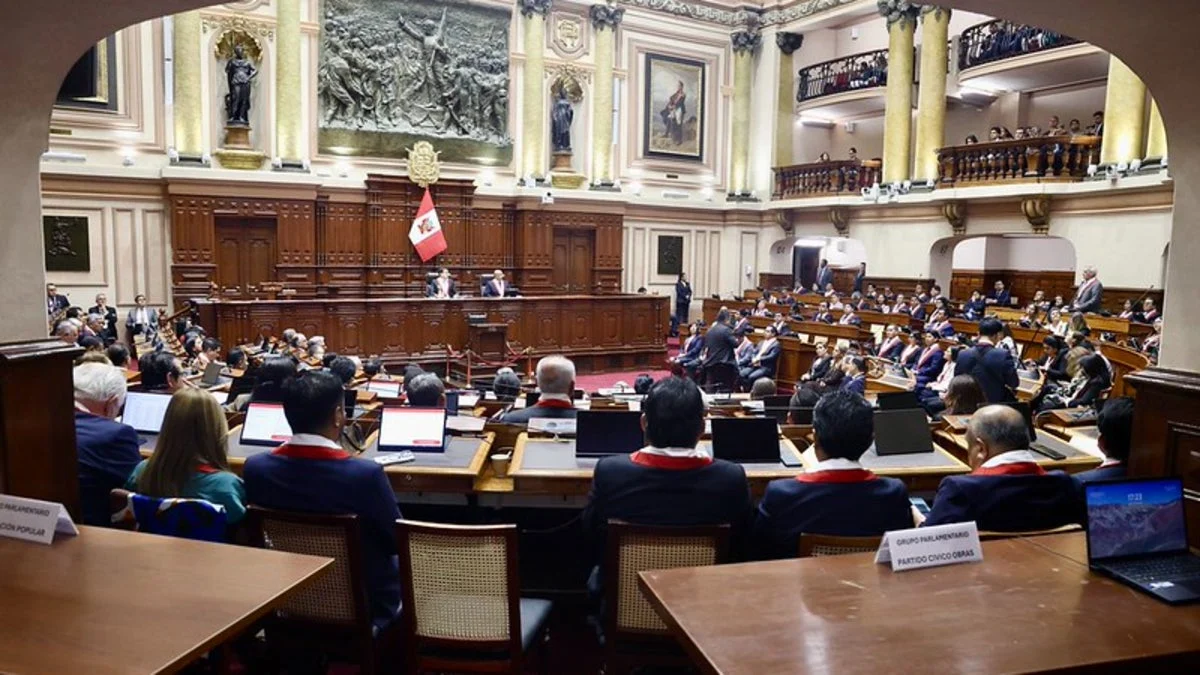
The halls of the Peruvian Congress have become the latest battleground in the search for justice following a harrowing incident of alleged sexual violence at the Liceo Naval Almirante Guise in San Borja. As public outrage mounts over the treatment of a 16-year-old student, legislative leaders are demanding accountability, signaling a potential shift in how educational institutions handle systemic abuse.
Flor Meza, Chairperson of the Congressional Commission on Social Inclusion, has emerged as a central figure in the push for oversight. In a stern rebuke of the school’s initial handling of the crisis, Meza declared that the administration’s official communication was woefully inadequate, promising that the case would not be buried under bureaucratic silence.
The Core Allegations: A Breach of Trust
The incident, which has sent shockwaves through the San Borja community, involves a group of secondary students accused of sexually assaulting a 16-year-old peer. The gravity of the accusation—compounded by the institutional setting—has triggered a firestorm of criticism regarding the school’s safety protocols and internal reporting mechanisms.
For many parents, the Liceo Naval Almirante Guise represented a bastion of discipline and security. However, the current scandal has shattered that perception. Legal proceedings are currently underway, with the Public Ministry confirming the initiation of a preliminary investigation. A key step in the legal process includes the testimony of the victim via Cámara Gesell (a specialized child-sensitive interview room), designed to minimize further trauma while securing reliable evidence.
Chronology of the Scandal
The escalation of this case has been rapid, moving from a private tragedy to a matter of national legislative priority.
- The Incident: Reports emerged of an alleged sexual assault involving minors within the premises of the Liceo Naval.
- Initial Response: The school issued a statement that was widely condemned by parents and public officials as being dismissive and lacking in transparency.
- The Arrests: Local authorities detained a group of secondary students suspected of involvement in the assault, drawing widespread media coverage.
- Institutional Purge: Recognizing the gravity of the situation, the Peruvian Navy took the rare step of removing the school’s director, a faculty member, and the soccer coach, signaling a complete loss of confidence in the school’s leadership.
- Congressional Intervention: Flor Meza announced that her commission would formally cite school authorities to provide a detailed accounting of the events and the school’s failure to prevent the violence.
Legislative Action: Moving Beyond Rhetoric
The frustration expressed by Flor Meza reflects a broader dissatisfaction with how Peruvian schools manage reports of abuse. In her statements to the press, Meza made it clear that "the commission will absolutely proceed" with citing the school’s administration.
The strategy proposed by the Commission on Social Inclusion is multi-pronged. Meza intends to orchestrate a coordinated effort involving:
- The Ministry of Women and Vulnerable Populations: To ensure the victim’s physical and psychological welfare is prioritized.
- The Office of the Public Prosecutor: To provide oversight and ensure the investigation remains impartial.
- The Ministry of Education (MINEDU): To hold the administration accountable for systemic failures.
- The Legislative Branch: To provide long-term follow-up and legislative pressure.
Strengthening the Legal Framework: The Role of Law 29719
Central to the Congressional inquiry is the enforcement of Law 29719, a piece of legislation specifically designed to prevent and address bullying and sexual violence within educational institutions. The law mandates the incorporation of dedicated psychological professionals in every school across the country.
Meza has signaled that the Commission will launch a rigorous fiscalization (audit) campaign to determine whether schools like the Liceo Naval have been in compliance with these mandates. "It is not enough to have a law on the books," analysts noted, "if the implementation is ignored by the very institutions tasked with protecting our children." The investigation into the Liceo Naval will serve as a litmus test for whether the state can force educational institutions to prioritize student safety over institutional reputation.
Institutional Responses: The Navy’s Stance
The Peruvian Navy, which oversees the Liceo Naval, has found itself in a precarious position. In an effort to preserve its reputation and appease public anger, the force issued a statement expressing its "categorical rejection of any act of violence, mistreatment, or violation of the integrity of any student."
The removal of the school director, a teacher, and the coach is a significant measure that suggests the investigation has already uncovered serious lapses in supervision. However, critics argue that the removal of staff is merely the first step. There are mounting questions about how a group of students could commit such an act without the knowledge of staff, and whether a culture of silence—often found in rigid, hierarchical institutions—contributed to the delay in reporting the assault.
Societal Implications and Public Outrage
The scandal at the Liceo Naval touches upon a deep-seated anxiety in Peruvian society: the safety of children in "prestigious" private and semi-private institutions. Often, these schools are viewed as immune to the social ills plaguing the public sector, but this case has proven that such violence is not restricted by class or institutional pedigree.
Social advocates are now calling for a comprehensive reform of school safety protocols nationwide. The demand is not just for the punishment of the perpetrators, but for a fundamental change in how school authorities respond to the first signs of harassment. As one advocate noted, "Bullying and abuse don’t happen in a vacuum. They happen when authority figures look the other way."
Future Outlook: A Long Road to Accountability
As the Congressional Commission prepares its subpoenas, the public is watching closely. For the victim and their family, the focus remains on justice. For the broader public, the focus is on systemic reform.
Flor Meza’s promise to make this a "priority case" suggests that the Liceo Naval scandal will be the catalyst for a broader debate in the Chamber of Deputies. The upcoming sessions will likely involve intense questioning of school board members and regional education officials. If the Commission succeeds in its goal of creating a "continuous follow-up plan," it could lead to the most significant reform of school safety protocols in recent years.
The coming weeks will be critical. The investigation into the Liceo Naval Almirante Guise is no longer just a local crime story; it is a flashpoint for the intersection of child rights, institutional accountability, and the power of the state to protect its most vulnerable citizens. As the case moves through the courts and the halls of Congress, the nation awaits a resolution that demands truth, transparency, and a renewed commitment to the sanctity of the classroom.
Ultimately, the goal expressed by legislators is clear: to ensure that the Liceo Naval case is not "left in the shadows," but instead serves as a stark reminder that institutions—regardless of their stature—must be held to the highest standards of safety and care. The eyes of Peru are on the Commission on Social Inclusion, waiting to see if the promised oversight will result in real, lasting change.