Executive Summary: The Impending Legislative Showdown
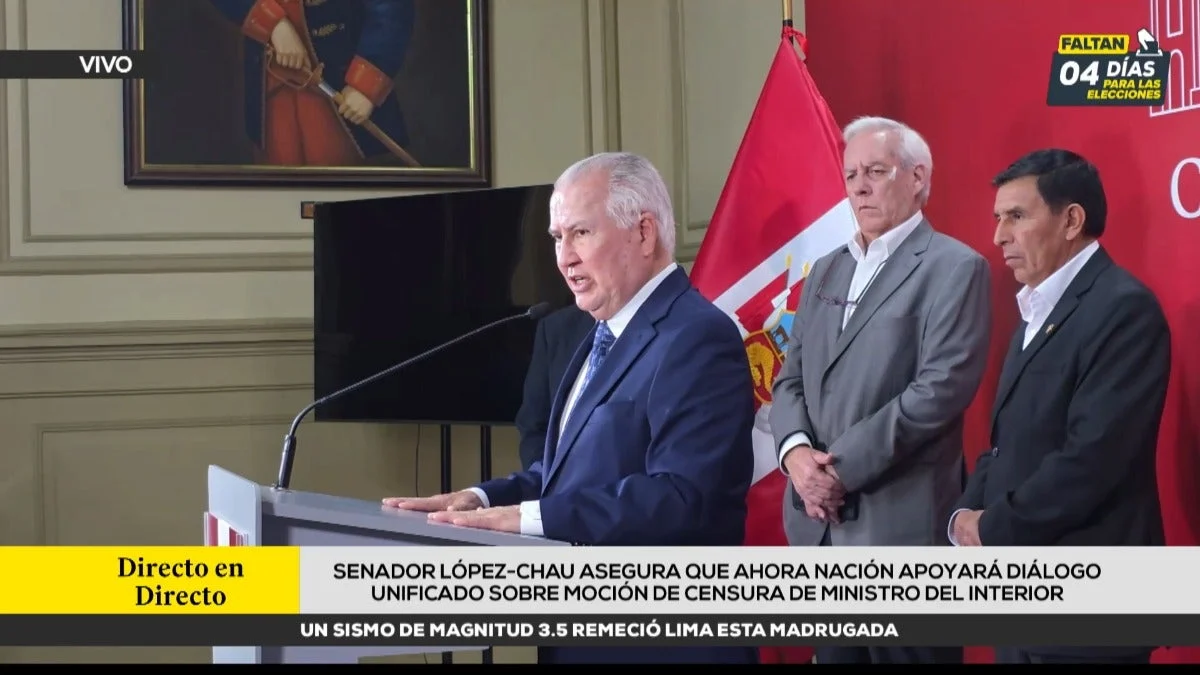
In a pivotal development within the Peruvian legislative landscape, Senator Alfonso López-Chau, representing the "Ahora Nación" caucus, has formally advocated for a period of strategic dialogue between the Chamber of Deputies and the Minister of the Interior, César Astudillo. This call to action comes as the nation braces for a high-stakes plenary session scheduled for Thursday, October 1, where a motion of censure against Minister Astudillo is slated for debate and potential vote.
The political atmosphere is currently charged with tension. As opposition forces in the Senate seek to harmonize their strategies, the call for prudence from López-Chau represents a significant shift from immediate confrontation toward a more deliberative approach. The Senator’s stance underscores a growing recognition that the stability of the Ministry of the Interior, especially amidst ongoing security challenges, requires a measured response rather than a knee-jerk reaction.
Chronology of Events: From Security Concerns to Censure
The path to the current legislative crisis has been marked by a series of escalating frictions between the executive branch and the newly established bicameral legislative structure.
- Mid-September: Initial murmurs of dissatisfaction regarding the Ministry of the Interior’s performance emerge, primarily concerning the escalation of organized crime and the perceived lack of coordination between the Ministry and regional authorities.
- September 20: Reports surface regarding logistical failures in the parliamentary chambers, with several congressmen complaining about the lack of adequate office space, which further inflamed tensions between the legislature and the administration.
- September 25: Formalization of the motion of censure against Minister César Astudillo. The move is spearheaded by a coalition of opposition parties aiming to hold the administration accountable for the current national security climate.
- September 28: Retired Colonel and current Deputy Harvey Colchado makes public statements cautioning against premature censure, suggesting that such a move could destabilize the National Police force at a critical juncture.
- September 29: Senator Alfonso López-Chau, in a joint press conference, formally requests a "cooling-off" period, urging the Chamber of Deputies to meet with Minister Astudillo before casting their final votes.
Supporting Data: The Argument for Institutional Stability
The debate surrounding Minister Astudillo is not merely political; it is deeply rooted in the technical realities of national security. Senator López-Chau’s position is heavily influenced by the insights provided by Deputy Harvey Colchado, whose expertise in the National Police is considered authoritative within the opposition bloc.
The "Moral Authority" Doctrine
López-Chau emphasized that the opposition’s decision-making process must be grounded in "moral authority." He argued that for a censure to be effective and legitimate, it must be the result of a rigorous, evidence-based assessment rather than a reactionary political maneuver.
"The Colonel [Colchado] authored our program; he possesses an intimate knowledge of the National Police," López-Chau stated. "We have aligned our stance with his assessment: it is too early for such a drastic decision. We must first earn the moral authority required to demand such a transition in leadership."
Economic and Security Implications
The Ministry of the Interior is currently overseeing a budget allocation aimed at modernizing police equipment and intelligence-gathering capabilities. A sudden change in ministerial leadership, according to policy analysts, could result in a "bureaucratic freeze," delaying the implementation of key security protocols during a period where public perception of safety is at an all-time low. The "Buen Gobierno" faction, which has joined López-Chau in calling for dialogue, argues that the short-term political gain of a censure vote might be outweighed by the long-term instability it could trigger within the security apparatus.
Official Responses and Coalition Dynamics
The Senate opposition is currently composed of four primary forces: Ahora Nación, Juntos por el Perú, Buen Gobierno, and the Partido Cívico Obras. Achieving a unified front has proven to be a complex exercise in political diplomacy.
The Quest for a Single Message
Senator López-Chau has taken the lead in attempting to synchronize the rhetoric of these four disparate parties. His goal is to present a single, coherent message to the public and the executive branch, regardless of whether the final decision is to support or oppose the censure.
"Ahora Nación is committed to concerting with all four forces," the Senator noted during his press conference. "We aim to forge a unified message. Whether we ultimately move to support or reject the censure, we must do so as a bloc to maintain the integrity of our legislative process."
Internal Divergence
While the move for dialogue is gaining traction, it is not without internal dissent. Some factions within the broader opposition are skeptical that a dialogue with Minister Astudillo will yield substantive changes in policy. They argue that the Minister has already had sufficient time to present his case and that further meetings are merely a "delaying tactic" that serves the interests of the executive branch.
Implications for the Future of the Bicameral System
The outcome of Thursday’s session will serve as a litmus test for the effectiveness of the new bicameral legislature. The interaction between the Senate and the Chamber of Deputies on this issue will set a precedent for how future crises are handled.
Strengthening Legislative Oversight
If the proposed dialogue between the deputies and the Minister proceeds, it could signal a transition toward a more mature parliamentary culture. By prioritizing discussion over immediate political execution, the legislature positions itself as a partner in governance rather than merely an adversary. This "dialogue-first" approach may prove essential in the coming months as the government faces mounting pressure to address economic stagnation and social unrest.
The Risk of Gridlock
Conversely, if the dialogue fails to produce concrete agreements or if the Minister refuses to address the concerns of the opposition, the resulting censure vote could be more aggressive, potentially leading to a constitutional impasse. Should the censure succeed, the executive branch will be forced to nominate a successor in an environment of heightened mistrust, potentially triggering a broader cabinet reshuffle.
Conclusion: A Delicate Balance
Senator Alfonso López-Chau’s intervention represents a pivotal moment of moderation. By advocating for a structured dialogue, he is attempting to steer the legislature away from a path of rapid escalation and toward a more traditional, deliberative process. As the clock ticks toward the October 1 plenary session, the eyes of the nation remain fixed on the Chamber of Deputies.
The final decision—whether to maintain the current ministerial leadership or to seek a change through censure—will ripple far beyond the halls of Congress. It will define the relationship between the government and the opposition for the remainder of the legislative term. For now, the call for "courtesy and political adequacy," as framed by López-Chau, stands as the most prominent attempt to stabilize a volatile political landscape. Whether this appeal for patience will succeed in tempering the fervor of the opposition remains to be seen in the coming days.