The Return of a Continental Dialogue
After a hiatus of 27 years, the prestigious Latin American Architecture Seminar (SAL, for its Spanish acronym) returns to the capital of Peru. From October 5 to 9, the Universidad de Lima will serve as the epicenter for architects, urban planners, historians, and academics from across the region to dissect the complex, layered evolution of Latin American urban centers.
The 19th edition of the SAL arrives at a critical juncture. As cities across the continent grapple with climate change, rapid population growth, and the legacy of unplanned development, the seminar proposes a paradigm shift: viewing the city not as a static set of concrete blocks, but as a living text—a palimpsest where history, geography, and social struggle are constantly being rewritten.
Main Facts: The "City as Text"
The theme for this year’s assembly is titled: "The City and the Territory as Text: Reading the Built Environment to Think about Latin America." The core thesis suggests that buildings, plazas, transit networks, and even the informal settlements that define our modern landscapes are not merely infrastructure; they are the physical records of our socioeconomic history.
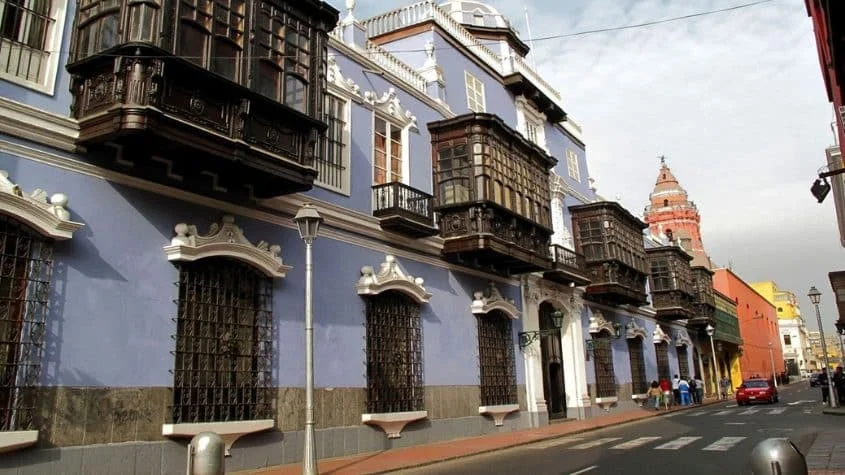
Lima, a city characterized by its immense cultural layering—from pre-Hispanic canals and colonial grid systems to the massive internal migrations of the 20th century—acts as the perfect laboratory for this discussion. The seminar posits that understanding these "layers" is essential for any sustainable future development. Instead of treating modern interventions as clean slates, urbanists are encouraged to "read" what is already there, identifying the underlying patterns that influence how citizens inhabit their environments.
A Brief Chronology: The SAL’s Legacy
To understand the significance of this event, one must look at the historical trajectory of the SAL, which has been instrumental in defining a uniquely "Latin American" identity in architecture since its inception:

- 1985: The first SAL is held in Buenos Aires, Argentina, establishing a network of professionals dedicated to breaking away from imported Eurocentric architectural models.
- 1997: Lima hosts the SAL for the first time, a moment marked by a push to integrate historical preservation with the burgeoning needs of a metropolitan city.
- 2000s–2010s: The seminar travels through various regional capitals, focusing on themes like the "informal city" and the impact of the neoliberal boom on urban aesthetics.
- 2024: After nearly three decades, the seminar returns to Peru. This gap reflects a period of intense transformation in Lima, including the rise of high-density housing, the expansion of the Metropolitan transit system, and the ongoing struggle to revitalize the historic Rímac river corridor.
Supporting Data and Urban Case Studies
The seminar program is anchored by a rigorous analysis of specific urban interventions, highlighting both successes and failures in territory management.
The Lima Case Studies
- The Vía Expresa (Paseo de la República): A mid-20th-century engineering marvel that effectively split the city in two. The seminar will analyze how this "canyon" of concrete altered social connectivity and whether it can be re-integrated into the urban fabric today.
- The Huatica Canal: A pre-Hispanic water system currently buried beneath the dense, informal urban fabric of Barrios Altos. Its existence challenges modern planners to consider indigenous engineering as a foundation for sustainable water management.
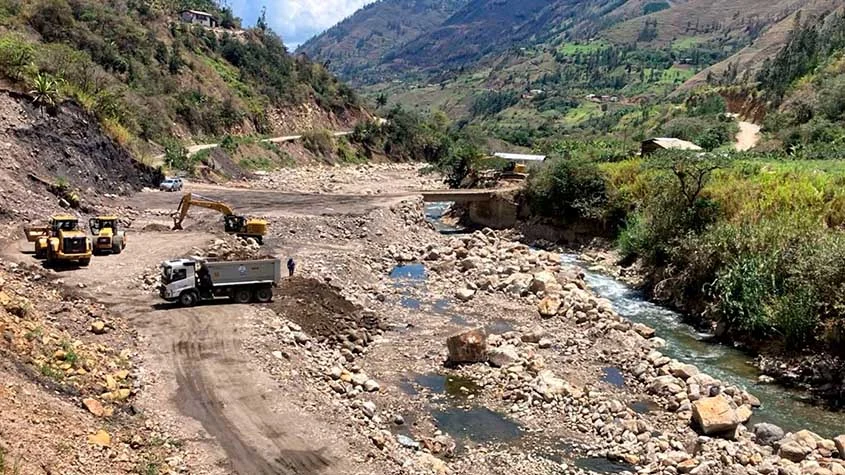
- The Rímac River: Often treated as a "backyard" or a barrier, the river’s rehabilitation remains one of the most critical challenges for Lima’s ecological and social future.
Regional Perspectives
The seminar extends beyond the Andes to include broader regional experiences:
- Medellín, Colombia: The transformation of the Moravia landfill from a site of waste to a site of social and environmental rebirth, often cited as a global model for "Social Urbanism."
- Iquitos, Peru: Explorations into "amphibious urbanism," where architecture must adapt to the seasonal flux of the Amazon basin rather than resisting it.
- Intermediate Cities: Studies from Bolivia, Chile, and Argentina focus on the rapid growth of secondary cities, which often lack the resources of capitals but face the same infrastructural pressures.
Official Perspectives: The Philosophy of the Seminar
Enrique Bonilla Di Tolla, Dean of the Faculty of Architecture at the University of Lima, emphasizes that the act of "reading" a city is inherently political.
"Reading a city is essentially understanding how a society has claimed, occupied, and modified its territory," says Bonilla Di Tolla. "In Lima, we see how different epochs of construction—colonial, modern, and informal—overlap. This is not a nostalgic exercise. It is a pragmatic requirement for anyone who wishes to intervene in the city today. We must understand the existing conditions, the social habits, and the physical traces left by our ancestors to make informed decisions for our children."
The seminar’s organizers argue that there is no "universal model" for urban development. While global architectural trends often push for standardized glass-and-steel skylines, the SAL advocates for a contextual approach that respects local environmental conditions and historical trajectories.

Implications: The Future of Latin American Urbanism
The implications of the 19th SAL reach far beyond the academic halls of the Universidad de Lima. As the region continues to urbanize at an unprecedented rate, the seminar serves as a necessary intervention against the "tabula rasa" (blank slate) mentality that has historically plagued urban planning in the Global South.
Key Implications Include:
- Sustainable Preservation: Moving away from the binary of "old vs. new" to a model of integration, where heritage is not frozen in time but incorporated into contemporary use.
- Inclusion of Informal Settlements: Recognizing that "autoconstrucción" (self-construction) is a vital component of Latin American urban identity. The seminar seeks to move from the stigmatization of these areas to a collaborative approach to upgrading their services and infrastructure.
- Climate Resilience: By looking at ancestral techniques (such as those in the Amazon or the arid coast), the seminar promotes architecture that is resilient to regional climate risks, such as seismic activity and floods, rather than relying solely on imported energy-intensive cooling or structural reinforcements.
- Network Strengthening: By bringing together experts like the Peruvian-French firm Barclay & Crousse, Chilean architect Cazú Zegers, and the visionary Jorge Marsino, the SAL solidifies a regional architectural identity that is confident in its ability to solve local problems with local intelligence.
Conclusion: Learning from the Built
The return of the SAL to Lima is a call to action. It asks a profound, uncomfortable question: What have we learned from the cities we have built, and how can that knowledge dictate the next century of urban growth?
As the event unfolds, the focus will remain on the tension between the city’s past and its future. For those attending, the objective is clear: to stop viewing the city as a collection of buildings and start viewing it as a continuous, unfinished narrative. In the streets of Lima—where the ancient and the hyper-modern share the same sidewalk—the answers to the region’s most pressing urban dilemmas are waiting to be read.
The 19th SAL is not just a conference; it is a vital checkpoint for the region, ensuring that the next chapter of Latin American urbanization is written with a deeper understanding of the ground upon which it stands.