The Peruvian government has officially declared a state of emergency for the nation’s public educational infrastructure. Through the issuance of Supreme Decree No. 013-2026-MINEDU, the administration aims to dismantle the systemic barriers that have long plagued the learning environments of millions of students, signaling a major pivot in how the state manages, maintains, and builds schools across the country.
1. Main Facts: The Scope of the Decree
The publication of Supreme Decree No. 013-2026-MINEDU in the official gazette, El Peruano, marks a watershed moment for the Ministry of Education (MINEDU). The decree establishes a formal state of emergency across the entire national public educational system.
The primary objectives of this mandate are threefold:
- Accelerated Gap Reduction: To identify and bridge the immense deficit in physical school facilities.
- Expansion and Construction: To mobilize resources for the creation of new, modern learning spaces, particularly in underserved rural and peri-urban areas.
- Sustainable Management: To overhaul the governance and planning mechanisms that have previously led to abandoned projects and deteriorating facilities.
By declaring an emergency, the executive branch bypasses certain bureaucratic bottlenecks, allowing for swifter administrative actions during the ongoing process of normative reform. The goal is not merely to patch existing buildings but to rethink the lifecycle of public infrastructure, ensuring that once a facility is built or renovated, it remains functional and safe for future generations.
2. Chronology of the Crisis: A Decades-Long Accumulation
The decision to declare an emergency is the culmination of years of mounting concern regarding the safety and adequacy of school buildings.

- Pre-2020 Context: For decades, the Peruvian education system faced a chronic "silent crisis." Reports from the Comptroller General consistently highlighted that a vast majority of public schools were either structurally vulnerable or lacked basic services such as water and sanitation.
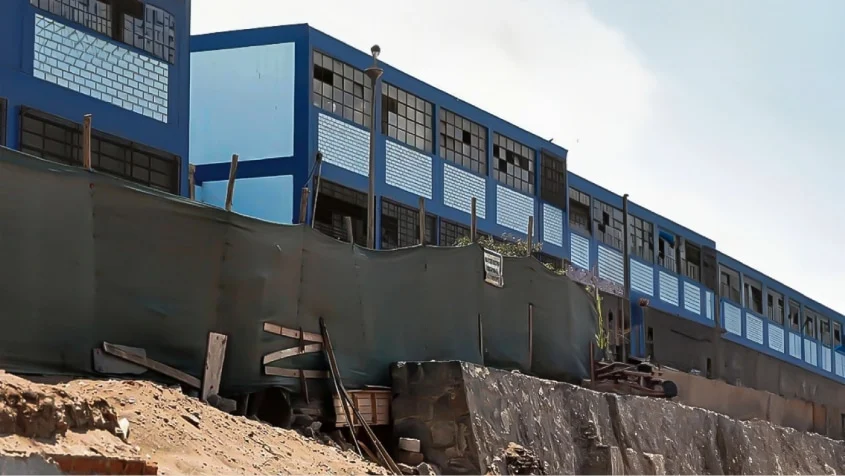
- The Post-Pandemic Reality: Following the global health crisis, the return to face-to-face learning exposed the extreme fragility of the system. Many schools were found to be in states of advanced decay, with roofs collapsing, electrical systems failing, and plumbing systems completely inoperable.
- The 2024-2025 Lead-up: Throughout the past two years, MINEDU, in conjunction with regional governments, conducted comprehensive audits of school facilities. These technical reports consistently pointed to a "governance vacuum"—a failure of inter-institutional coordination that left projects stalled mid-construction.
- August 2026: With the issuance of Supreme Decree No. 013-2026-MINEDU, the government has transitioned from reactive patching to a proactive, state-level intervention, acknowledging that the status quo is no longer viable.
3. Supporting Data: The Magnitude of the Challenge
The technical justifications accompanying the decree paint a stark picture of the current state of public education in Peru. While official figures fluctuate, the national audit identified several critical indicators that necessitated this emergency declaration:
The Infrastructure Gap
Estimates suggest that the financial requirements to bring all existing public schools up to a "habitable and safe" standard run into the tens of billions of soles. This "infrastructure gap" is characterized not just by the lack of new classrooms, but by the "obsolescence" of existing ones.
Governance and Efficiency Metrics
The Ministry’s reports indicate that nearly 40% of public school projects initiated over the last decade have faced significant delays or abandonment due to:
- Deficient Technical Expedients: Errors in the initial planning phase lead to cost overruns and legal disputes.
- Lack of Maintenance Budgets: Even when schools are built, there is no standardized, automated system to ensure ongoing maintenance, leading to rapid deterioration.
- Information Asymmetry: Until now, there has been no unified, real-time database tracking the physical status of every school in the country, leading to redundant investments in some areas while others are completely ignored.
4. Official Responses and Institutional Strategy
The Ministry of Education has emphasized that this emergency is not just about building walls; it is about "reforming the architecture of the state’s educational management."
In official statements, ministry spokespeople have stressed that the emergency status grants the government the legal authority to streamline the "Technical Expedients" process. Under the current legal framework, the time taken from the approval of a project to the commencement of construction is often measured in years. This decree seeks to reduce that time by consolidating the oversight roles between the central government, regional authorities, and local municipalities.

Furthermore, the government is looking to incorporate "smart" infrastructure standards. This includes the integration of disaster-resilient designs, energy-efficient lighting, and high-speed connectivity, acknowledging that a school in 2026 must be a digital hub, not just a physical room.
5. Implications: What This Means for the Future of Peru
The implications of this decree are far-reaching, touching upon the social, economic, and political fabric of the nation.
For the Student Population
The most immediate impact is expected to be a reduction in the number of students studying in temporary, dangerous, or overcrowded conditions. By prioritizing the most critical "high-risk" facilities, the government intends to improve student attendance and, ultimately, academic performance.
For the Construction and Engineering Sector
The decree represents a massive influx of public works projects. This will require a robust collaboration between the Ministry of Education and the private construction sector. The government has signaled that it will favor firms capable of executing "integrated projects"—those that handle design, construction, and initial maintenance under a single contract—to avoid the fragmentation that caused past failures.
For Regional Governments
Perhaps the most significant shift is the strengthening of central oversight. Regional governments, which have historically struggled with the technical capacity to manage large-scale infrastructure projects, will now be supported by a more centralized, high-level task force. While this may cause friction regarding local autonomy, the government argues that the urgency of the situation necessitates a unified, top-down approach.

The Long-Term Economic Outlook
Investing in school infrastructure is arguably the highest-yielding public investment a nation can make. Modern, safe, and connected schools serve as engines for local development. By addressing these gaps, the Peruvian government is not only fulfilling a constitutional duty to provide education but is also laying the groundwork for a more competitive workforce in the coming decades.
Conclusion: A Turning Point
The declaration of a national state of emergency in education is a bold acknowledgment of a systemic failure that has long held back the potential of the Peruvian youth. While the road ahead is fraught with logistical and financial challenges, the clear commitment shown by the issuance of Supreme Decree No. 013-2026-MINEDU suggests a new era of accountability.
The success of this emergency measure will ultimately depend on the transparency of the execution process and the ability of the state to sustain these efforts beyond the current administration. As the country moves forward, the focus will remain on whether these new policies can truly turn the tide of decay and build a foundation for a modern, equitable, and resilient education system. The children of Peru deserve no less.