There exists a chilling legend about a nation trapped in a temporal loop of its own making. In this land, the ravages of natural disasters—floods, landslides, and infrastructure collapse—are treated not as anomalies, but as a recurring, cyclical history. Despite advanced warnings from meteorologists and the painful lessons of past catastrophes, the state remains perpetually unprepared. It is a narrative so steeped in administrative absurdity that it defies the bounds of traditional literature. One wonders: what title would Jorge Luis Borges have bestowed upon a short story documenting such a reality? Perhaps even the master of the labyrinthine would have found the level of institutional incompetence too surreal to capture.
However, for the residents of Peru, and specifically the Piura region, this is not fiction. It is a daily, harrowing reality. The following analysis examines the systemic failure to prepare for environmental disasters, despite the availability of massive financial resources and years of lead time.
The Main Facts: A Failure of Governance
During a recent fact-finding mission to Piura, a delegation of private sector leaders, including representatives from chambers of commerce, academics, and journalists, gathered to address the looming threat of the next El Niño phenomenon (FEN). The objective was simple: to coordinate urgent prevention efforts.
The meeting was marked by a glaring absence. Despite invitations extended to regional authorities, mayors, and central government delegates, the chairs reserved for regional leadership remained empty. This silence speaks volumes. Since the last major FEN event, regional authorities have had ample time to execute critical hydraulic projects—reinforcing riverbanks, cleaning riverbeds, and building drainage systems. Instead, progress is negligible.
The disconnect is further illustrated by the Autoridad Nacional de Infraestructura (ANIN). It took this state entity nearly a decade to achieve technical viability for essential projects, such as urban pluvial drainage and riverbank protection. While these approvals finally materialized in mid-2026, the question remains: why did it take ten years to approve work that is now a matter of life and death?
Chronology of Stagnation
To understand the depth of this crisis, one must trace the timeline of inaction that has left Northern Peru vulnerable:
- 2016–2017: The coastal El Niño causes widespread destruction. The government promises a "Reconstruction with Changes" plan.
- 2018–2022: A period characterized by bureaucratic inertia. Budgetary allocations are made, but project designs remain stalled in the "viability" phase.
- 2023: Rising alarm over climate forecasts. Private sector entities begin lobbying for accelerated emergency intervention.
- June–July 2026: ANIN finally grants technical viability for major drainage and river protection projects, years after the initial damage occurred.
- Late 2026: Despite approvals, the physical execution on the ground remains stagnant, with the rainy season looming.
This chronology reveals a cycle: a disaster occurs, panic ensues, funds are earmarked, administrative hurdles are erected, and then the disaster hits again before the solutions are ever built.
Supporting Data: The Myth of Budgetary Scarcity
A common refrain from apologists for the current administration is that "there is simply no money." This argument is not only disingenuous; it is mathematically false.
Data analysis indicates that the Piura region accumulated approximately S/4,000 million in canon, over-canon, and mining royalties between 2016 and 2025. Furthermore, the region has access to an even greater pool of funds through the "Works for Taxes" (Obras por Impuestos) mechanism. The issue is not a lack of liquidity; it is an absolute failure of management.
When a region sits on billions of soles while its citizens face the annual threat of losing their homes and livelihoods, the classification of this failure shifts from "administrative oversight" to "criminal negligence." The cost of inaction is exponentially higher than the cost of prevention. It is measured first in the irreplaceable loss of human life, and second in the total destruction of regional productive infrastructure—agriculture, transportation, and small-scale commerce.
Official Responses and the Culture of Silence
The absence of regional officials at the recent summit in Piura is emblematic of a broader, deeper problem: the disconnect between the political class and the public interest. When requested to comment on the lack of progress, local and regional authorities often point fingers at the Central Government, while the Central Government cites "technical delays" and "bureaucratic requirements."
This blame-shifting is a well-oiled machine. By fragmenting responsibility across various ministries and local jurisdictions, no single entity is ever truly held accountable for the failure to prevent flooding. The "well-intentioned" defenders of this status quo argue that the complexity of the Peruvian state makes rapid action impossible. However, the private sector has repeatedly demonstrated that when the bureaucracy is bypassed or streamlined, large-scale projects can be completed in a fraction of the time.
The Implications: A Race Against the Clock
We are currently in a critical window. With only three months remaining before the peak of the rainy season, large-scale structural works are no longer feasible. However, this does not mean the situation is hopeless.
The immediate imperative is to protect human life, physical integrity, and public health. This requires a shift from "long-term planning" to "emergency triage." The following actions must be prioritized immediately:
- Desilting and Dredging: Rapid cleaning and deepening of river channels to ensure maximum flow capacity.
- Infrastructure Clearing: Removal of debris and obstructions in urban drainage systems.
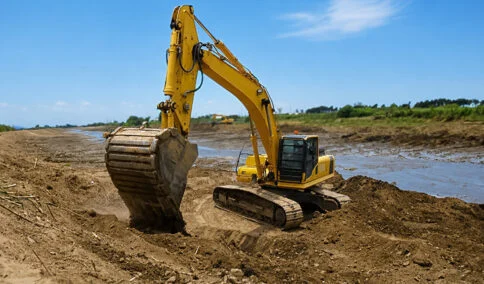
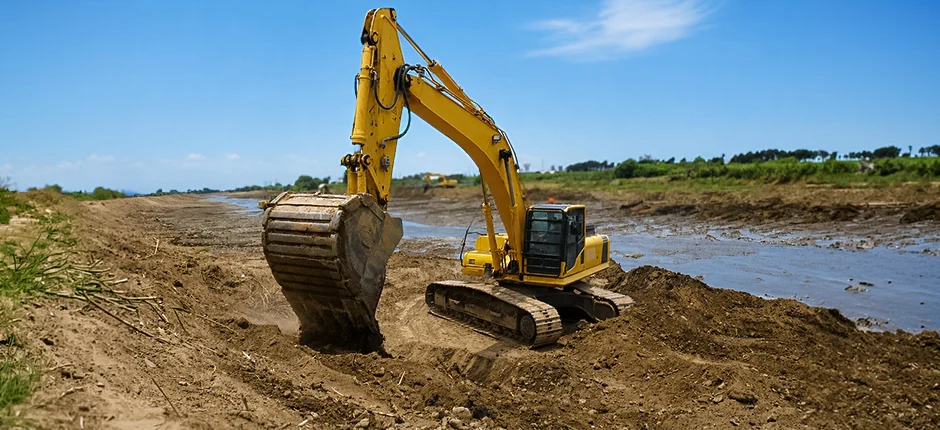
- Channel Expansion: Immediate widening of the spillway channels in the Piura River to prevent overflow into urban centers.
The Way Forward: A Call for Urgency
The private sector in Peru possesses the logistical capacity and the operational agility to solve these problems. We are not merely observers; we are stakeholders in the survival of our regions. However, we are currently hampered by legislative red tape.
The Executive branch must act now to issue a Decree of Urgency that expands the use of the "Works for Taxes" mechanism. This tool is the only bridge currently available that allows the private sector to step in, finance the projects, and execute them with the speed that the government currently lacks.
If the government refuses to open this door, they are effectively choosing to let the floods return. They are choosing to keep the country trapped in this dark, circular legend.
It is time to break the cycle. We must ensure that the history of Peru’s disasters is not an eternal recurrence, but a relic of the past. We must act with the gravity that this situation demands so that, in the future, these events remain where they belong: in the pages of fiction, and not in the reality of our homes. The clock is ticking, and the rivers are waiting. The question is no longer whether we can prevent the next tragedy, but whether those in power have the will to stop being the architects of our own misfortune.