Date: September 11, 2026
The perennial debate regarding Peru’s economic trajectory has reached a fever pitch. On one side, populist factions frequently posit that the nation’s current economic framework—codified in the 1993 Constitution—is the primary culprit behind the country’s failure to achieve a full-scale industrial revolution. They argue that the constitutional focus on private initiative as the engine of growth has somehow shackled the state’s ability to foster manufacturing and industry.
However, a closer analysis suggests that this diagnosis is fundamentally flawed. The Constitution acts merely as a foundational framework; the true bottleneck lies beneath the surface, buried under a dense, bureaucratic thicket of regulations, redundant procedures, and administrative hurdles. These legislative layers have systematically stifled the flexibility required for enterprises to innovate and scale.
The Myth of the "Failed Model"
For years, the political narrative in Peru has centered on the supposed failure of the neoliberal economic model. Critics argue that the state’s limited role in direct industrial planning has led to a stagnation in manufacturing. Yet, the evidence suggests that it is not the economic model that has failed, but rather the execution of the supporting regulatory framework.
Since the turn of the millennium, the proliferation of "red tape" has acted as a silent tax on productivity. Every new regulation, often drafted under the guise of social protection, adds a layer of friction that discourages new market entrants and forces existing firms to divert resources from innovation toward mere regulatory compliance. This "legislative entanglement" is the real adversary of industrialization, not the foundational principles of private property and free-market competition.
The Agro-Export Miracle: A Blueprint for Success
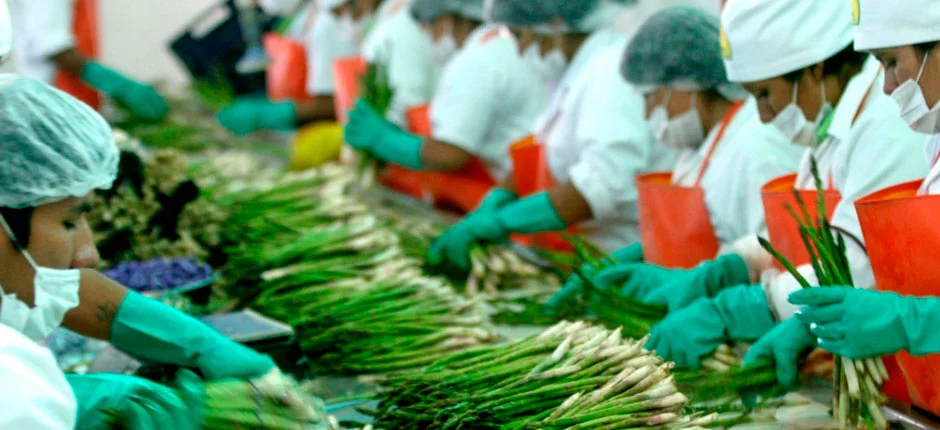
If one requires proof that the economic model is not the problem, one need look no further than the agro-export sector. Two decades ago, this industry was a marginal player, with exports totaling a mere $500 million. Today, that figure has soared to $15 billion.
From Deserts to Global Powerhouse
The transformation of Peru’s arid coastal deserts into lush, high-tech agricultural hubs is nothing short of a miracle. This success was not achieved through protectionist shielding, but by embracing global competition. By providing a stable environment and targeted promotion for a high-risk sector, the industry was able to:
- Scale Operations: Moving from local production to global supply chain integration.
- Create Employment: Generating hundreds of thousands of formal jobs in rural areas.
- Foster Inclusion: Integrating small-scale farmers into a sophisticated, high-value export ecosystem.
- Bolster Fiscal Health: Expanding the tax base through consistent, long-term growth.
This success story stands in stark contrast to the stagnant manufacturing sector, proving that when the state provides clarity and support rather than obstruction, the private sector is more than capable of competing on the world stage.
Chronology: The Struggle for Competitiveness
- 2000–2010: The rise of the agro-export sector. Implementation of the Agricultural Promotion Law, which provided the necessary tax stability for long-term investment.
- 2011–2018: The "Goldilocks" period. The sector continues to expand, diversifying crops from asparagus and grapes to blueberries and avocados, establishing Peru as a global leader.
- 2019–2022: Political volatility begins to affect the regulatory environment. Populist rhetoric shifts, targeting "excessive profits" in the agro-export sector.
- 2023: Introduction of a 30% surcharge on wages in the agricultural sector, significantly increasing labor costs during a period of global inflation.
- 2024–2025: Debates emerge regarding the repeal of key tax incentives. The sector faces the dual pressure of the El Niño weather phenomenon and rising costs.
- September 2026: The current impasse. Stakeholders argue that the sector is at a crossroads—either return to a policy of incentivization or face a decline in global competitiveness.
Supporting Data: The Impact of Policy Shifts
The success of the agro-export sector was built on the premise that "tax stability equals long-term investment." The removal of these incentives, combined with the 30% wage increase, has created a "competitiveness gap."
| Period | Export Value ($B) | Sector Status |
|---|---|---|
| 2005 | $1.2 | Early Growth |
| 2015 | $6.5 | Consolidation |
| 2025 | $15.0 | Peak Competitiveness |
| 2026 (Est.) | Variable | At Risk due to policy changes |
Critics of the current tax regime argue that the sector has "earned enough." This, however, is a dangerous misreading of market dynamics. Agriculture is a capital-intensive industry with thin margins, highly susceptible to climate change and global price fluctuations. Penalizing the sector just as it faces the impact of the El Niño phenomenon is not "social justice"—it is economic sabotage.
Official Responses and Political Friction
The legislative push to roll back benefits for the agro-export industry has been met with staunch opposition from economic analysts and industry associations.
Proponents of the cuts argue that the state needs additional revenue to cover social programs. However, economists warn that by eroding the competitiveness of the sector, the government is effectively killing the "goose that lays the golden egg." If the sector’s exports contract, the loss in future tax revenue will far exceed the short-term gains from removing these incentives.
"The narrative that the sector has reached a saturation point is a fallacy," says one leading economist. "Global demand for Peruvian produce continues to grow. The limitation is not the market; the limitation is the internal cost structure created by recent, ill-advised legislative interventions."
The Path Forward: Infrastructure and Deregulation
To replicate the success of the agro-export industry in other sectors, Peru must shift its focus from "redistributing" to "expanding."
1. Unlocking Irrigation Projects
The single most important factor in the success of the coastal agro-industry was water management. Yet, many of the large-scale irrigation projects that were planned over the last decade remain unfinished or stalled in bureaucratic limbo. Completing these projects is essential to doubling or tripling production capacity.
2. A Call for Deregulation
For other industries to compete globally, the government must undertake a comprehensive audit of the regulatory burden. This involves:
- Simplification: Reducing the number of permits required to launch a new manufacturing facility.
- Digitalization: Eliminating in-person, paper-based bureaucratic processes.
- Legal Stability: Ensuring that tax and labor laws are not subject to the whims of the current political cycle.
3. Investing in Productivity
Infrastructure is not just about roads and ports; it is about energy, digital connectivity, and human capital. A workforce that is trained in modern technical skills will be more productive and, by extension, earn higher wages—not because the government mandates it, but because the market rewards it.
Implications: A Choice for the Future
The debate over the economic model is, at its core, a debate over the vision of Peru’s future. One path leads toward a state-centric model where the government attempts to control and micromanage industrial growth, a strategy that has historically led to stagnation and inefficiency. The other path—the one that fueled the agro-export miracle—leverages the power of the private sector, provides clear and stable rules of the game, and focuses on removing the obstacles that keep millions of Peruvians from reaching their full potential.
If Peru is to truly industrialize, it must stop treating the economic model as a scapegoat for political failure. The tools for success are already in our hands. The question is whether policymakers have the courage to stop "trapping" the economy and start fueling it. The success of the last twenty years was not an accident; it was the result of a conscious choice to compete. To continue that progress, the country must recommit to that same vision: a competitive, open, and robust economy that creates value for all citizens, not just for a privileged few.