Executive Summary
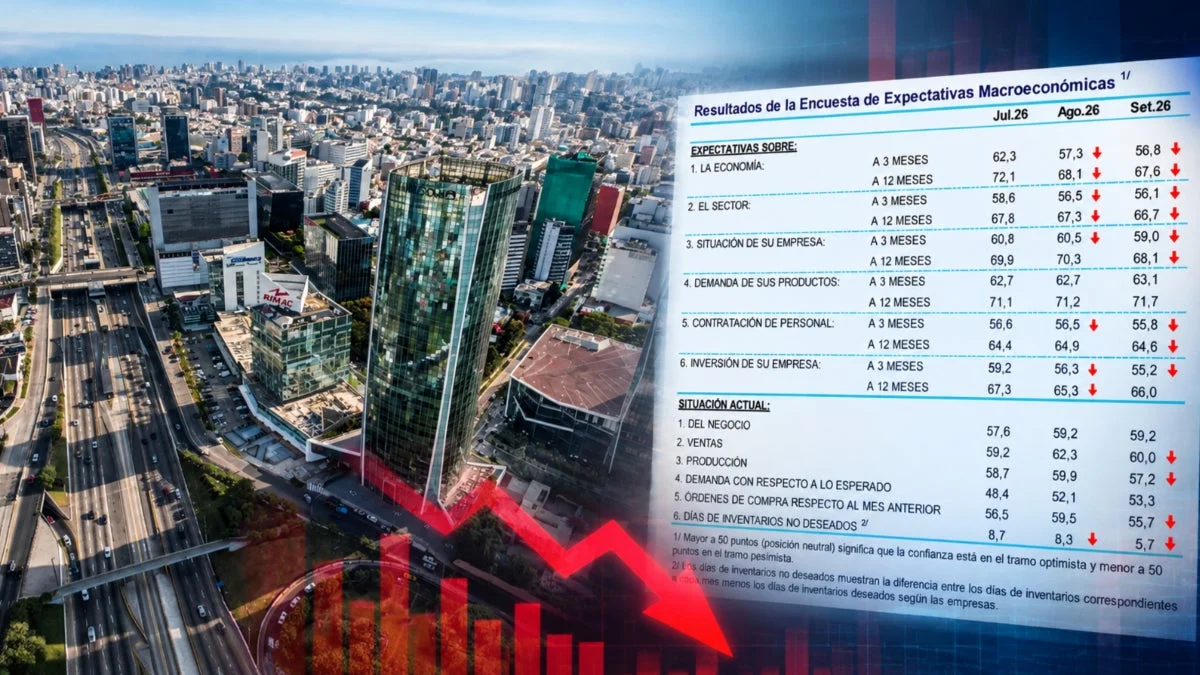
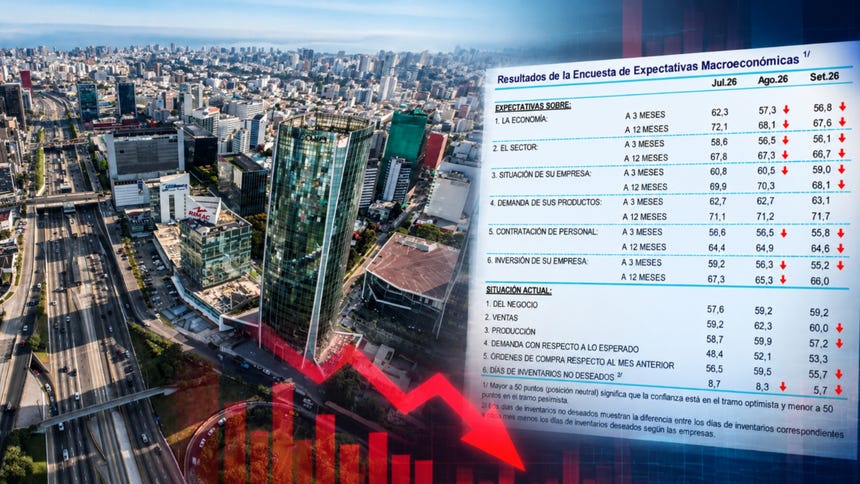
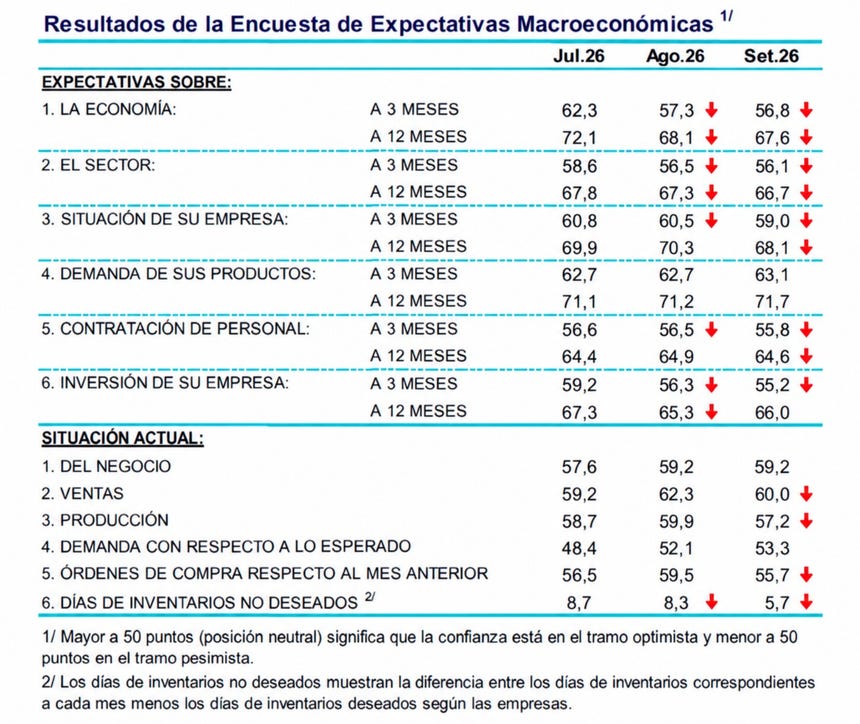
The Peruvian business landscape, which experienced a surge of euphoria following the inauguration of President Keiko Fujimori in July 2026, is currently undergoing a period of recalibration. According to the latest survey conducted by the Central Reserve Bank of Peru (BCRP), business confidence has begun to wane, with key indicators for investment, sales, and hiring experiencing a consistent retreat over the last two months. While the sentiment remains technically in "optimistic" territory—staying above the critical 50-point threshold—the momentum that characterized the mid-year period is dissipating as corporations adopt a more cautious stance regarding the near-term economic horizon.
A Chronology of Sentiment: From Euphoria to Caution
The trajectory of business sentiment in 2026 has been marked by a distinct "honeymoon" phase followed by a reality check.
July 2026: The Peak of Expectation
Following the transition of power, the private sector reacted with significant enthusiasm. Business expectations regarding the economy shattered the 70-point barrier, a symbolic milestone indicating robust optimism. During this period, the leadership of organizations like the Confederation of Private Business Institutions (Confiep) hailed the new administration as a "historic opportunity" to unlock latent projects and accelerate national investment.
August 2026: The First Signs of Moderation
As the initial fervor settled, August marked the first month of contraction. While corporate perception of current operations remained strong, there was a visible shift in tone regarding the medium-term outlook. Companies began to articulate concerns about the sustainability of the economic rebound, citing structural risks that had previously been overshadowed by political optimism.
September 2026: The Sustained Downturn
The latest data from the BCRP confirms a second consecutive month of decline. The erosion of confidence is no longer a localized dip but a trend affecting multiple dimensions of corporate activity, from capital expenditure (CAPEX) to labor demand and order volumes.
Data Analysis: Where the Indicators Are Slipping
The BCRP report provides a granular look at how the shift in sentiment is manifesting in business operations.
Capital Expenditure and Investment
The most concerning metric is the expectation for business investment over the next three months. The indicator fell from 59.2 points in July to 56.3 in August, and further to 55.2 in September. This represents a cumulative decline of 4 points in just 60 days. While remaining above the 50-point "neutral" threshold, the downward slope suggests that firms are putting expansionary projects on hold, preferring to wait for more clarity on government policy and macroeconomic stability.
The Sales and Orders Slump
A clear indicator of cooling demand is the contraction in order books. Orders for purchase dropped from 59.5 points in August to 55.7 in September, effectively erasing the gains made in the previous month. This decline in orders is mirrored by a contraction in actual sales and production figures, signaling a softening in both domestic and potentially external market demand.
Labor Market Trends
Hiring expectations—a lagging indicator of economic health—have also begun to show signs of stagnation. At the three-month horizon, the indicator has slipped to 55.8 points. While the decline is subtle, the persistent downward pressure over three consecutive months suggests that businesses are hesitant to expand their payrolls until they have greater certainty regarding the trajectory of the economy.
Factors Driving the "Cooling" Effect
Why has the optimism of July faded? Economists and industry analysts point to a confluence of factors that are forcing firms to trade boldness for prudence.
1. The Shadow of Insecurity
Citizen and business security remain the primary concern for the private sector. The perception that internal security risks could disrupt supply chains or deter investment has become a recurring theme in corporate boardroom discussions.
2. Climate Uncertainty (El Niño)
The looming threat of the El Niño phenomenon continues to weigh heavily on agricultural and textile sectors. The government’s struggle to manage the impact of climate events on regional retail and production cycles has introduced a layer of unpredictability that businesses are now factoring into their risk models.
3. Public Investment and Execution
While the private sector is eager to invest, they are closely watching the pace of public investment. Delays in the execution of government infrastructure projects can create a ripple effect, reducing the overall stimulus to the economy and impacting the secondary sectors that rely on state contracts.
4. Cost Pressures and Price Stability
Despite the overall favorable macroeconomic environment, the volatility in input costs and price levels remains a hurdle. Firms are cautious about their ability to pass on costs to consumers without dampening demand, leading to a tighter squeeze on profit margins.
Official and Industry Responses
The business community’s reaction to these figures is one of "cautious waiting." Jorge Zapata, president of Confiep, previously emphasized that the "exceptional opportunities" presented to the country must be backed by clear, consistent signals from the executive branch.
In response to the current data, government spokespeople have maintained that the fundamental indicators of the Peruvian economy remain solid. They argue that the minor cooling is a natural adjustment following the high-octane excitement of the post-election period and that structural reforms planned for the fourth quarter of 2026 will serve to bolster long-term confidence.
Economic Implications: What Lies Ahead?
The shift from "euphoria" to "cautious optimism" has significant implications for the Peruvian economy:
- Investment Stagnation: If the downward trend in investment expectations continues, the country could miss its projected GDP growth targets. Capital investment is the engine of productivity, and its deceleration is a primary concern for the BCRP.
- Fiscal Revenue Risks: A slowdown in corporate sales and hiring directly impacts tax revenue. If businesses scale back operations, the government may find it more difficult to finance its ambitious infrastructure programs, potentially leading to a vicious cycle of slowed growth.
- The 12-Month Outlook: Interestingly, the 12-month outlook remains more stable than the 3-month outlook. This suggests that while companies are worried about the immediate future (next 90 days), they still maintain a degree of faith in the long-term stability of the Peruvian market.
Conclusion: The Path Toward Stability
The Peruvian business sector is at a crossroads. The current data serves as a reminder that political goodwill is a depreciating asset if not supported by concrete economic results. To reverse the current trend and push expectations back toward the 60+ point range, the government must address the specific "pain points" identified by the BCRP survey.
Stability will require a two-pronged approach: effective management of climate risks and a robust, transparent commitment to public investment. As the country moves into the final quarter of 2026, the challenge for the administration will be to bridge the gap between the initial political enthusiasm of July and the operational reality of September. The business community remains in the "optimistic" zone, but the margin for error is shrinking, and the need for clear, decisive governance has never been more pressing.