In the Peruvian economic landscape, a profound structural crisis persists, casting a long shadow over the nation’s aspirations for sustainable development. With national labor informality rates hovering at a staggering 70%, approximately 12 million workers operate outside the protection of the formal economy. These individuals remain excluded from critical social safety nets, including health insurance, pension contributions, paid vacations, and severance indemnity (CTS).
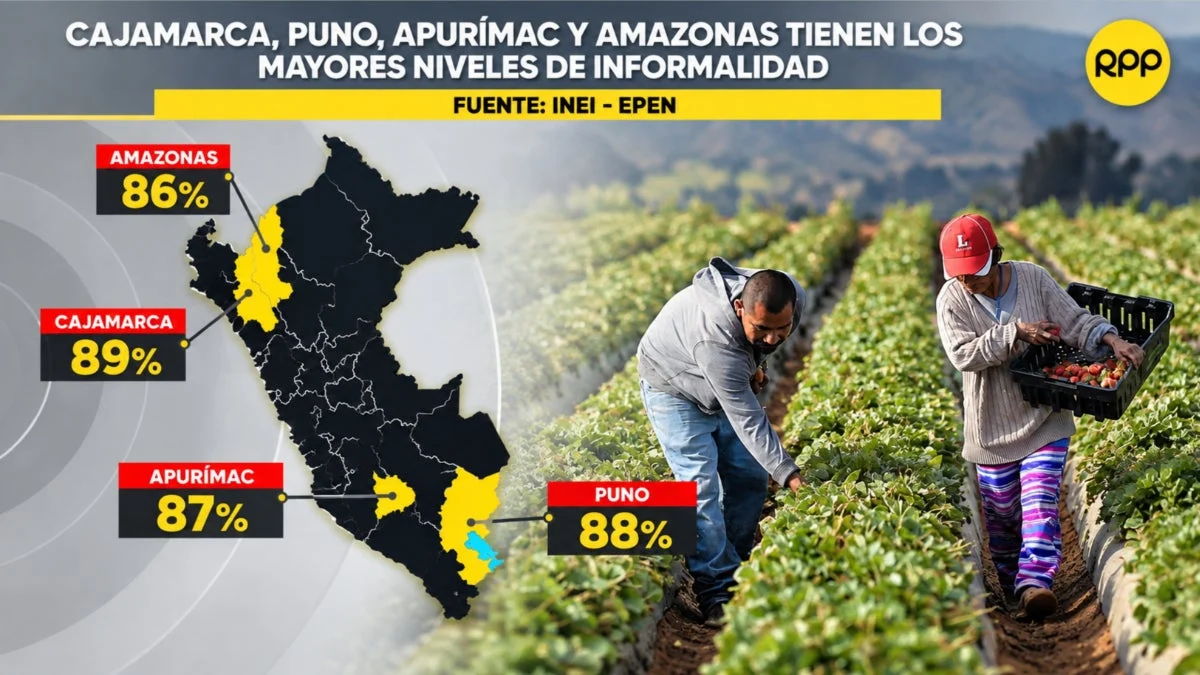
However, this national average masks a more acute reality: in four specific regions—Cajamarca, Puno, Apurímac, and Amazonas—the rate of informality exceeds 86%, meaning nearly nine out of every ten workers lack formal job security. As Peru approaches critical regional and municipal elections, the spotlight is shifting toward the incoming authorities. Can subnational governments break the cycle of low productivity and institutional neglect that keeps millions trapped in the informal sector?
The Geography of Informality: A Data-Driven Analysis
The divide between Peru’s coastal regions and its Andean and Amazonian hinterlands is stark. While regions like Lima, Moquegua, and Arequipa benefit from higher concentrations of private investment, advanced infrastructure, and service-oriented economies, the interior of the country remains heavily reliant on traditional, subsistence-based activities.
According to the Instituto Peruano de Economía (IPE), the correlation between regional informality and low-productivity sectors—specifically traditional agriculture—is undeniable. Paola Herrera, an economist at the IPE, highlights that a formal worker in Peru produces, on average, six times more than an informal counterpart. This productivity gap is not merely a statistical curiosity; it is the fundamental barrier to formalization.
The Vicious Cycle of Low Productivity
The phenomenon described by experts is a "vicious cycle." Low-productivity jobs—often found in small-scale, traditional agriculture—generate meager income. Because these activities yield such low margins, they cannot sustain the costs associated with formalization, such as tax compliance and social security contributions.
This cycle is exacerbated by deep-seated structural issues:
![La informalidad laboral roza el 90% en cuatro regiones del Perú: ¿Qué les toca hacer a los próximos gobernadores? [INFORME]](https://f.rpp-noticias.io/2026/10/02/475947_1913991.jpg?width=860&quality=80)
- Educational Gaps: A persistent mismatch between the skills taught in rural areas and the needs of a modern, digitized, and efficient labor market.
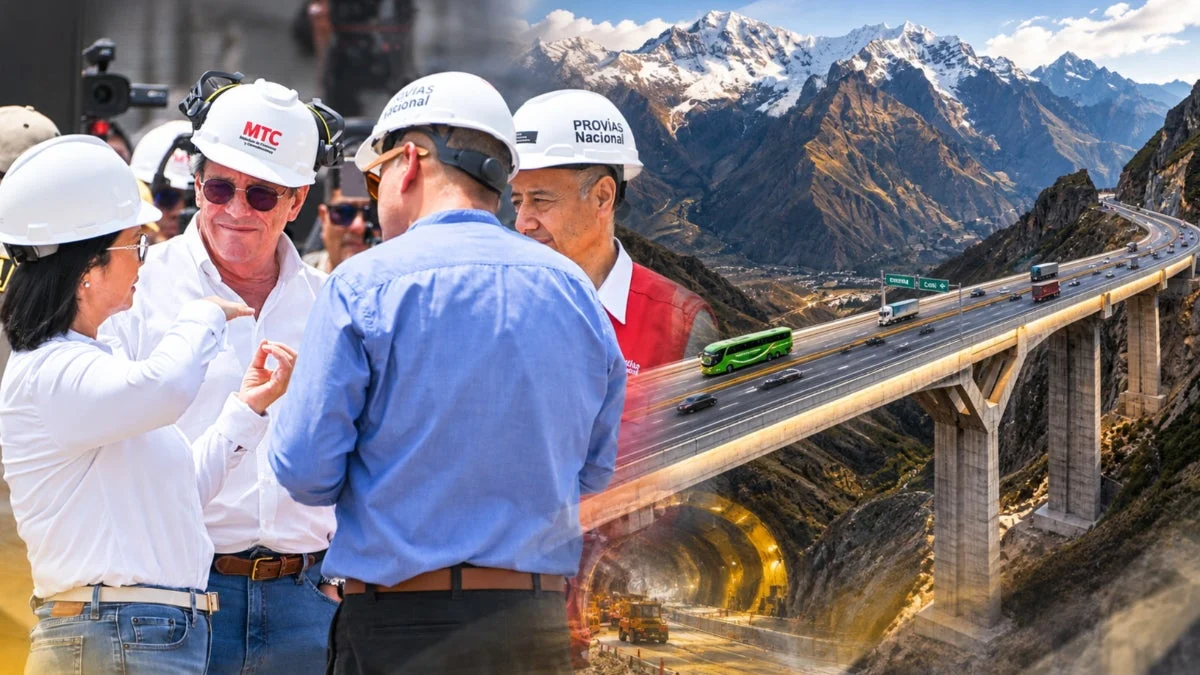
- Infrastructure Deficits: A lack of reliable energy, high-speed internet, and transportation networks limits the ability of rural businesses to scale or integrate into regional value chains.
- Institutional Fragility: Inadequate regulatory environments at the local level discourage business owners from registering their operations.
Chronology of a Chronic Challenge
To understand the current crisis, one must look at the evolution of the Peruvian labor market over the last two decades.
- The Early 2000s: Post-stabilization, Peru experienced high growth rates driven by mining and global commodity prices. While poverty decreased, the structure of the labor market remained largely unchanged. The "trickle-down" effect failed to reach the deepest corners of the informal sector.
- 2010–2019: Successive governments attempted various tax and labor reforms designed to incentivize small business formalization. While some sectors saw improvements, the "informality trap" remained resilient due to the high cost of compliance versus the perceived benefits of staying underground.
- 2020–2022 (The Pandemic Shock): The COVID-19 pandemic acted as a massive stress test, revealing the vulnerability of the 70% of the workforce without social safety nets. Millions were left without income or health support, forcing a national reckoning on the need for structural change.
- 2023–2026 (The Current Context): Rising costs of production—including fuel and fertilizers—have crippled small-scale farmers, pushing them further into the informal economy as a survival mechanism rather than a choice.
Official Responses and Stakeholder Perspectives
The debate surrounding informality has moved beyond abstract economic theory to a direct challenge for local governance. Maximandro Rojas, president of the National Convention of Peruvian Agriculture (Conveagro), provides a grim assessment of the current state of rural production.
"For many small-scale farmers, the challenge isn’t just about formalization; it’s about survival," Rojas notes. "The costs of production—fertilizers, fuel, and equipment—have skyrocketed. When you factor in the lack of rural roads and the dominance of middlemen, the small producer is left with almost nothing."
Rojas argues that the responsibility for change lies squarely with regional governments, which have been granted greater administrative powers but lack the corresponding budgetary efficiency. "The central government has transferred responsibilities for land titling and legal sanitation to the regions. Yet, these regions lack the resources or the management capacity to execute these tasks effectively. Without clear land titles, farmers cannot access the credit necessary to modernize, and without modernization, they cannot formalize."
The Call for Decentralized Competitiveness
The IPE’s Paola Herrera emphasizes that the role of a regional government is not merely to enforce labor laws, but to create an "ecosystem of competitiveness."
"Regional authorities manage more than 60% of the public budget in their respective areas," Herrera explains. "If that money is not spent on irrigation, electricity, internet, and road connectivity, the private sector will never be able to grow. A company in a remote region cannot be expected to be formal if it lacks the basic infrastructure to operate efficiently. The authorities have the tools, but they need to prioritize strategic infrastructure over short-term political gains."
![La informalidad laboral roza el 90% en cuatro regiones del Perú: ¿Qué les toca hacer a los próximos gobernadores? [INFORME]](https://f.rpp-noticias.io/2026/10/02/1913990befunky-collage-2026-10-02t105442030.jpg?width=860&quality=80)
Implications for the Future: The October Elections
As the October 4th regional elections approach, the political discourse is shifting toward "productive decentralization." The implications of these elections are significant:
- The Infrastructure Mandate: The incoming governors will be judged by their ability to complete "bottleneck" infrastructure projects—those that specifically help farmers transport goods to market and provide businesses with reliable energy and connectivity.
- Institutional Capacity Building: Beyond spending, there is a dire need for the professionalization of regional bureaucracies. The failure to manage land titling, as cited by Conveagro, is a failure of administrative management that directly prevents capital accumulation for the rural poor.
- Human Capital Development: To break the cycle of informality, regions must invest in technical and vocational training that aligns with the specific economic vocations of their territories, whether it be agro-industrial, tourism, or sustainable mining.
A Path Forward
If Peru is to move beyond the 70% informality mark, the strategy must be bifurcated. At the national level, tax and labor laws must be simplified to make formalization accessible to micro-entrepreneurs. At the regional level, the focus must be on competitiveness.
The "informality trap" is essentially an "infrastructure trap." When the state provides the basic services necessary for an enterprise to thrive—such as water, power, and logistics—the cost of staying informal becomes higher than the cost of becoming formal. By integrating the rural economy into the broader national and international market, regional leaders can turn subsistence agriculture into profitable business enterprises.
Ultimately, the goal is to transform the 12 million informal workers from a vulnerable population into a productive, protected middle class. This is not only an economic imperative; it is a fundamental requirement for the stability and legitimacy of the Peruvian democratic project in the years to come. The upcoming elections represent a critical juncture: voters will be choosing not just leaders, but the architects of their own regional economic futures. The question remains whether those elected will move beyond rhetoric to address the structural barriers that have kept so many of their citizens on the margins for far too long.