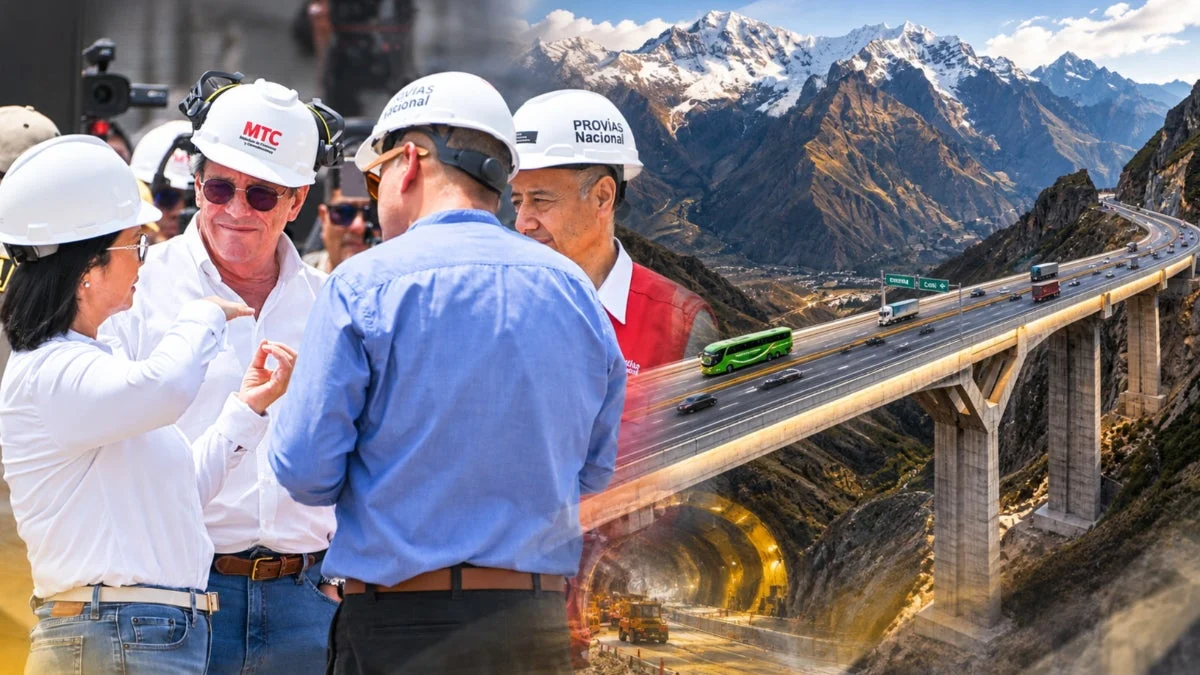
The dream of connecting Lima and Junín in less than three hours remains trapped in a bureaucratic and financial limbo. Despite being touted as a cornerstone of national development and a priority commitment of President Keiko Fujimori’s administration, the "New Central Highway"—a massive infrastructure project intended to revolutionize transport in the Peruvian Andes—is facing its most critical existential crisis to date.
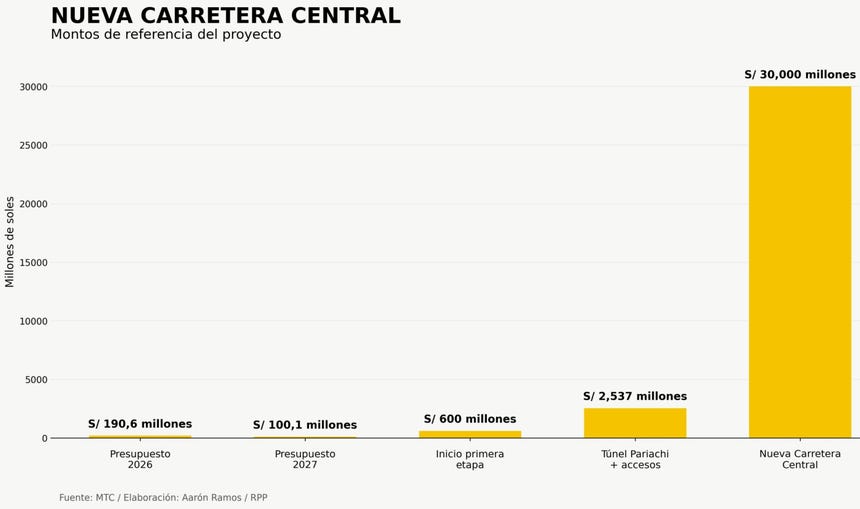
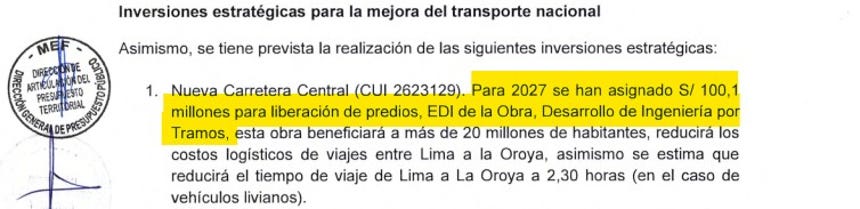
Recent developments have cast a long shadow over the project’s viability. The resignation of Minister of Transport and Communications (MTC) Rafael Rey this past Friday has left the portfolio in a state of flux, coinciding with a federal budget proposal that fails to bridge the gap between planning and physical construction. While the government has allocated S/100 million for the 2027 fiscal year, industry experts and former officials warn that this funding is exclusively earmarked for administrative tasks—land acquisition, technical designs, and engineering studies—leaving the actual construction of critical components like the Pariachi Tunnel entirely unfunded.
The Financial Chasm: Planning vs. Reality
The disparity between the project’s requirements and the government’s fiscal commitment is staggering. To initiate the construction of the Pariachi Tunnel, which is designed to connect Ate and Cieneguilla in under ten minutes, the MTC estimates a starting requirement of S/600 million. Currently, the government’s allocation for 2027 covers only a fraction of the necessary capital to break ground.
Under the current budgetary framework, the project remains in a "preparatory loop." Funding is directed toward the Estudio Definitivo de Ingeniería (EDI) and the liberation of land rights. While these are necessary procedural steps, they do not constitute physical progress. The absence of a capital investment plan for actual construction means that the project, despite its "priority" status, remains on the drafting board.
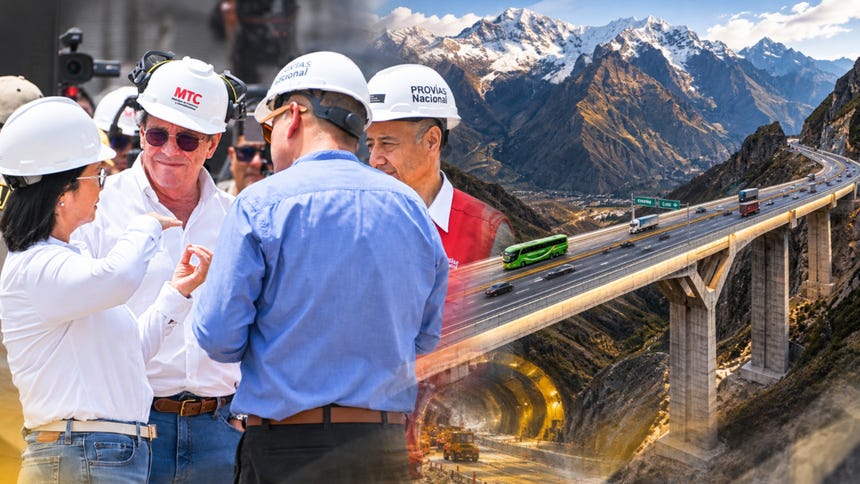
Former Minister of Transport, Paola Lazarte, has been vocal about the strategic error in this approach. "There is no strategic vision in how this project is being financed," she noted. "While it is a massive undertaking, we have reached stages where specific segments are ready for construction. If we continue to fund only studies, we run the risk of those studies becoming obsolete due to the passage of time, necessitating further expenditures to update them."
Chronology of a Stalled Megaproject
The trajectory of the New Central Highway has been marked by high-level promises followed by persistent legislative and fiscal failures:
- 2021: The Government-to-Government (G2G) agreement with France is signed, with an initial estimated cost of approximately S/11.57 billion.
- 2025: The budget for 2026 is approved under the administration of José Jerí, allocating a mere S/190 million to the project.
- Early 2026: Following intense pressure from regional governments, particularly in Junín, the administration of José María Balcázar promises a supplemental credit of S/400 million to meet the S/600 million target, with a public pledge that the Pariachi Tunnel construction would commence in July.
- Mid-2026: The promised supplemental credit is never materialized by the outgoing Congress, leaving the project without the additional funding required to launch the construction phase.
- September 2026: Minister Rafael Rey resigns from the MTC, further destabilizing the project’s leadership. The proposed 2027 budget confirms the S/100 million allocation, focusing solely on technical studies rather than construction.
The Escalating Cost of Infrastructure
The economic scale of the New Central Highway is daunting. Initially projected at S/11.57 billion, the total estimated cost has ballooned significantly. Reports from the Comptroller General’s office previously placed the figure closer to S/24.65 billion, while current market estimates suggest the total investment could reach S/30 billion.
The project is ambitious in scope, encompassing 183 kilometers of new roadway, 32 kilometers of tunnels, 13 kilometers of viaducts, 13 kilometers of containment walls, and eight highway interchanges. However, the sheer size of the project is often cited as an excuse for the lack of progress.
"One does not need to have the entire budget for the 183-kilometer road secured in a single year," argues Paola Lazarte. "The project is designed in ‘functional milestones.’ We can complete and open segments that provide immediate relief to transitability while the rest of the project is under construction."
Expert Analysis: The Strategy of Functional Milestones
The current impasse is viewed by many as a failure of prioritization. Rather than viewing the 183-kilometer stretch as an "all-or-nothing" venture, critics of the current fiscal approach suggest a phased execution model.
The Pariachi Tunnel is the primary example of a segment that is technically "shovel-ready." Because its engineering studies are finalized, there is no technical impediment to starting work, only a financial one. If the government were to focus its limited resources on these "functional milestones," it could begin to see results within the current five-year cycle.
Lazarte warns that the current trend of "perpetual planning" is a fiscal trap. "If we do not move to execution immediately after the studies are finished, the information becomes outdated. We then waste public money re-validating the same data. We need to bridge the gap between planning and construction now, or the project will simply drift further into the future."
The Political and Economic Implications
The resignation of Rafael Rey at such a critical juncture creates a vacuum in the MTC that threatens to delay the project for at least another year. Without a strong, consistent voice advocating for the project within the cabinet, the New Central Highway risks being sidelined by other, less complex administrative priorities.
Furthermore, the lack of a sustainable financial structure—such as public-private partnerships or concession models for maintenance—means that the burden of the cost falls entirely on the national treasury. This is particularly problematic in an era of fiscal tightening.
Key Stakeholder Concerns:
- Regional Stability: The government of Junín and other regional authorities are increasingly frustrated by the lack of physical progress, fearing that the "priority" status of the project is merely political rhetoric.
- Investor Confidence: The constant shifts in budget and the lack of a clear timeline for the G2G agreement implementation create uncertainty for international partners and potential private contractors.
- Transit Efficiency: The current Central Highway is notoriously prone to closures, landslides, and traffic congestion. The delay of the new project directly impacts the national economy, as the route is a vital artery for the transport of minerals and agricultural products from the highlands to the coast.
Looking Forward: A Call for Structural Reform
To rescue the project from its current trajectory, the incoming administration at the MTC faces three immediate imperatives:
- Financial Restructuring: Moving away from reliance on annual budget scraps and toward a multi-year, sustainable financing plan that includes potential private sector participation for specific segments.
- Prioritization of Milestones: Shifting the focus from the 183-kilometer goal to the immediate construction of the Pariachi Tunnel and other high-impact, low-complexity sections that can be completed in the near term.
- Administrative Continuity: Ensuring that the technical team responsible for the G2G agreement with France is shielded from political turnover, maintaining the institutional knowledge necessary to oversee such a complex engineering task.
As it stands, the New Central Highway is a project of immense potential paralyzed by a lack of political will and fiscal strategy. For the citizens of Lima and Junín, the promise of a three-hour transit remains an elusive goal—one that will require more than just updated engineering designs to bring to reality. It will require a fundamental shift in how the state views and finances the infrastructure that is meant to define the country’s future.