Executive Summary: The Infrastructure Bottleneck
The "Nueva Carretera Central" (New Central Highway), once hailed as the crown jewel of Peru’s infrastructure development, finds itself at a critical crossroads. Designed to revolutionize connectivity between Lima and the central Andean region of Junín, the project aims to reduce travel times to a mere two and a half hours, bypassing the congestion and safety risks of the existing, saturated mountain road. However, despite being officially categorized as a "priority" project by the administration of President Keiko Fujimori, the construction of its vital first component—the Pariachi Tunnel—is stalled.
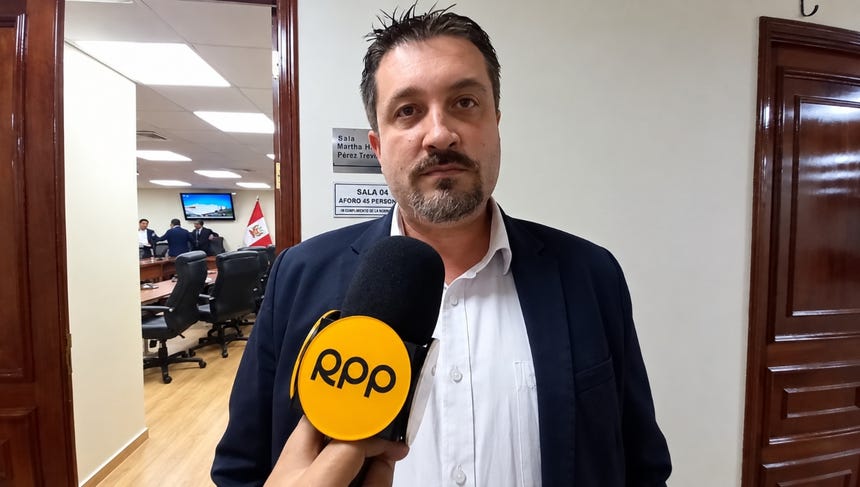
Marc Chassande, the manager of PMO Vías, the French management entity overseeing the project, has issued a stark warning: the engineering, environmental, and technical hurdles have been cleared, but a severe lack of fiscal willpower is holding the project hostage. With a total estimated cost of S/30 billion, the project’s future is currently obscured by budgetary gaps that threaten to push completion timelines toward 2035 or even 2038.
The Chronology of Instability: A Legacy of Administrative Flux
The struggle to build the New Central Highway is not merely a technical challenge; it is a symptom of systemic administrative instability. Since the initial contract was signed in 2021, the project has weathered a revolving door of leadership that would challenge the resilience of any major infrastructure initiative in the world.
To date, the project has seen:
- Six different Presidents of the Republic.
- 12 Ministers of Transport and Communications (MTC).
- 30 consecutive directors of Provías Nacional.
This constant churn in leadership has severely hampered long-term planning and institutional memory. The most recent shift involves the departure of Rafael Rey from the MTC, who left the position without securing the necessary budget to launch 2027 operations. His successor, Minister José Angello Tangherlini, is now under intense pressure, with a scheduled appearance before the Peruvian Congress on October 20 to provide a definitive roadmap for the project.
The Pariachi Tunnel: Ready to Dig, Waiting for Funds
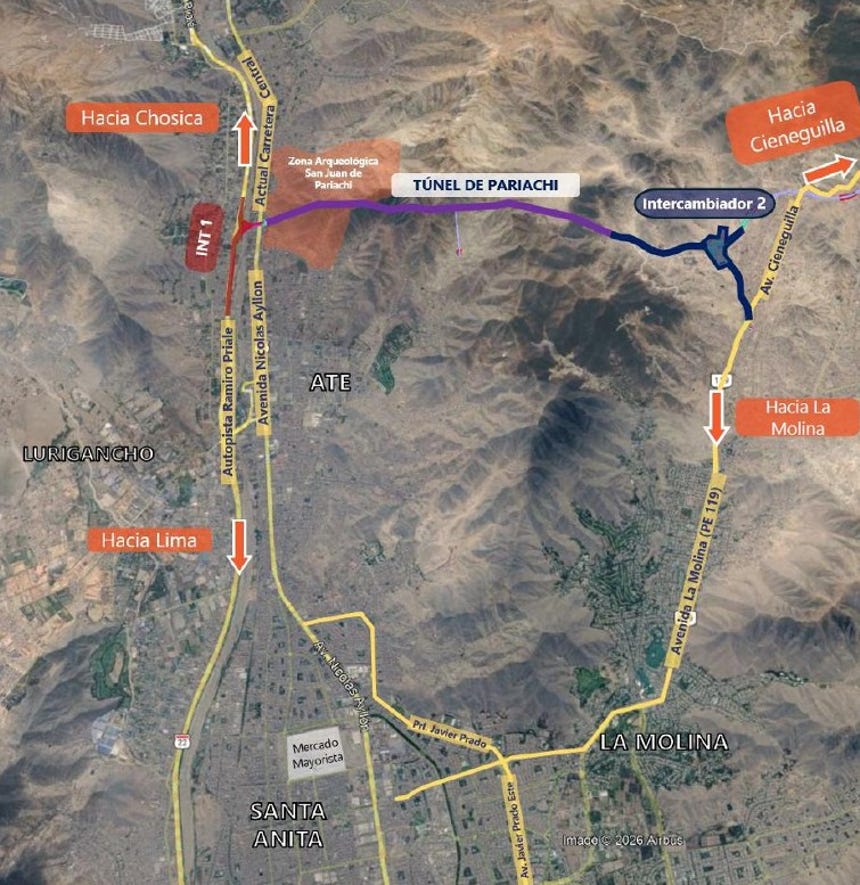
The "Pariachi Tunnel" represents the first functional unit (UF1) of the mega-project. This segment is designed to bridge the gap between Ate and Cieneguilla in less than 10 minutes, serving as the essential gateway to the entire highway network.
According to PMO Vías, the status of this unit is "shovel-ready." The firm has completed the definitive studies, secured environmental certifications, finalized technical-legal frameworks, and concluded all procurement processes. There is no technical ambiguity left to resolve.
The Financial Gap
The immediate crisis is the shortfall of S/300 million. Currently, the project holds only S/172 million in its coffers—an amount insufficient to sign the construction contracts and initiate the physical work. Marc Chassande highlighted that the government has even reallocated S/10 million previously earmarked for the project toward the "Puente Santa Rosa" bridge, further depleting the available resources.
If the government does not provide the additional S/300 million required for the immediate signing of contracts, the timeline for the start of operations will inevitably slide into 2027. Even then, the 2027 budget proposal is drastically insufficient. While the current draft budget allocates only S/100 million for the entire project, the technical requirement for 2027—to maintain the pace of construction and cover management, studies, and land acquisition—is S/876 million.
Supporting Data: Mapping the Future
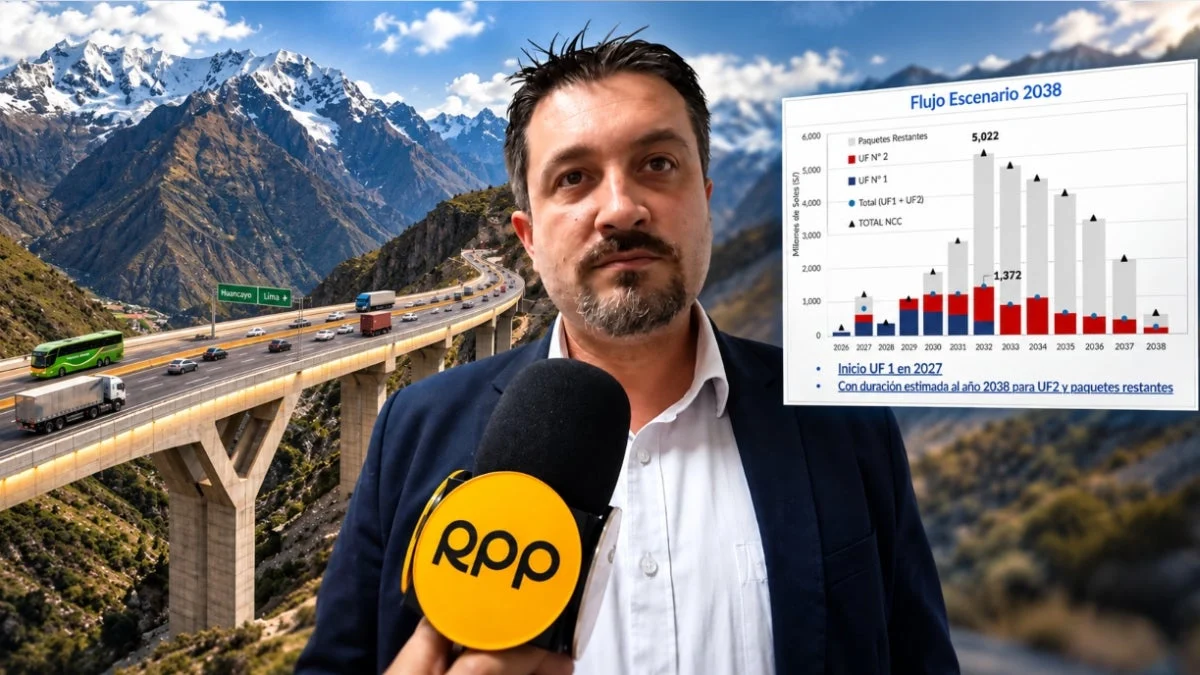
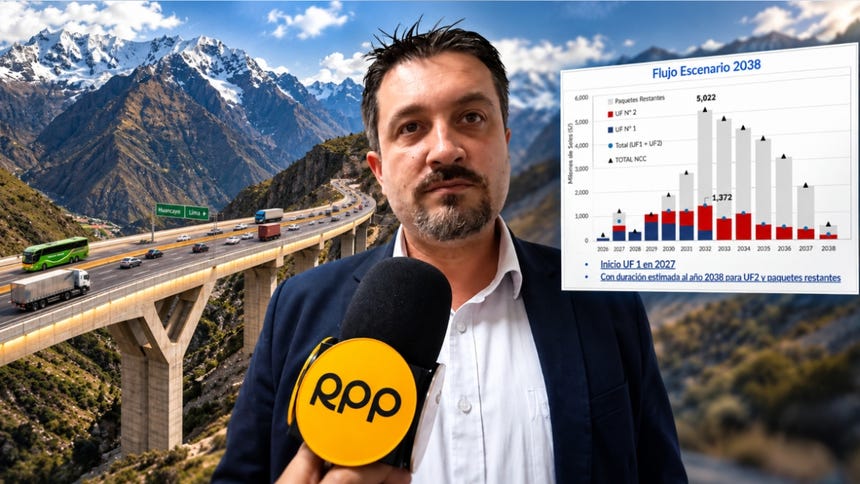
PMO Vías has presented two distinct execution scenarios to the Congressional working group led by Congressman César Muedas. Both scenarios assume that the Pariachi Tunnel (UF1) commences in 2027, but they diverge based on the flow of investment and the speed of subsequent construction phases:
- The 2035 Horizon: This is the "optimistic" scenario, requiring a steady, uninterrupted flow of capital and consistent political backing to complete the remaining functional units and the complex viaduct systems.
- The 2038 Horizon: A more conservative estimate that accounts for potential further delays in securing budget, inflationary pressure, and the logistical challenges of building 39 kilometers of tunnels and 19 kilometers of viaducts in high-altitude terrain.
The project’s segmentation strategy is a direct response to these financial constraints. By dividing the 185-kilometer highway into functional units, the project managers hope that each segment can be built and operated independently, providing early economic relief to the regions even while the more expensive or complex sections of the route remain under construction.
Official Responses and Political Accountability
The political narrative surrounding the highway has shifted from one of "grand ambition" to one of "fiscal constraint." In her July 28th address, President Keiko Fujimori reiterated her commitment to finishing the highway as a top-priority initiative. However, the disconnect between the executive branch’s rhetoric and the Ministry of Economy and Finance’s (MEF) budgetary allocations has reached a breaking point.
The Congressional Perspective
During a recent oversight meeting, representatives expressed frustration over the lack of inclusion of the New Central Highway in the 2027 budget or the supplemental credit requests currently being evaluated. The legislative branch, tasked with approving the budget, is now demanding clear explanations from the MEF. The resignation of former Minister Rafael Rey has left a vacuum of accountability, with stakeholders wondering if the government truly possesses the fiscal capacity to fulfill its promises.
The PMO Vías Stance
The French management team remains firm: "The engineering is not the problem," says Chassande. "The engineering is there, the environmental certification is there, the technical file is there, the procurement is there. What we need is for the Peruvian State to decide whether it wants to start this work or not."
Implications for Peru: Economic and Social Costs
The failure to move forward with the New Central Highway has profound implications for the country:
- Economic Stagnation: The existing road is already at capacity. Constant delays and accidents on the current route cause significant losses in logistics, freight, and agricultural exports from Junín to Lima.
- Loss of Investor Confidence: The constant turnover of officials and the inability to fund a project that has already reached the procurement phase sends a negative signal to international firms and investors regarding the reliability of the Peruvian government as a partner.
- Regional Disparity: The central region of Peru, a vital source of produce and minerals, remains effectively isolated from the capital by a bottleneck that stifles economic growth and social integration.
- Cost Escalation: With every passing month of delay, the cost of the project is likely to rise due to inflation, the depreciation of the currency, and the need to maintain, update, or renegotiate contracts that have been left in limbo.
Conclusion: The October 20th Turning Point
The upcoming report from the Minister of Transport, José Angello Tangherlini, to the Congress on October 20th will be a defining moment. It is expected that he will either present a credible plan to secure the necessary funding—perhaps through a new supplemental credit or a reorganization of public spending—or continue the cycle of uncertainty.
For the citizens and businesses that rely on the vital link between the coast and the highlands, the "New Central Highway" is no longer just a construction project; it is a test of the state’s ability to execute long-term, nation-building infrastructure. The technical feasibility of the Pariachi Tunnel proves that the path is clear; the only remaining obstacle is the political will to provide the funding necessary to transform this vision into a reality. As Chassande noted, "Every day that passes is a day lost at the end for the project." In a country hungry for development, the time for administrative excuses is running out.