The state-owned energy giant, Petroperú, finds itself at a critical juncture. As the Peruvian government moves forward with an aggressive reorganization plan, the future of the nation’s primary refinery—and the company’s very survival—hangs in the balance. Minister of Energy and Mines, Guillermo Shinno, has laid out a clear, if demanding, path: achieve operational autonomy and fiscal efficiency, or face the prospect of external management.
Main Facts: The Mandate for Efficiency
The central pillar of the current administration’s strategy is the implementation of the Emergency Decree 010-2025. This legal framework serves as the blueprint for transforming Petroperú into a "leaner, more agile, and more efficient" entity. Minister Shinno has emphasized that the primary goal is not the wholesale privatization of the company, but rather the optimization of its ten distinct lines of business.
Under the guidance of ProInversión, these ten business units are currently undergoing rigorous performance assessments. Each unit must demonstrate its ability to function as a self-sustaining enterprise. The Refinería de Talara—the company’s flagship asset—is at the center of this scrutiny. While the government remains committed to keeping Petroperú under state control for the time being, the Minister’s stance is pragmatic: if internal management cannot turn these units into profitable ventures, the government is prepared to explore "alternative schemes," specifically the integration of private management.
Chronology of a Crisis and Reorganization
The current situation is the culmination of years of financial volatility, high debt loads, and operational setbacks.
- Mid-2024: The financial strain on Petroperú becomes acute. A combination of anomalous sea conditions, lack of crude oil, and mounting debt triggers operational paralysis at the Talara refinery.
- Late 2024: The government announces a sweeping reorganization plan, including the planned reduction of 954 jobs to lower operating costs and streamline the corporate hierarchy.
- Early 2025 (The Decree): The publication of Emergency Decree 010-2025 formalizes the restructuring process, mandating a forensic analysis of the Talara refinery to identify the root causes of its underperformance.
- Present Day: Petroperú continues to navigate the complexities of securing a $2 billion state-backed credit facility. The creation of "Petroperú Invest," a special purpose vehicle (SPV) supported by a trust, marks the latest attempt to satisfy the concerns of international financial markets.
Supporting Data and Financial Hurdles
The financial landscape for Petroperú remains precarious. Despite the legislative approval of a $2 billion support package over two months ago, not a single dollar has been disbursed. This delay is largely due to the stringent requirements imposed by the financial sector, which has remained skeptical of the company’s previous governance and operational model.
The Financial Bridge
To address the liquidity crisis, the government has moved to secure a "bridge loan" of approximately $500 million. This initial tranche is intended to stabilize immediate operations and facilitate the purchase of crude oil, which has been restricted due to payment delays to suppliers. The remaining $1.5 billion is contingent on the successful implementation of the trust structure and the long-term viability proofs provided by the new SPV, Petroperú Invest.
Market Volatility as a Temporary Relief
Paradoxically, the recent volatility in international fuel prices has provided a brief respite for the company. Minister Shinno noted that higher global prices have allowed Petroperú to generate a "momentary surplus." This, in turn, has permitted the company to settle some of its most pressing obligations with suppliers, thereby easing the supply chain bottlenecks that had threatened to halt operations entirely. However, the Minister was quick to clarify that this is a temporary buffer, not a structural solution.
Official Responses and Strategic Vision
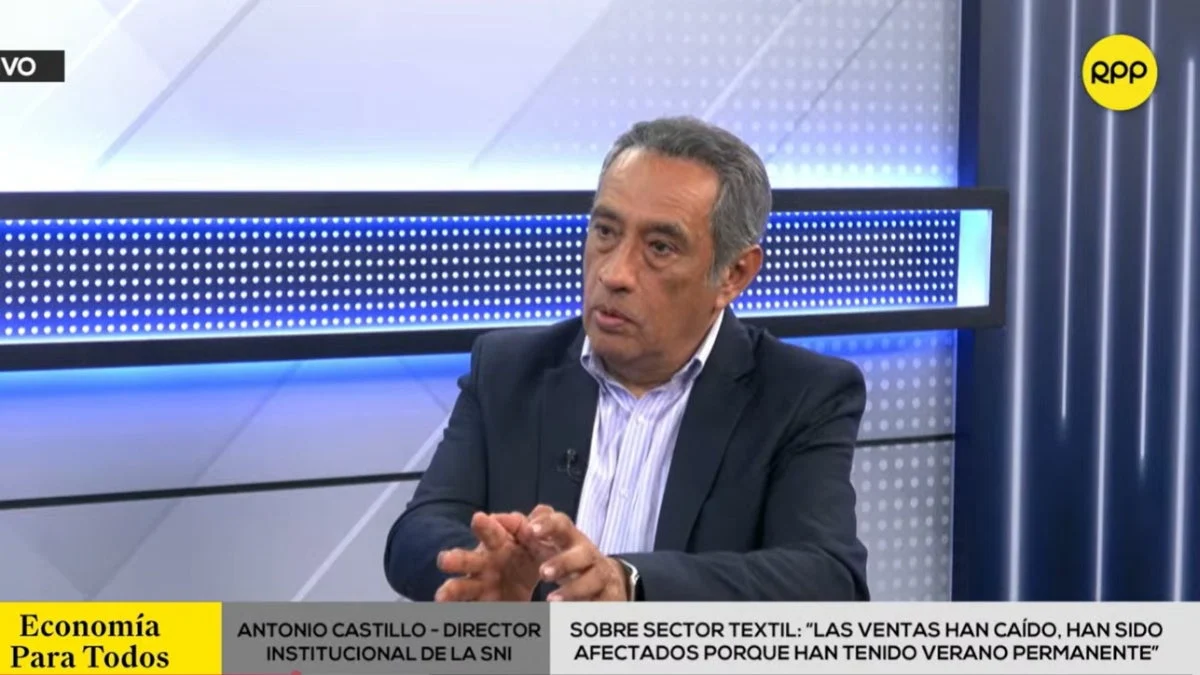
In an interview on RPP’s Economía para Todos, Minister Shinno clarified the government’s red lines regarding the private sector. "Today, that is not being considered," he stated regarding the total transfer of Petroperú to private hands. "Right now, we want Petroperú itself to be efficient. If it is not, we will see what alternatives we have later, among which could be private management of some of the business lines."
This represents a nuanced shift in policy. By keeping the threat of private management on the table, the government is signaling to the company’s labor unions and internal management that the "status quo" is no longer an option. The mandate is clear: generate value, manage costs, and satisfy the market, or relinquish control.
Implications for the Peruvian Economy
The success or failure of this restructuring carries profound implications for the Peruvian economy.
1. Energy Security
Petroperú is a cornerstone of the national energy supply. Any prolonged failure in its ability to process or distribute fuel creates a ripple effect, increasing costs for transport, agriculture, and industrial sectors. Ensuring the Talara refinery functions at optimal capacity is not merely a fiscal goal; it is a matter of national security.
2. The Credibility of State Enterprises
The case of Petroperú serves as a litmus test for the effectiveness of state-run corporations in the modern market. If the government fails to execute this turnaround, it may force a national debate on the fundamental role of the state in the energy sector. A successful restructuring, however, could prove that state enterprises can operate with the same efficiency as private counterparts when subject to strict oversight and professionalized management.
3. The Debt Burden
The $2 billion rescue package is essentially a bet on the future. Should the restructuring fail, the taxpayer will be left to cover an even larger deficit. The reliance on Petroperú Invest and the new trust structure is an attempt to ring-fence the company’s assets from political interference, a move that rating agencies and international lenders are watching closely.
Conclusion: A High-Stakes Transformation
The strategy articulated by Minister Guillermo Shinno is one of "forced evolution." By prioritizing internal efficiency and reserving private management as a fallback, the government is attempting to modernize Petroperú without triggering the political firestorm that usually accompanies privatization.
As the company awaits the release of the bridge funding and continues the painful process of downsizing its workforce, the pressure is mounting. The coming months will be decisive. Whether Petroperú emerges as a lean, competitive player or continues to be a drain on the national treasury depends on the execution of the 010-2025 decree. For now, the refinery at Talara and the newly formed Petroperú Invest are the front lines of a battle to prove that the state can indeed manage its most vital assets with the efficiency required by the 21st-century global market.