Arequipa, Peru – In a significant milestone for junior mining exploration, Canada-based Radius Gold Inc. has officially secured the regulatory authorizations required to commence drilling operations at its flagship Tierra Roja copper project. Located in the district of Ático, within the Caravelí province of Arequipa, the project is now poised to enter a critical phase of testing that could redefine the company’s asset portfolio and regional exploration potential.
The authorization, granted by the Regional Directorate of Energy and Mines (GREM) of the Arequipa Regional Government, marks the conclusion of a complex, months-long administrative journey. This permit unlocks the path for Radius Gold to probe the subsurface of a project that has already generated considerable excitement among investors and geological experts alike.
The Path to Permitting: A Chronology of Bureaucratic Navigation
The path to the drill rig at Tierra Roja was far from straightforward, reflecting the rigorous, multi-layered regulatory environment of the Peruvian mining sector. Because the project is situated on unoccupied state-owned land, the legal framework mandates two distinct primary approvals: environmental clearance for drilling activities and a surface rights agreement (derecho de superficie) granted by the Superintendence of National State Assets (SBN).
A Timeline of Regulatory Milestones
- 2025 – Environmental Baseline: Radius Gold successfully secured the necessary environmental permits, which covered the proposed drilling platforms and essential access infrastructure.
- January 2026 – Technical Review: The Regional Directorate of Energy and Mines (GREM) approved the technical review of the surface access, marking a pivotal step forward. The file was subsequently transferred to the SBN for final surface rights processing.
- March 2026 – Provisional Access: The SBN granted provisional access, clearing the way for the company to finalize its application with the regional mining authority.
- Mid-2026 – The Coordination Hurdle: The final issuance of the GREM authorization hit a snag due to a technical observation from the SBN regarding project coordinates. Radius Gold acted swiftly, filing an appeal that ultimately resolved the discrepancy.
- October 2026 – Final Authorization: With the administrative barriers removed, the GREM issued the final permit, allowing operations to commence while the definitive easement process is finalized.
This successful navigation of Peruvian bureaucracy serves as a testament to the company’s persistence. By securing the provisional access, Radius Gold can now move forward with on-site preparations while long-term land usage terms are codified.
Strategic Preparation: Beyond the Paperwork
While the regulatory process unfolded, the technical team at Radius Gold remained proactive, ensuring that once the "green light" was received, they would hit the ground running. The company has not merely waited for permissions; it has aggressively expanded its understanding of the geological potential at Tierra Roja.
Geophysical and Geochemical Advancements
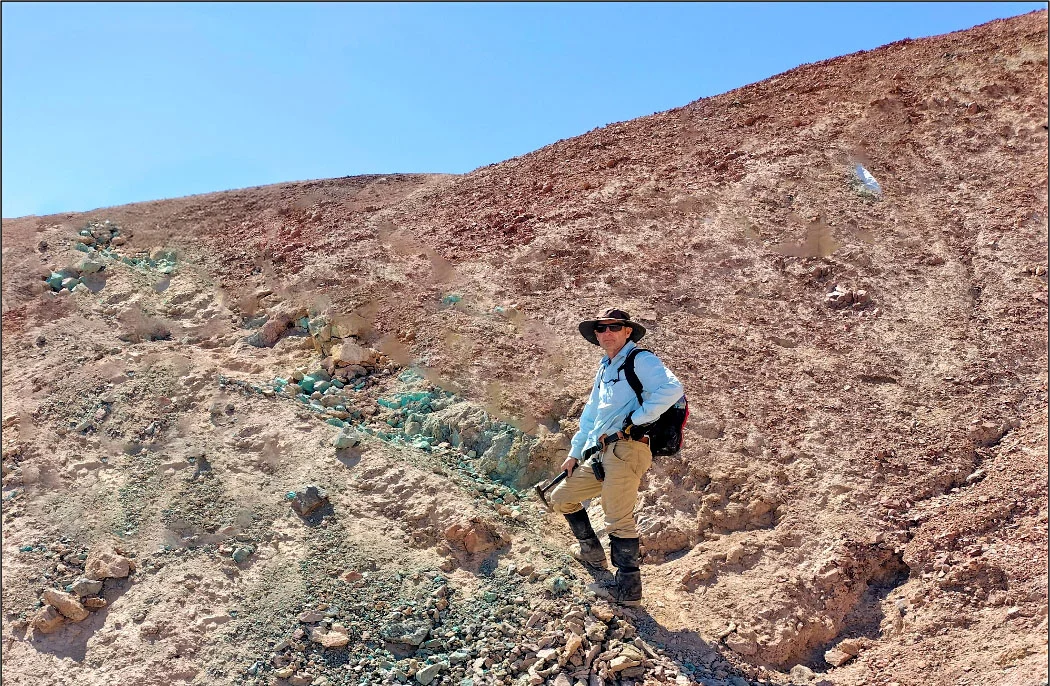
The company has completed comprehensive geophysical surveys, specifically magnetometry and induced polarization (IP) studies, across the entire property. These surveys have identified significant anomalies in resistivity and chargeability at depth, providing a compelling target beneath the surface copper mineralization hosted in Jurassic volcanic rocks.
Furthermore, the team has expanded its geochemical rock sampling footprint. By moving beyond the core zone that dominated previous campaigns, the company aims to delineate the full extent of the mineralized system. These samples are currently undergoing laboratory analysis, with results expected to provide further validation for the upcoming drill targets.
Tackling the "Caliche" Challenge
A unique geological characteristic of the project is the extensive layer of caliche—a hardened natural cement of calcium carbonate—that blankets much of the area. To mitigate the uncertainty this creates, Radius Gold is evaluating innovative sampling methods. These include shallow percussion drilling and auger sampling, designed to penetrate the cover and gather representative geological data before deep-core drilling begins.
Official Perspective: Leadership’s Vision
Luke Longridge, President of Radius Gold, expressed a blend of relief and intense anticipation following the receipt of the permits. For Longridge, the bureaucratic delay was a necessary hurdle in the broader strategy to de-risk the project.
"I am extremely pleased that we finally have the necessary authorizations to begin drilling," Longridge stated. "While the delay regarding the provisional surface rights from the SBN was challenging, we have used that time to sharpen our geological model. We are excited to test the Tierra Roja target, and we are currently finalizing logistics to ensure we start as soon as possible."
The company is now in the active phase of contract negotiations, road access preparation, and the establishment of an on-site field camp. The primary objective remains firm: to initiate the inaugural diamond drilling program before the close of 2026.
Supporting Data: Why Tierra Roja Matters
The geological profile of Tierra Roja is what continues to drive investor confidence. The main target corridor spans approximately 750 meters in strike length and 450 meters in width, concealed partially by the aforementioned caliche.
The proposed drill holes are specifically designed to test the northern portion of the project. Here, the convergence of geochemical signals, geophysical anomalies, and geological mapping strongly suggests that the copper-bearing system continues and potentially intensifies at depth.
Corporate Growth and Financial Footing
Radius Gold’s commitment to the project is underscored by its aggressive expansion of the land position. Since the acquisition and optioning of the initial concessions in late 2024, the company has increased its project footprint from 600 to 1,870 hectares.
This expansion has been supported by a robust financial strategy. In August 2026, the company successfully closed a private placement of $1.248 million. These funds were earmarked specifically to fuel the exploration campaigns at Tierra Roja and the promising Jonco silver project, ensuring that the company maintains sufficient liquidity to execute its ambitious drilling timelines.
Market Reaction and Broader Implications
The news of the permit approval sent shockwaves through the market, highlighting the high sensitivity of junior mining stocks to regulatory progress. On October 7, 2026, shares of Radius Gold (TSXV: RDU) surged by 44.8% during the trading session. The stock reached a high of 0.22 Canadian dollars before settling around the 0.21 mark.
For the junior exploration sector, such a rally is indicative of the "discovery premium" investors are willing to pay when a company moves from the planning phase to the active drilling phase. The market is clearly banking on the possibility that Tierra Roja could be a significant new copper discovery in a prolific mining jurisdiction.
What Lies Ahead
The immediate future for Radius Gold is defined by execution. The "ball is now in the court of the drillers." With the permit in hand and the infrastructure being deployed, the upcoming weeks will see the first bits hitting the rock.
The implications for the company are twofold:
- Validation of Geological Model: The results of the first few holes will determine whether the subsurface aligns with the geophysical interpretations, effectively confirming the project’s viability.
- Increased Valuation: A successful discovery would significantly alter the valuation of the company, potentially attracting interest from mid-tier and major mining firms looking to bolster their copper reserves in Peru.
As the company sets up its camp and begins the mobilization of heavy equipment, the mining community will be watching closely. In the world of mineral exploration, success is rarely a straight line, but for Radius Gold and the Tierra Roja project, the path to discovery has finally been cleared.