By Editorial Staff
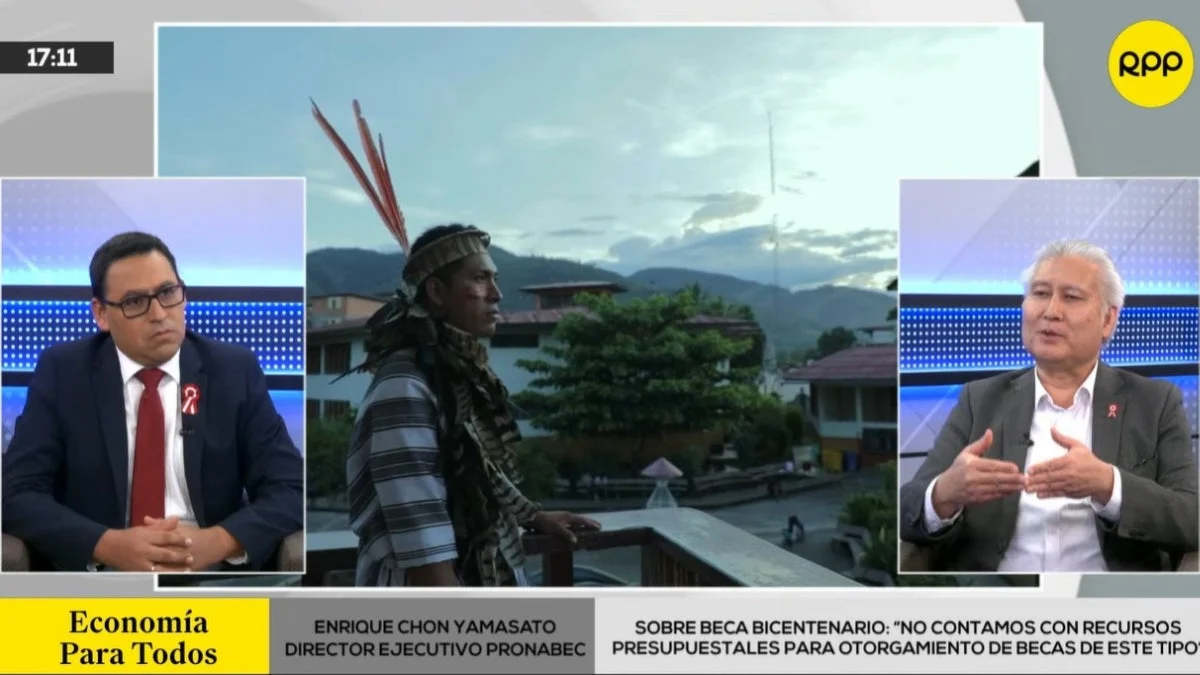
The landscape for high-level academic development in Peru has suffered a significant setback. In a candid interview on RPP’s Economía para Todos, Enrique Chon Yamasato, Executive Director of the National Program for Scholarships and Educational Credit (Pronabec), confirmed that the prestigious Beca Generación Bicentenario will not hold a call for applications in 2026. This decision, driven by severe budgetary constraints, leaves hundreds of high-achieving professionals without the opportunity to pursue postgraduate studies at top-tier universities abroad through state sponsorship.
While the government recently authorized a supplementary credit of S/ 34 million for the education sector, Chon clarified that these funds are strictly earmarked for undergraduate programs—specifically the expansion of Beca 18—leaving the postgraduate sector effectively unfunded for the current fiscal cycle.
The Core Facts: A Suspension of Opportunity
The Beca Generación Bicentenario has long been considered the flagship program for Peruvian talent seeking to acquire specialized knowledge in global academic hubs. By providing full financing for master’s and doctoral degrees, the program aimed to bridge the knowledge gap between Peru and leading international economies.
However, the reality of the 2026 fiscal year is stark. According to Director Chon, the institution lacks the necessary fiscal backing to initiate a competitive selection process. "Effectively, we do not have the budgetary resources to ensure the granting of scholarships of this nature," Chon stated during the broadcast.
The financial gap is not merely a matter of bookkeeping; it is a policy priority shift. The government’s decision to prioritize undergraduate access—by funding 2,000 additional slots for Beca 18—comes at the direct expense of postgraduate research and specialization abroad. For many aspiring scholars, this creates a "missing year" in their professional development, potentially stalling the return of advanced human capital to the country.
Chronology of a Budgetary Collapse
The suspension of the program was not an overnight decision but the culmination of a protracted fiscal struggle that began late last year.
- April 2026: Recognizing the tightening financial constraints, Pronabec formally requested a budget extension from the Ministry of Economy and Finance (MEF). The request included a specific allocation of S/ 14 million to sustain the Beca Generación Bicentenario.
- Legislative Review (May-June 2026): The request was channeled through the Ministry of Education (MINEDU) to be included in the Executive Branch’s project for a supplementary credit. Despite the urgency communicated by Pronabec, the request was excluded from the final project sent to Congress.
- The Parliamentary Vote (July 2026): Congress approved a supplementary credit of S/ 34 million. However, the legislative language restricted these funds to pre-degree programs, specifically citing the need to expand Beca 18.
- The Deadline Crisis: Following the approval of the credit, Pronabec performed a final feasibility analysis. Chon noted that even if emergency funds were miraculously identified, the calendar makes a 2026 call impossible. With most top-tier international universities beginning their academic years in August and September, there is no remaining time to execute a transparent, merit-based selection process, vet candidates, and issue financial guarantees.
Supporting Data: Where the Money Went
The allocation of the S/ 34 million supplementary credit highlights the current administration’s focus on base-level education. While the investment in Beca 18 is socially significant, it underscores the struggle to maintain a balanced portfolio of educational support.
According to Chon, the original 2026 budget was inadequate from the start. The fiscal planning process failed to account for the actual costs required to sustain existing cohorts of scholarship recipients. This forced the institution to engage in emergency "budgetary surgery" during the first quarter of 2026, shifting funds internally just to ensure that students already studying abroad under the Bicentenario program did not lose their funding midway through their degrees.
The financial strain was so acute that, earlier in the year, the Ministry of Education and the Ministry of Economy had to provide extraordinary injections of S/ 50 million each to keep the Beca 18 program afloat, allowing for a cohort of 5,100 students. This "firefighting" approach to budgeting has left little room for the innovation or expansion of programs like the Bicentenario.
Official Responses and Strategic Rationale
The Ministry of Economy and Finance (MEF) has previously expressed skepticism regarding the current design of foreign scholarships. High-ranking officials have suggested that the state should not prioritize financing students who may not return to the country, or whose studies do not immediately align with the most pressing needs of the Peruvian labor market.
This tension between the Ministry of Education (which advocates for human capital development) and the MEF (which prioritizes fiscal austerity and return-on-investment metrics) is at the heart of the crisis. Chon, representing Pronabec, has found himself caught in the middle. He maintains that the institution cannot and will not launch a call for applications without a 100% guarantee of funding. "It would be a period too short, which would not allow us to ensure that the scholarships could be granted technically," he remarked.
Implications: The Long-Term Cost of Underfunding
The cancellation of the 2026 cycle for postgraduate scholarships carries profound long-term implications for the Peruvian economy and academia.
1. The "Brain Drain" and Stagnation
Without state support, only the most affluent students will be able to afford top-tier international education. This exacerbates inequality in the professional sector, as the "Bicentenario" program was specifically designed to be meritocratic, allowing talent from all regions of Peru to compete based on academic excellence rather than socioeconomic background.
2. Loss of Global Networking
Scholarships like the Beca Generación Bicentenario are not just about the classroom; they are about integration into global intellectual networks. By failing to send a cohort of researchers and specialists abroad in 2026, Peru misses out on critical opportunities for knowledge transfer in fields ranging from climate science and renewable energy to advanced public policy and economic development.
3. Institutional Credibility
Pronabec’s reputation relies on its ability to provide stable, reliable support. The uncertainty surrounding the 2026 budget has caused significant distress among current beneficiaries and prospective applicants. Frequent changes in funding availability, as seen in the recent protests against reforms to scholarship eligibility criteria, suggest an institution under immense strain.
4. The 2027 Outlook
While the government has hinted at the possibility of a 2027 call, the uncertainty remains high. The budgetary cycle for next year will begin in the coming months, and unless there is a fundamental shift in the government’s willingness to prioritize postgraduate education, the program risks becoming a relic of the past rather than a bridge to the future.
Conclusion
The suspension of the Beca Generación Bicentenario in 2026 serves as a sobering reminder of the fragility of state-led educational advancement in Peru. While the expansion of Beca 18 provides a safety net for thousands of undergraduate students, the sacrifice of postgraduate opportunities reflects a short-term approach to human capital. As the nation looks toward its future, the question remains: Can a country truly compete on the global stage if it ceases to invest in the advanced training of its most promising minds? For now, the answer from the halls of government is a quiet, yet damaging, "not this year."