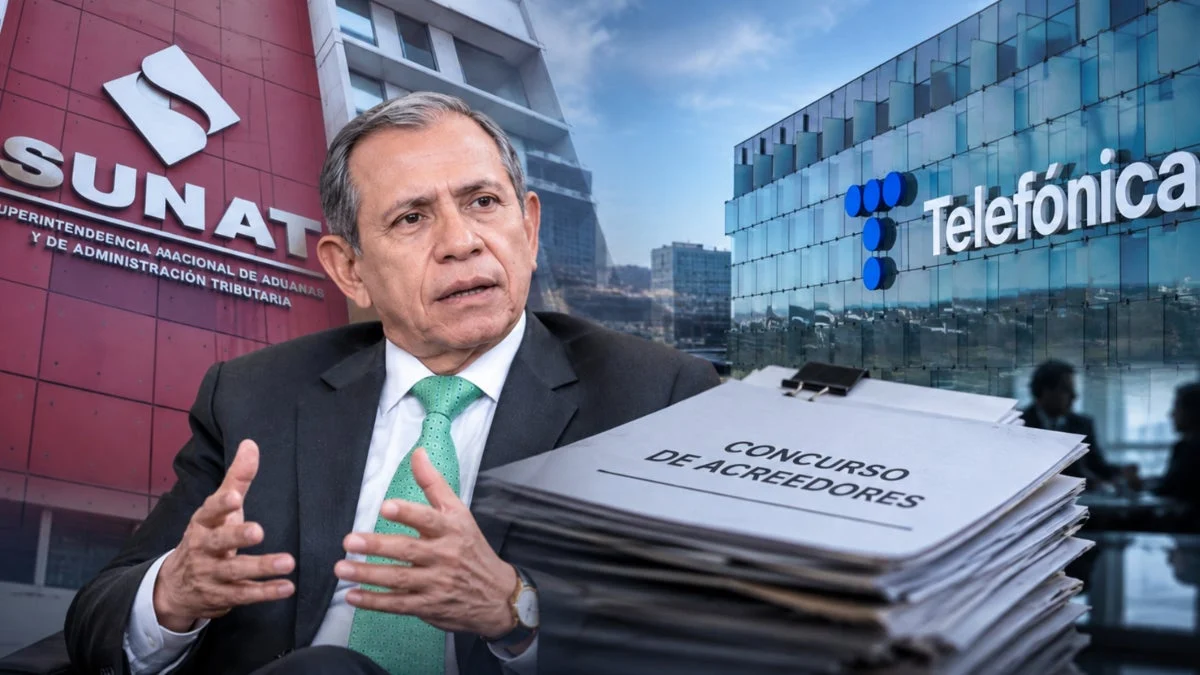
In a development that has sent ripples through Peru’s telecommunications and fiscal sectors, the Superintendencia Nacional de Aduanas y de Administración Tributaria (Sunat) is aggressively readying its strategy to address a massive debt obligation held by Integratel Perú—the telecommunications giant formerly known as Telefónica del Perú. As the company navigates a complex insolvency process, the tax authority is moving to ensure that the interests of the Peruvian state are protected in what is shaping up to be one of the most significant creditor disputes in recent national history.
The Core Conflict: A Fiscal Tightrope
The fundamental shift in the relationship between Sunat and the telecommunications operator occurred when the company entered a formal insolvency proceeding. Under Peruvian law, this transition fundamentally alters the mechanism of debt collection. No longer a straightforward tax enforcement case, the situation has evolved into a multi-party legal marathon governed by the rules of the Indecopi-led insolvency framework.
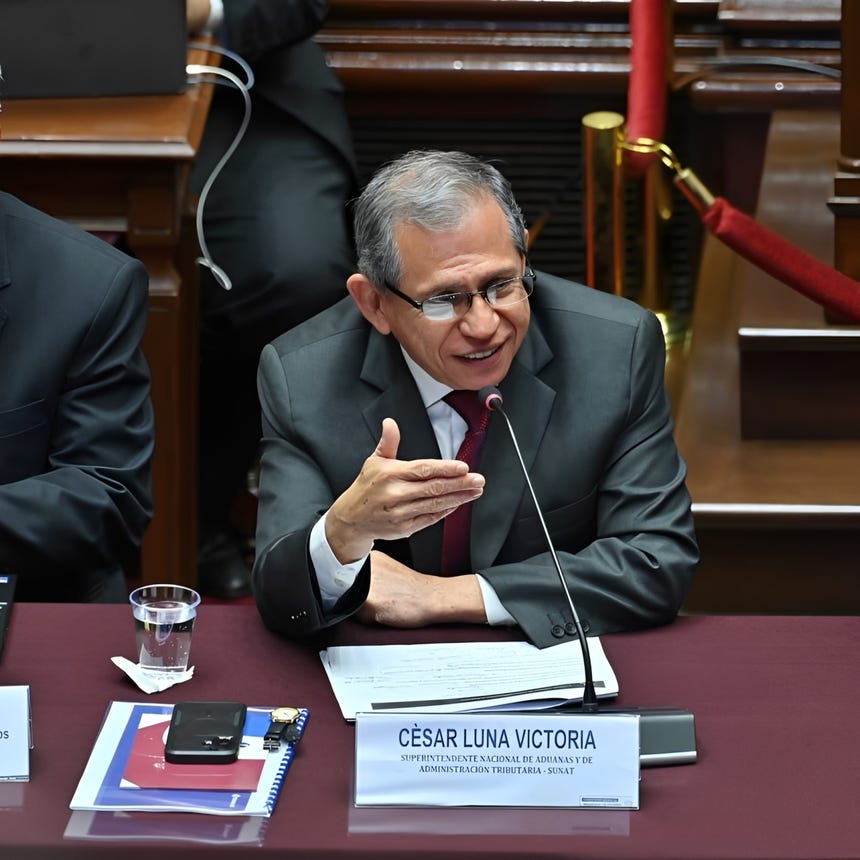
Sunat, acting as a major creditor, currently finds itself in a position where it must balance its mandate to collect public revenue with the realities of corporate restructuring. César Luna-Victoria, the head of the tax authority, has been vocal about the necessity of a sophisticated approach. Speaking before the Bicameral Commission for the Budget and General Account of the Republic, he emphasized that the state’s involvement is not merely a matter of filing claims, but of active, strategic participation in the forthcoming Creditors’ Board.
Chronology of a Corporate Transition
The path to this moment is paved with significant corporate maneuvering.
- Acquisition: The entity formerly known as Telefónica del Perú was acquired by the Argentine firm Integra Tec, subsequently rebranding as Integratel Perú. The acquisition price of S/3.7 million was notably low, a figure that analysts attribute to the massive liabilities the buyer inherited.
- The Insolvency Filing: Following the transfer of ownership, the company entered the administrative insolvency process overseen by Indecopi.
- Credit Recognition: Indecopi has been tasked with the arduous process of verifying and prioritizing the claims of various creditors. As of late 2026, the commission is still in the phase of resolving reconsiderations for credit recognition, a necessary prerequisite before the Creditors’ Board can be formally installed.
- The Current Standstill: While the process remains in the "recognition" phase, the lack of a firm date for the installation of the Creditors’ Board leaves market participants and public stakeholders in a state of suspended anticipation.
Breaking Down the Numbers: The Debt Landscape
The financial scale of this insolvency is immense. According to data provided by Indecopi, total recognized debts currently stand at approximately S/5.154 billion. This figure remains fluid as administrative appeals are processed, but it provides a clear picture of the fiscal gravity of the situation.
The distribution of this debt is a critical factor in the balance of power:
- Sunat’s Position: The tax authority holds recognized credits totaling approximately S/1.209 billion. This is composed of S/519.9 million in principal and S/689.7 million in accrued interest. This represents roughly 23% of the total recognized debt, though this percentage is subject to final adjustments once the recognition process concludes.
- The Voting Bloc: Within the future Creditors’ Board, the state (via Sunat) is expected to wield approximately 33% of the voting power. The remaining power is split between the majority shareholder, Integra Tec, which holds roughly 40%, and a group of bondholders who account for the final segment of the voting interest.
Official Responses and Strategic Preparation
The gravity of the situation has led Sunat to take the unprecedented step of commissioning external expertise. Luna-Victoria confirmed that the tax authority is in the process of contracting high-level financial and legal advisors.
"Given the complexity, we must contract external services to advise us in financial and legal matters," Luna-Victoria stated during his testimony. "The goal is to ensure the state’s vote in the Creditors’ Board is a reasoned one, and that any credit losses or risks taken are not disproportionate to those adopted by other creditors."
The logic behind this strategy is to prevent a scenario where the state, as a public institution, is forced to accept terms that prioritize private stakeholders over the public treasury. Luna-Victoria also defended the inherent value of the company, arguing that the low purchase price paid by Integra Tec does not reflect a lack of value in the business, but rather the heavy burden of the debt that the new owners assumed. "The company still functions, it provides a public service, and we must treat it as a going concern," he added.
For its part, Indecopi continues to act as the neutral arbiter. Its Technical Secretariat has indicated that they are currently prioritizing the resolution of reconsideration requests, which is the final hurdle before the formal installation of the Creditors’ Board can be scheduled.
Implications for the Future of Telecommunications in Peru
The implications of this dispute extend far beyond the balance sheets of Sunat and Integratel.
1. Precedent for Corporate Insolvency
The case is likely to set a legal precedent for how the state handles major infrastructure and service-provider insolvencies. By opting for a strategy that includes external financial advisors, Sunat is signaling a more aggressive, technical, and professionalized approach to debt recovery, moving away from purely administrative actions.
2. Market Stability and Service Continuity
Integratel remains a critical provider of telecommunications services. The insolvency process is designed to allow the company to restructure its debts while maintaining its operations. However, the tension between the majority shareholder (Integra Tec) and the state creditor creates an environment of uncertainty that could affect future investments in network infrastructure and service quality.
3. The "Value" Debate
The debate over the valuation of the company—highlighted by the S/3.7 million sale price—raises questions about transparency in the telecommunications sector. If the company is worth significantly more than its sale price due to its operational capacity, stakeholders will be watching closely to see how the restructuring plan accounts for this value. Will it be used to pay down the debt to the state, or will it be reinvested into the company? The Creditors’ Board will be the forum where these competing interests are adjudicated.
4. The Political Economy of Debt
The fact that this issue was brought before the Bicameral Commission for the Budget underscores the political sensitivity of the debt. With over S/1.2 billion at stake, the government is under pressure to prove that it is not leaving "money on the table." The public interest in this case is high, and the outcome will likely be used as a metric for the current administration’s efficacy in managing national assets.
Conclusion: A Long Road Ahead
As the administrative gears of Indecopi continue to turn, the silence from Integratel regarding their specific restructuring plans has only heightened interest in the upcoming board meeting. The company has acknowledged receipt of inquiries but has maintained a low profile, likely focusing on the legal hurdles of the recognition phase.
For Sunat, the coming months will be a test of its ability to navigate the complex, multi-layered reality of corporate insolvency. By seeking specialized counsel and aligning its interests with the broader fiscal health of the nation, the tax authority is preparing for a high-stakes negotiation. Whether this leads to a settlement, a structured repayment plan, or a deeper, more protracted legal battle remains to be seen. What is certain, however, is that the resolution of this debt will have a lasting impact on the regulatory and economic landscape of Peru’s telecommunications industry for years to come.