The Peruvian foreign exchange market has witnessed a significant shift in recent months, as the U.S. dollar continues to lose ground against the sol, retreating to valuation levels not seen since February. After a period of heightened volatility prompted by geopolitical tensions and local uncertainty, the exchange rate has entered a phase of stabilization, albeit at lower levels than market analysts projected earlier this year. As of Thursday, August 13, 2026, the dollar closed at S/3.366, marking a resilient performance for the local currency.
Main Facts: The Current Landscape of the Currency Market
The recent performance of the sol represents a notable recovery. Following the onset of the conflict in the Middle East—which initially drove the dollar to peak at S/3.524 on April 29—the currency has undergone a sustained correction. This downward trajectory represents a cumulative decline of approximately 4.5% from the year’s high.
According to data from the Central Reserve Bank of Peru (BCRP), the currency touched a floor of S/3.363 this week, its lowest point in nearly six months. While the market saw a marginal uptick to S/3.366 on Thursday, the overarching trend remains bearish for the dollar.
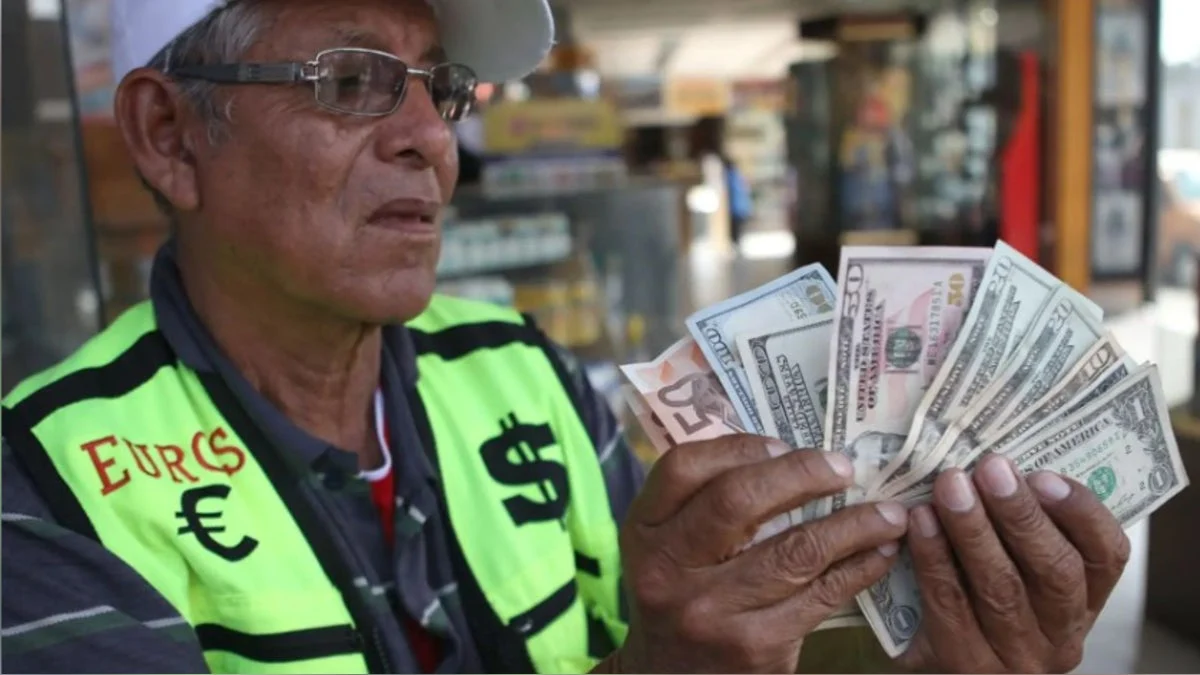
In the retail and informal sectors, the impact is palpable. In the parallel market, the dollar is currently being bought at S/3.36 and sold at S/3.38. Simultaneously, commercial banks are offering a buying rate of S/3.33 and a selling rate of S/3.41. For importers and businesses with dollar-denominated obligations, this stabilization offers a window of relief, though it necessitates careful strategic planning given the potential for future volatility.
Chronology: The Road to the Current Exchange Rate
To understand the current standing of the sol, one must examine the timeline of the factors that influenced the market throughout 2026:
- Early 2026 (February): The exchange rate hovered around the S/3.36 range, reflecting a period of relative domestic and international calm.
- April 2026: The eruption of conflict in the Middle East acted as a catalyst for global risk aversion. Investors rushed to the dollar as a "safe-haven" asset, pushing the exchange rate to its annual high of S/3.524.
- May–July 2026: Markets began to discount the probability of the conflict escalating into a wider regional war. Concurrently, signs of a slowdown in the U.S. economy began to materialize, dampening demand for the greenback.
- August 13, 2026: The dollar stabilizes at S/3.366, signaling a return to pre-conflict levels and a renewed confidence in the strength of the Peruvian sol, supported by robust export data and favorable internal political perceptions.
Supporting Data: Macroeconomic Drivers
The appreciation of the sol is not an isolated phenomenon but the result of a confluence of internal and external macroeconomic variables. Javier Pineda, CEO of the financial firm Billex, emphasizes that the decline in the dollar is primarily driven by a "normalization" of global risk premiums.
The U.S. Economic Slowdown
The U.S. economy, the engine of global demand, slowed to a 1.5% growth rate in the second quarter, down from 2% in the first. This deceleration, coupled with a softening labor market, has led analysts to believe that the Federal Reserve will likely maintain or even cut its reference interest rates. As the interest rate differential between the U.S. and emerging markets narrows, the dollar naturally loses some of its traditional "carry trade" appeal.
Domestic Strength: Exports and Politics
Peru’s internal fundamentals have provided a solid foundation for the sol. Export performance remains a standout metric, with annualised figures reaching US$107 billion. The country maintains a healthy trade surplus of approximately US$45 billion, which ensures a steady inflow of foreign currency. Furthermore, the political landscape following the election of Keiko Fujimori has, perhaps counterintuitively to some, resulted in a reduction of "risk perception." Investors appear to have factored in the current administration’s policies, leading to a more stable outlook on domestic economic governance.
Official Responses and Expert Outlook
The BCRP remains a silent but watchful observer, maintaining its mandate to prevent excessive volatility while allowing the market to dictate the equilibrium. The recent appointment of new board members—Inés Choy, Luis Palomino, and Gustavo Yamada—has been met with cautious optimism by the markets, signaling continuity in the central bank’s orthodox monetary policy.
However, experts are warning that the current "sol-friendly" environment may be temporary. Javier Pineda notes that the second half of the year poses significant risks that could reverse the current trend.
The Threat of "El Niño"
The looming arrival of the El Niño phenomenon is the most critical variable. "The second semester incorporates the effect of El Niño, which could severely impact the export capacity of the agricultural and fishing sectors," Pineda warns. Beyond the export hit, the potential for logistical disruptions and regional desupply chains could dampen GDP growth, fundamentally weakening the sol and pushing the dollar back toward the S/3.45 mark by year-end.
The China Factor
Peru’s economic health is intrinsically linked to China. Any further deceleration in the Chinese economy, particularly regarding their demand for base metals, would reduce the inflow of dollars into Peru. A contraction in Chinese industrial activity would likely translate into a weaker sol, as the local market relies heavily on the proceeds from mineral exports.
Implications for Businesses and Consumers
For the average citizen and the business community, the current exchange rate environment presents both opportunities and warnings.
Is it a Good Time to Buy Dollars?
Financial experts suggest that the current price point—hovering near S/3.36—is an attractive entry point for those with future obligations in foreign currency. Because the dollar remains a global store of value, accumulating it at these levels serves as an effective hedge against the uncertainty of the coming months.
Strategic Planning for Importers and Exporters
Importers should take advantage of the current rate to hedge their costs for the remainder of the year. Conversely, exporters, who have enjoyed the benefits of a weaker dollar in terms of domestic cost absorption, should prepare for a potential "dollar rebound." If the predicted impacts of El Niño materialize, the exchange rate may climb, which would increase costs for those relying on imported inputs (such as fertilizer, fuel, or technology).
Conclusion: A Delicate Balance
The Peruvian sol has demonstrated remarkable resilience, successfully navigating the turbulence of early 2026. While the current stabilization is a positive indicator of the country’s economic fundamentals, it would be premature to declare the dollar’s decline as permanent.
The interplay between the U.S. Federal Reserve’s monetary policy, the evolution of global geopolitical risks, and the looming environmental threats posed by El Niño will determine the next chapter for the exchange rate. For now, the market remains in a state of watchful waiting. As we move into the final months of 2026, the key for both individuals and corporations will be to remain agile, recognizing that while the current strength of the sol is a welcome development, the underlying risks to the Peruvian economy necessitate a cautious and diversified financial strategy.
The upcoming months will test the limits of the sol’s strength. Whether the currency can maintain its gains or will succumb to the pressures of a changing global climate and shifting trade dynamics remains the primary focus of analysts and policymakers alike. Investors, meanwhile, would be wise to treat the current low-dollar environment as a transient opportunity rather than a new long-term reality.