The Chilean Ministry of Public Works has officially received four competitive proposals for the "Second Concession of the Ruta 57 Santiago–Colina–Los Andes" project. This ambitious initiative, valued at approximately US$ 950 million (23.153 million UF), promises to reshape connectivity between the Metropolitan and Valparaíso regions, signaling a robust resurgence in investor confidence for the nation’s infrastructure sector.
The tender has attracted significant interest from both domestic and international heavyweights, marking a pivotal moment for public-private partnerships (PPP) in Chile. The entities that submitted technical and economic proposals are Vías Chile S.A., China Harbour Engineering Company Ltda., Sacyr Concesiones Chile SpA, and the consortium Strabag Infrastructure Chile SpA.
The Scope of the Project: Modernizing a Strategic Corridor
The Ruta 57 is more than just a roadway; it is a critical artery for the Chilean economy, facilitating the movement of passengers and freight between the capital and the Valparaíso region. Furthermore, it serves as a vital logistics link for international trade, particularly for traffic originating from and destined for Argentina.
The project, which encompasses approximately 110.4 kilometers of road infrastructure, is designed to address current traffic congestion, enhance road safety, and improve the quality of life for the residents of the seven municipalities it traverses: Quilicura, Huechuraba, Colina, Tiltil, Rinconada, Calle Larga, and Los Andes.
The scope of the project includes:

- Expansion to Three Lanes: The first 24 kilometers of the route will be expanded to three lanes to handle increased capacity.
- Chacabuco Tunnel: A new, parallel tunnel will be constructed alongside the existing Chacabuco tunnel to improve transit flow.
- Infrastructure Connectivity: Construction of a 9.3-kilometer direct link between Route 57 and Route 5, and a 4.6-kilometer connection at the Los Andes Terrestrial Port.
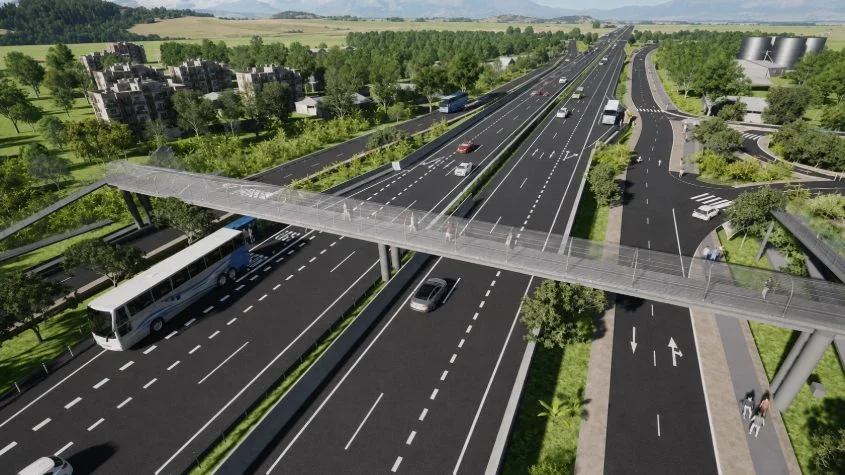
- Urban Integration: Incorporation of pedestrian footbridges, bus stops, cycling paths, and noise-reduction acoustic screens.
- Route G-71 Upgrades: Significant improvements to 16.7 kilometers of the G-71 route.
A Rebound in Investor Interest: The Chronology of Confidence
The receipt of four formal bids is being viewed as a major success by the Ministry of Public Works. According to official reports, the sector has seen a shift in market appetite over the last decade. During the initial ten years of the concession system in Chile, it was common for projects to receive four or more bids. However, that figure dipped to an average of fewer than three in subsequent years, bottoming out at roughly 1.5 bids per project in the last decade.
The current trajectory, however, shows a recovery. This follows the competitive bidding seen for the Ruta del Itata in 2024 and the Route 78 project, which garnered seven bids in 2021. This trend suggests that the government’s efforts to streamline regulatory frameworks and provide clearer project pipelines are yielding results.
Key Milestones and Timeline
- August 2026: Submission of technical and economic offers.
- September 4, 2026: Formal opening of the economic proposals.
- Q4 2026: Final adjudication of the contract.
- January 8, 2027: Expiration of the current concession agreement.
- 2031: Estimated commencement of major construction works.
- 2035: Full operational status of the modernized highway.
Official Responses and Strategic Vision
The Biminister of Public Works and Transport and Telecommunications, Louis de Grange, underscored the strategic nature of the project. He emphasized that the influx of four high-quality bids is a testament to the continued attractiveness of Chile as a destination for infrastructure investment.
"This project is a cornerstone for the nation’s growth," said de Grange. "It addresses the immediate needs of road safety and capacity, but it also prepares the national corridor for the future of international logistics. The interest from these major firms proves that our vision for a more integrated, efficient, and safer infrastructure network is shared by the private sector."
Lorena Herrera, Director General of the DGC (Dirección General de Concesiones), highlighted the human-centric approach of the development. "While the engineering feats, such as the new Chacabuco tunnel and the link to the Los Andes port, are vital for logistics, we have prioritized urban integration," Herrera stated. "The project is designed for the people living along the route, with new service roads, cycling infrastructure, and noise protection that will fundamentally improve the daily lives of citizens in these seven communes."

Implications for the Chilean Economy
The investment of US$ 950 million represents one of the largest infrastructure commitments in the region for the current cycle. The economic implications are multifaceted:
1. Logistics and Trade Efficiency
By creating a seamless connection between Route 57 and Route 5, the project will significantly reduce transit times for freight transport. This is particularly important for the Los Andes Terrestrial Port, which serves as a gateway for international cargo. Enhanced efficiency translates into lower logistics costs, which ultimately benefits the end consumer and boosts the competitiveness of Chilean exports.
2. Employment and Growth
The long-term construction timeline—from 2031 to 2035—will generate a steady stream of demand for engineering services, raw materials, and labor. This project will sustain thousands of direct and indirect jobs over the coming years, acting as an economic multiplier for the construction and professional services sectors in the Metropolitan and Valparaíso regions.
3. Safety and Environmental Mitigation
Modernizing a highway that cuts through urban areas necessitates a focus on safety. The inclusion of pedestrian walkways, modernized bus stops, and acoustic barriers addresses long-standing concerns regarding road accidents and noise pollution. By separating local urban traffic from long-distance and heavy freight traffic, the project will drastically reduce the frequency of accidents and improve the fluidity of traffic flow.
Technical Challenges and Engineering Excellence
The construction of the new Chacabuco tunnel is arguably the most complex technical component of the project. Building a tunnel parallel to an existing structure requires precision engineering to ensure the stability of the surrounding geology and the safety of the existing transit.

Furthermore, the new 9.3-kilometer connection to Route 5 represents a major reconfiguration of regional traffic patterns. By bypassing dense urban areas where necessary and reinforcing local links elsewhere, the concessionaire must balance the needs of transit logistics with the local requirement for accessibility. The requirement for acoustic screens is also a nod to modern urban planning, acknowledging that as infrastructure grows, so too does the responsibility to mitigate the environmental impact on neighboring communities.
Conclusion
The "Second Concession of the Ruta 57" serves as a benchmark for how Chile manages its public-private partnerships. With a clear roadmap toward the economic opening in September 2026, the Ministry of Public Works has set the stage for a transformative era in regional transport.
As the project moves from the bidding phase to the technical evaluation and final adjudication, all eyes will be on the winning consortium. The successful bidder will not only be responsible for the capital-intensive construction of tunnels and bridges but also for the long-term maintenance and operation of a critical, 110-kilometer-long lifeline that connects the heart of Chile to the global market.
By balancing the needs of international commerce with the quality-of-life requirements of local residents, this project reaffirms Chile’s commitment to building a modern, resilient, and globally competitive infrastructure landscape. The road to 2035 is long, but the groundwork laid today ensures that the Santiago-Colina-Los Andes corridor will remain a vital artery for generations to come.