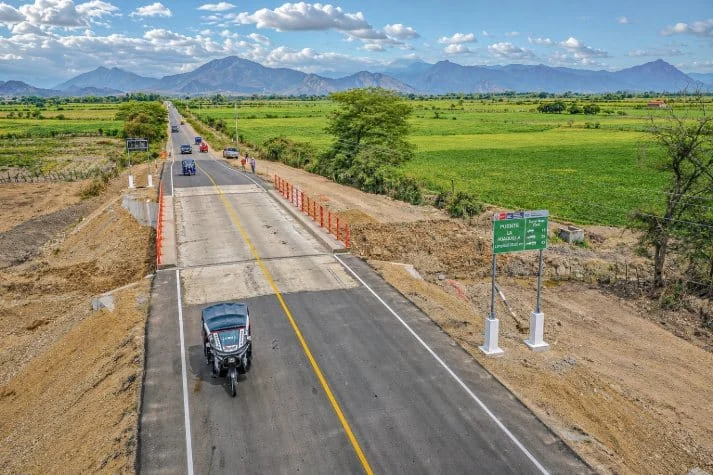
In a significant move to bolster national connectivity and improve the quality of life for rural populations, the Peruvian Ministry of Transport and Communications (MTC), through its specialized unit, Provías Descentralizado (PVD), has formalized a series of cooperation agreements with municipal leaders from over 30 districts. This collaborative effort aims to secure and manage the necessary financing for the construction of 58 bridges of “minor span,” a critical infrastructure development that promises to transform the logistics and social fabric of several Peruvian regions.
The initiative, which represents a total investment exceeding S/ 111 million, marks a pivotal shift in how the central government decentralizes infrastructure projects. By empowering local municipal governments to oversee the execution of these works, the MTC aims to ensure that projects are not only completed with local oversight but are also tailored to the specific geographical and socio-economic needs of the affected populations.
Main Facts: A Decentralized Infrastructure Drive
The core of this agreement lies in a strategic partnership model. Provías Descentralizado acts as the technical and financial facilitator, navigating the complex bureaucratic landscape required to secure state funding. Once the funds are authorized and transferred, the municipal governments take the lead as the executing agencies.
The project encompasses 58 distinct bridge structures across 11 key regions: Amazonas, Ancash, Ayacucho, Cajamarca, Huancavelica, Huánuco, Junín, Lima, Madre de Dios, Pasco, and San Martín. These bridges, classified as “minor spans,” are the lifelines of rural Peru. They are designed to replace precarious crossings that are often impassable during the rainy season, effectively connecting isolated communities to regional trade hubs, hospitals, and educational facilities.
Crucially, the sustainability of these agreements is tied to the upcoming publication of the legal frameworks necessary for the transfer of public resources. This ensures that every sol spent is legally accounted for, adhering to strict national procurement and public investment standards.

Chronology: The Path to Cooperation
The road to these 58 bridge projects was paved through a series of structured dialogues and persistent lobbying by regional representatives.
- Initial Identification: Over the past year, regional technical offices identified dozens of “bottleneck” points—locations where the lack of a permanent bridge causes significant delays in trade and social access.
- The AMUDIP Engagement: The Association of Municipalities of Peru (AMUDIP) played a central role in organizing the discourse between local authorities and the central government. Recognizing that individual municipalities lacked the fiscal capacity to fund these structures, AMUDIP facilitated a high-level meeting between district mayors and MTC officials.
- The Technical Review: Provías Descentralizado conducted extensive assessments of the 58 proposed bridge sites, reviewing technical dossiers and cost estimates. This due diligence culminated in the evaluation of the S/ 111 million investment requirement.
- Formalization: The signing ceremony represents the culmination of these preliminary stages, transitioning from planning to the formal commitment phase.
- The Pending Milestone: The current phase involves the administrative waiting period for the official publication of the budgetary transfer decree, which will serve as the "green light" for the initiation of bidding processes.
Supporting Data: Why Connectivity Matters
The significance of this investment cannot be overstated. In many of the target regions, such as Huancavelica and Cajamarca, the absence of proper bridges leads to the "seasonal isolation" of agricultural communities. During the peak of the rainy season, heavy river flows often render dirt roads impassable, preventing farmers from taking their products to market and denying students access to schools.
The S/ 111 million allocated for these 58 bridges will achieve several key performance indicators:
- Reduction in Travel Time: By creating permanent connections, the time required to transport goods to regional capitals is expected to drop by an average of 40% in affected areas.
- Economic Resilience: Reliable infrastructure is the backbone of rural commerce. The ability to move products like coffee, potatoes, and livestock without the risk of being stranded due to river swells will significantly increase the income stability of thousands of farming families.
- Emergency Response: In the event of health crises or natural disasters, these bridges provide essential routes for emergency vehicles, which are currently restricted to specific seasons or high-risk fords.
Official Responses and Collaborative Governance
The partnership has been welcomed by local authorities as a triumph of decentralized governance. During the information sessions held between the MTC and the mayors, the focus was heavily placed on transparency and the capacity of local administrations to manage complex public works.
Provías Descentralizado officials emphasized that while the municipalities will be the executors, they will not be left to navigate the project lifecycle alone. PVD will maintain a supervisory role, providing technical assistance to ensure that the infrastructure meets national engineering standards. This "co-management" approach is designed to mitigate the risks of administrative delays and cost overruns, which have historically plagued large-scale projects in the Peruvian interior.

AMUDIP representatives highlighted the meeting as a success, noting that the MTC’s willingness to listen to the specific needs of district-level mayors reflects a more mature relationship between Lima and the provinces. "These bridges are not just concrete and steel," noted one attending mayor; "they are the difference between a community that is integrated into the national economy and one that is left to wait for the river to recede."
Implications for Future Infrastructure Development
The success of this 58-bridge project will likely serve as a blueprint for future infrastructure policy in Peru. If the decentralized execution model proves successful—meaning projects are delivered on time and within budget—the MTC is expected to expand this model to include road maintenance and drainage systems in other underserved districts.
However, the implications go beyond mere construction. The project acts as a stress test for the administrative capacity of district municipalities. By managing funds of this magnitude, local governments are gaining experience in public procurement and project management that will strengthen their local institutions for years to come.
Furthermore, the geographical diversity of the project—spanning from the high-altitude Andes of Huancavelica to the tropical regions of Madre de Dios—demonstrates a comprehensive national strategy. By addressing these needs simultaneously, the government is signaling that it views rural connectivity as a national security and economic priority rather than a peripheral concern.
Conclusion: A New Chapter for Rural Connectivity
As the country awaits the official legal decree that will release the funds for these 58 bridges, the atmosphere among the involved stakeholders is one of cautious optimism. The challenges ahead are significant; environmental conditions in regions like San Martín and Amazonas can be unpredictable, and the logistical hurdles of transporting materials to remote areas are formidable.

Nevertheless, the framework is set. By aligning the technical expertise of the MTC with the local knowledge and political urgency of municipal mayors, Peru is taking a substantive step toward closing the massive infrastructure gap that has historically hindered its regional development. For the thousands of families residing in these 11 regions, these bridges represent more than just a crossing—they represent a bridge to the future, promising greater opportunity, better access to services, and a deeper integration into the national fold.
As the program moves into the execution phase, the focus will shift to monitoring, transparency, and timely delivery. If successful, this initiative will stand as a landmark example of how decentralized cooperation can effectively overcome the deep-seated logistical challenges of the Peruvian landscape, ensuring that no district, regardless of how remote, is left behind.