Executive Summary: Strengthening Electoral Integrity
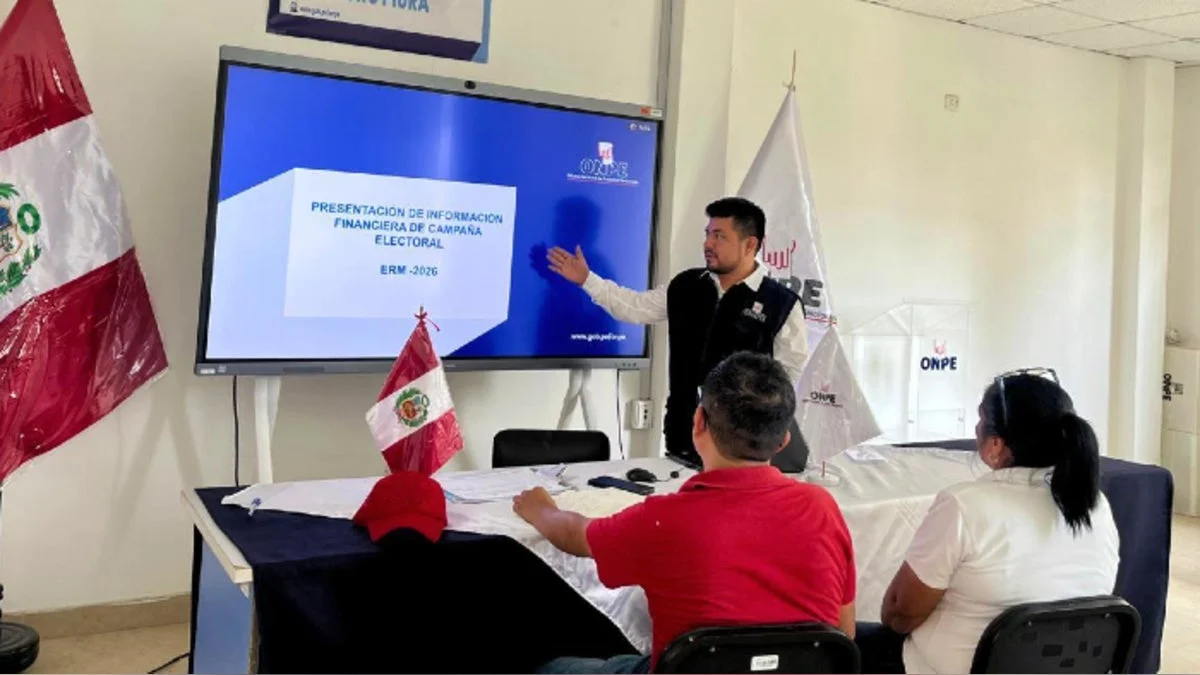
As the 2026 regional and municipal elections approach, the National Office of Electoral Processes (ONPE) has taken a decisive step toward enhancing financial oversight. In a move aimed at ensuring transparency and curbing illicit campaign financing, the electoral body has officially granted an extension for the first submission of financial information. Political organizations and candidates vying for governorships, vice-governorships, and mayoral seats now have until September 18, 2026, to fulfill their reporting obligations.
This extension, formalized through Gerential Resolution No. 000012-2026-GSFP/ONPE, provides a critical seven-day buffer for stakeholders to consolidate their financial data. The report covers the period from January 7, 2026—the date the elections were formally called—through September 5, 2026. This period, ending 30 days prior to the voting day, represents a foundational segment of the campaign, where the majority of logistical and promotional expenditures are incurred.
The Chronology of Compliance
The electoral timeline is a rigid framework designed to minimize the potential for corruption and ensure a level playing field. The events leading up to this recent extension illustrate the complexity of managing financial disclosures in a subnational election cycle:
- January 7, 2026: Official convocation of the regional and municipal elections. This date marks the beginning of the "financial window," during which all income, donations, and expenditures must be tracked.
- September 5, 2026: The cutoff date for the first reporting cycle. This date is strategically chosen by the ONPE to capture the early and mid-term financial status of candidates before the final, high-intensity push toward election day.
- September 11, 2026 (Original Deadline): The initial date set for the submission of financial records.
- September 18, 2026 (New Deadline): The revised date following the publication of Gerential Resolution No. 000012-2026-GSFP/ONPE.
The decision to extend the deadline reflects an acknowledgment of the logistical hurdles faced by candidates and parties in consolidating records from decentralized regional offices across the country. By providing an additional week, the ONPE seeks to ensure that the data collected is accurate and exhaustive, rather than rushed and prone to clerical error.
Supporting Data and Procedural Requirements
Transparency in modern elections relies heavily on standardized reporting. The ONPE has mandated specific documentation protocols to ensure that all financial flows—from small-scale donations to large campaign expenditures—are traceable and auditable.
Reporting Formats: A Taxonomy of Disclosure
The ONPE has categorized reporting requirements to distinguish between the obligations of political organizations (parties, regional movements, and alliances) and individual candidates:
-
For Political Organizations:
- Format 5: Specifically designed to aggregate all aportes (donations/contributions) and other sources of income.
- Format 6: Dedicated to the itemization of campaign expenditures, ensuring that money spent on advertising, travel, and logistics is clearly identified.
-
For Individual Candidates:
- Format 7: Required for the disclosure of personal or candidate-specific income and contributions.
- Format 8: Required for the recording of individual campaign expenditures.
- Format 14: Mandatory for the formal designation of a "Campaign Manager" (Responsable de Campaña), who assumes the fiduciary responsibility for the accuracy of these reports.
Submission Modalities: Digital vs. Physical
Recognizing the digital transformation of governance, the ONPE has integrated the "CLARIDAD" portal as the primary vehicle for electronic submissions. This platform allows for real-time tracking and facilitates easier public access to financial data, fostering a culture of "sunlight" in campaign funding.
However, the ONPE maintains a hybrid model to ensure inclusivity for candidates in remote or less digitally connected regions. Physical submissions are accepted at the central ONPE headquarters, as well as at any of the Regional Coordination Offices (ORC) or Decentralized Offices of Electoral Processes (ODPE) established for the 2026 cycle. By allowing both digital uploads and physical letters of submission, the ONPE balances modern efficiency with geographical accessibility.
Official Responses and Regulatory Intent
The ONPE’s decision to extend the deadline was not merely a concession to political parties but a strategic regulatory maneuver. According to the Gerential Resolution, the objective is to ensure that the maximum number of participants comply with the transparency laws.
Legal experts and electoral analysts suggest that the ONPE is moving away from a punitive-only model toward one of "facilitated compliance." By allowing an extra week, the ONPE mitigates the risk of administrative sanctions that could lead to the disqualification of candidates or the imposition of heavy fines, which would inevitably lead to legal appeals and judicial congestion.
The agency emphasized that the reporting process can be completed by either the candidate personally or their appointed Campaign Manager. This flexibility is particularly important for high-profile candidates who manage multiple administrative staff members. Furthermore, the ONPE clarified that a single individual may serve as the campaign manager for multiple candidates, simplifying the administrative burden for smaller regional movements that may share resources.
Implications for the 2026 Election
The impact of this financial transparency drive extends far beyond the mere filing of forms. It touches the core of democratic trust in the Peruvian electoral system.
1. Curbing Dark Money
One of the primary goals of the "CLARIDAD" initiative is the reduction of "dark money"—undeclared funds from illicit sources, private interests, or criminal organizations. By forcing candidates to itemize expenditures in the middle of the campaign, the ONPE makes it significantly harder for candidates to hide massive spending spikes that often correlate with late-stage vote buying or illegal influence.
2. Promoting Public Accountability
When candidates know that their financials will be audited and published, their behavior changes. Public disclosure acts as a deterrent against excessive spending and encourages candidates to justify their campaign budgets to the electorate. It empowers civil society, journalists, and watchdog groups to cross-reference reported spending with observed campaign activity, such as the number of billboards, television spots, and local rallies.
3. Strengthening Institutional Credibility
The 2026 subnational elections are a litmus test for the ONPE’s authority. By enforcing strict adherence to financial reporting, the agency reinforces the idea that the electoral process is governed by law, not by the wealth of the participants. Any failure to comply now could result in long-term damage to the legitimacy of the winning candidates, making this extension a vital tool for ensuring that the final results are seen as both legal and fair.
4. A Template for Future Cycles
The lessons learned from this 2026 reporting window—specifically regarding the ease of use of the CLARIDAD portal and the adequacy of the reporting formats—will likely shape the future of electoral oversight in Peru. The ONPE’s willingness to adapt the timeline based on the operational realities of the candidates demonstrates a nuanced understanding of the electoral landscape, which is essential for maintaining the balance between strict regulation and practical feasibility.
Conclusion: The Path Forward
As the September 18 deadline approaches, the attention shifts to the political parties and their candidates. The extension granted by the ONPE is a final opportunity to align their operations with the requirements of the law. For the electorate, this period of disclosure provides a window into the machinery of their future leaders.
Ultimately, the integrity of the 2026 elections will depend on the commitment of every participant to transparency. While the forms and formats are technical in nature, their purpose is profoundly democratic: to ensure that the people of Peru can vote with the knowledge of who is funding the men and women who seek to hold power in their regions and districts. The ONPE’s recent intervention serves as a necessary reminder that in the arena of politics, the most important currency is not the money spent, but the trust earned through accountability.