In a move that underscores the evolving priorities of the global mining industry, BHP has officially submitted a project for environmental evaluation to optimize the tailings storage facility (TSF) at its Minera Spence operation in Chile’s Antofagasta Region. Valued at $318 million, the initiative represents a strategic shift from pure production expansion toward long-term operational resilience and resource efficiency.
The project, submitted via a Declaration of Environmental Impact (DIA) to the Environmental Assessment Service (SEIA), does not aim to increase the daily processing capacity of the facility, which remains capped at 95,000 tonnes of ore. Instead, the objective is to fortify the infrastructure to ensure uninterrupted production through 2039, the current limit of the mine’s authorized lifespan.
Main Facts: Strengthening the Backbone of Production
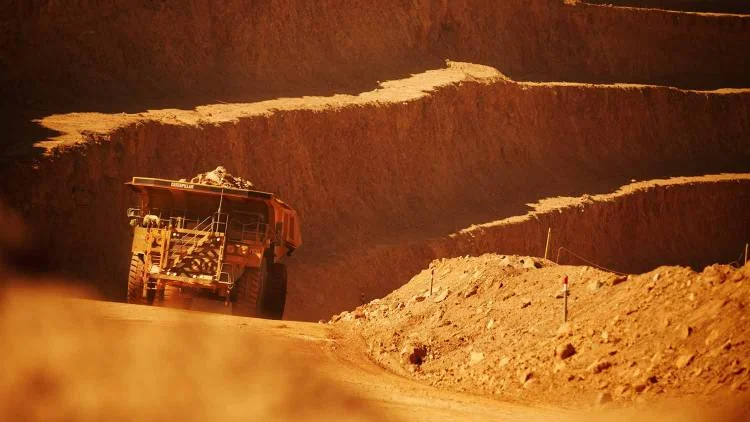
Minera Spence, located in the municipality of Sierra Gorda, stands as one of BHP’s crown jewels in the Chilean copper landscape, secondary only to the massive Escondida operation. The proposed $318 million investment is a vital maintenance and optimization project designed to address the physical limitations of the existing tailings deposit.
By focusing on the lifecycle of tailings—the waste byproduct of ore extraction—BHP is positioning Spence to navigate the increasingly complex regulatory and environmental landscape of Northern Chile. The project encompasses a total area of approximately 6,081 hectares within the company’s existing property. Crucially, 5,531 hectares of this footprint utilize pre-existing industrial areas, with only 550 hectares representing new intervention zones. This approach demonstrates a commitment to minimizing territorial impact, a critical factor for securing "social license to operate" in regions where land use is a contentious public issue.
A Two-Phase Chronology: Engineering for the Future
BHP has structured the project into two distinct phases, acknowledging that the challenges of tailings management evolve as the mine matures.
Phase 1: Operational Stabilization (Present to 2031)
During the initial phase, which will run through 2031, the focus will be on the physical reconfiguration of the deposit. The primary goal is to ensure that the current operational rhythm—which processes 95,000 tonnes of mineral daily—can be maintained without logistical or safety bottlenecks. During this period, the tailings will maintain a solids concentration of approximately 52%, aligning with the current design parameters that have served the mine since its recent expansions.
Phase 2: The Technological Leap (Post-2031)
The second phase represents a significant technological upgrade. Starting in 2031, BHP plans to install high-efficiency, advanced thickeners. These machines will allow the operation to increase the solids concentration of the tailings to a range of 53% to 58%.
This is not merely a technical adjustment; it is a vital step in water stewardship. By increasing the solids density, the company effectively reduces the amount of water trapped within the waste material. This "recovered" water can then be recycled back into the industrial circuit. In a region like Antofagasta, characterized by extreme aridity and water scarcity, this optimization is a core component of BHP’s sustainability strategy.
Supporting Data: Why Water Efficiency Matters
The economic and environmental rationale for this project is rooted in the harsh reality of the Atacama Desert. As water rights become more expensive and strictly regulated, the ability to close the loop on industrial water usage is becoming the most important metric for mining viability.
- Investment: $318 million.
- Capacity: 95,000 tonnes of ore per day (maintained).
- Operational Horizon: Extension of infrastructure reliability through 2039.
- Environmental Footprint: 6,081 hectares, with 91% of the work occurring on already disturbed land.
- Production Targets: For the 2026 fiscal year, BHP projects Spence to yield between 230,000 and 250,000 tonnes of copper.
Without this investment, the TSF could eventually act as a "choke point." By proactively upgrading the thickening technology, BHP ensures that the facility can handle the volume of waste generated by the mine’s high-production targets for the next 15 years, preventing any premature scaling back of mining operations.
Official Stance and Strategic Implications
While BHP has not issued a celebratory press release regarding this filing, the move speaks volumes about the company’s internal philosophy. The decision to invest heavily in maintenance rather than new extraction capacity is a reflection of the "Brownfield vs. Greenfield" debate currently dominating the boardrooms of major mining houses.
The Shift Toward Infrastructure Continuity
The global copper industry is facing a reality where high-grade deposits are increasingly difficult to find. Consequently, major players like BHP, Anglo American, and Antofagasta Minerals are pivotally focused on "continuity projects."
This project at Spence serves as a bellwether for the industry. It suggests that the "easy" phase of mining expansion in Chile—simply adding more crushing or leaching capacity—is giving way to an era of "defensive infrastructure." Today, billions of dollars are being funneled into desalination plants, energy transmission lines, and advanced tailings management systems. These investments do not necessarily add to the total global supply of copper, but they are essential to keep the current supply from disappearing.
The Regulatory Landscape
The project now sits before the Chilean SEIA. The success of the project hinges on the regulator’s perception of the environmental benefits—specifically, the reduced water consumption. If approved, the project will serve as a template for other aging mines in the region that are grappling with similar tailings capacity constraints. If it faces delays or rejection, it could signal a tightening of environmental standards that may force miners to implement even more expensive technologies, such as filtered (dry-stack) tailings, sooner than anticipated.
Industry Implications: The New Normal
The investment in the Spence TSF carries several long-term implications for the mining sector:
- Water Scarcity as a Driver of Innovation: BHP’s transition toward higher-density thickening is a direct response to the "water-stressed" reality of the Andes. This technology, while capital-intensive, is a hedge against future water price hikes and regulatory mandates.
- Territorial Optimization: By prioritizing the use of existing industrial footprints, BHP is attempting to bypass the complex social and environmental negotiations that arise when opening new land. This is a pragmatic approach that reduces the "permitting risk" inherent in modern large-scale mining.
- Future-Proofing Production: By ensuring that the tailings system can support the mine through 2039, BHP provides stability for its investors and the local workforce. It signals that Spence will remain a long-term anchor in the company’s portfolio, regardless of short-term price volatility.
- Capital Allocation Trends: Investors should expect to see more of these "non-productive" capital expenditures in the coming decade. The era of mining expansion is being supplanted by an era of mining optimization, where operational endurance is the primary metric of success.
Conclusion: A Calculated Risk for Stability
BHP’s $318 million proposal for the Minera Spence tailings facility is a calculated move to secure the mine’s long-term viability. By focusing on water recovery and infrastructure longevity rather than production volume, BHP is aligning its operations with the technical and social demands of the 21st century.
As the project undergoes the rigorous process of environmental evaluation, it will be closely watched by analysts and competitors alike. If the optimization succeeds, it will prove that existing, mature mining assets can be transformed into more sustainable, efficient operations without the need for massive new land interventions. Ultimately, this project is not just about moving dirt; it is about keeping the copper flowing in an increasingly resource-constrained world.