*By: Jorge Montero Cornejo ()**
The global transition toward a decarbonized economy has placed copper at the epicenter of international geopolitics. As the backbone of electrification, electric vehicle (EV) manufacturing, and renewable energy infrastructure, the "red metal" is no longer just a commodity; it is a strategic asset. In a landmark move that promises to reshape the global supply chain, Peru and Chile have joined forces through a transformative initiative unveiled during the PERUMIN 37 mining convention in Arequipa on September 22, 2025.
Known as "Project 51," this strategic alignment seeks to consolidate the mining prowess of South America’s two largest copper producers, creating a unified front capable of meeting more than half of the world’s refined copper requirements over the coming decade.
The Genesis of the Agreement: A New Era of Collaboration
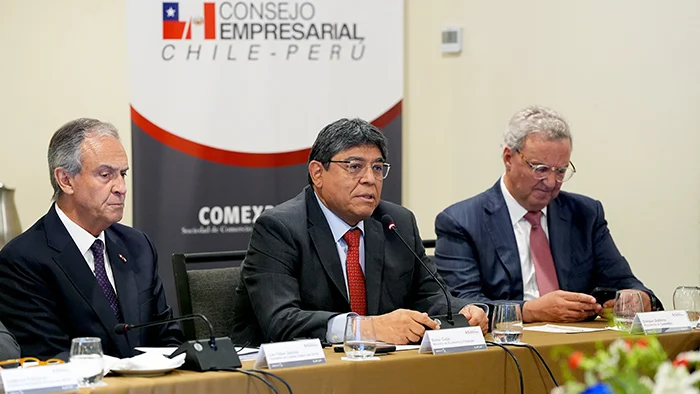
The signing of the Memorandum of Understanding (MoU) by the Mining Ministers of Chile and Peru marks the beginning of a five-year roadmap (2025–2030) dedicated to the expansion of critical mineral development. Having undergone rigorous vetting by the Ministries of Foreign Affairs in both nations, the agreement is designed to be more than a mere statement of intent. It provides the framework for a potential "Binational Mining Treaty," which would establish legally binding mechanisms similar to the successful 1997 Chile-Argentina Integration and Complementarity Treaty.
This alliance is not merely about production volumes; it is about establishing a regional "Copper Triangle" that leverages the geological richness of the Andes to ensure global supply security. By aligning regulatory standards, infrastructure development, and logistical networks, Lima and Santiago are signaling to the world that the South American Andes remain the most reliable and prolific source of copper on the planet.
Decoding "Project 51": The Strategy for Market Dominance
The core objective of Project 51 is ambitious: to ensure that Peru and Chile collectively supply at least 51% of the global market’s demand for refined copper within the next ten years.
The Urgency of the Supercycle
We are currently in the midst of a copper supercycle, a phenomenon that began in 2003 and has been significantly accelerated by current spot market volatility and the rise of copper futures. While Chile and Peru currently account for 35% of the global supply, there is an alarming 18% gap between current production and global consumption needs—a gap currently being bridged by less efficient recycling plants.

The data is clear: if the industry fails to act, market pressures will inevitably force the adoption of commercial substitutes like aluminum, zinc, and graphene. History provides a cautionary tale here—much like fiber optics rendered coaxial cables obsolete, the absence of a reliable copper supply will catalyze a technological migration away from the metal, permanently damaging the long-term economic prospects of producing nations.
The South American Copper Triangle: Geological Supremacy
The geological foundation of Project 51 rests upon the Metallogenic Map of the Border Region (14°S to 28°S). Covering a vast expanse of 675,000 square kilometers, this region houses more than 2,000 mineralized occurrences of high economic significance.
The Powerhouse Assets
The "Copper Triangle" brings together some of the most significant mining districts in the world:
- Chile: The home of mega-porphyry giants such as Chuquicamata, La Escondida, and Collahuasi.
- Peru: A region defined by massive porphyry deposits including Cuajone, Toquepala, Cerro Verde, and the state-of-the-art Quellaveco mine.
- Argentina: A growing player in the alliance, with the Vicuña District (Josemaría and Filo del Sol) currently in advanced exploration stages.
Currently, Chile and Peru control 30% of global reserves, 38% of greenfield projects, and 48% of brownfield expansion projects. By formalizing their collaboration, these nations are not just acting as individual players, but as a cohesive bloc managed by corporations that adhere to the highest global ESG (Environmental, Social, and Governance) standards.
Peru’s Strategic Contribution: Doubling Production
Peru is prepared to leverage its experience in specialized logistics and a favorable legal framework to drive this partnership forward. With a portfolio of 28 major copper projects, representing an investment exceeding $45 billion, Peru is projected to produce 2.75 million tons of copper annually in the near term.
However, the vision of Project 51 is even grander. By accelerating the expansion of key assets such as Quellaveco, Toromocho, Antamina, and the Ferrobamba projects, Peru possesses the potential to double its current production, reaching an annual capacity of 5.5 million tons.
Roadmap for Growth (2025–2032)
- Phase 1 (2025–2027): Focus on brownfield optimization and regulatory streamlining to increase immediate throughput.
- Phase 2 (2028–2030): Deployment of capital for major greenfield operations, supported by the binational infrastructure framework.
- Phase 3 (2031–2032): Full integration of the refined copper supply chain, shifting from concentrate exports to higher-value refined product dominance.
As the World Bank has repeatedly emphasized, the key to success lies in transforming these massive resource extraction projects into long-term economic drivers. "From resources to jobs" is the mantra; the challenge remains in improving institutional capacity and ensuring high-quality public budget execution.

Geopolitics: The Rise of Friendshoring
The global investment landscape is shifting. The traditional focus on pure financial return is being eclipsed by a new geopolitical reality. The erosion of long-standing Free Trade Agreements and the rise of protectionist industrial policies have created a need for "friendshoring"—the practice of sourcing critical materials from politically aligned and stable partners.
Western industrial economies are increasingly wary of supply chain vulnerabilities. Project 51 offers a solution:
- Security of Supply: Guaranteed access to refined copper for Western manufacturers.
- Sustainability: Adherence to transparent, high-standard mining practices that meet the scrutiny of global investors.
- Regional Stability: A unified South American bloc that acts as a reliable partner in the global energy transition.
Implications for the Future
The success of Project 51 will depend on more than just geology and capital; it will require firm political will and a sustained dialogue between stakeholders. By acting as a unified front, the Copper Triangle can move beyond being mere exporters of raw material to becoming the architects of the global energy transition.
The path forward requires each nation to improve its internal processes, optimize its regulatory environment, and commit to the long-term vision of the alliance. We are standing at a historic juncture where the natural wealth of the Andes can be translated into a century of prosperity for our people.
The winds of change are blowing in our favor. The South American Copper Triangle is not just a geological fact; it is a global imperative. It is time for both governments, the private sector, and civil society to ensure that this project reaches its full potential. The world needs the copper; we have the capacity to provide it. Let us make it a reality.
*() Jorge Montero Cornejo*
Former Minister of Energy and Mines
Contact: [email protected]*