The administrative and operational stability of Sedapal (Servicio de Agua Potable y Alcantarillado de Lima) has long been a subject of intense debate in Peru. Recently, the discourse has gained renewed urgency as Milton von Hesse, former Minister of Housing, Construction, and Sanitation, launched a pointed critique of the state-run utility’s performance. With Lima facing unprecedented climate-related challenges and an aging infrastructure, von Hesse is advocating for a structural overhaul that pivots away from traditional state management toward a sophisticated public-private partnership (PPP) model—without the politically sensitive consequence of rising water tariffs.
The Core Argument: A Decade of Stagnation
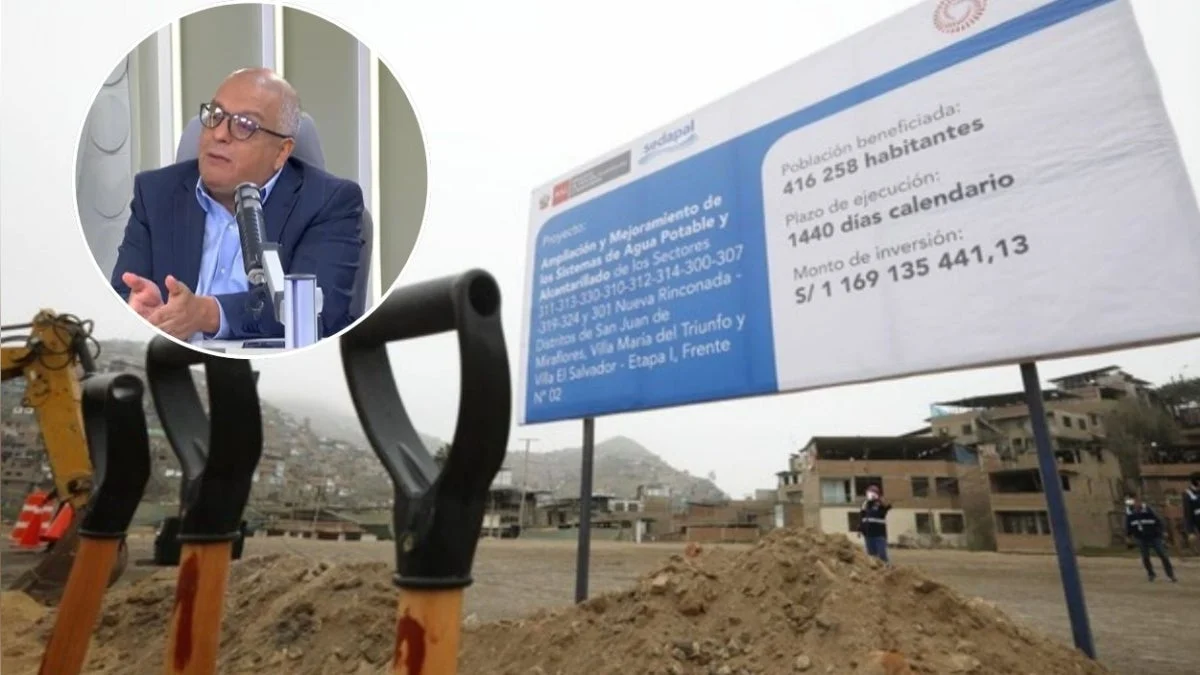
The crux of von Hesse’s critique lies in the glaring inefficiency of the project cycle within Sedapal. According to the former minister, the timeline from the initial declaration of project viability to the actual commissioning of essential water and sanitation works frequently exceeds a decade.
"Between the time a project is declared viable and the time it is inaugurated, more than ten years pass," von Hesse stated in a recent interview with RPP. This lethargic pace of execution is not merely a bureaucratic hurdle; it is a fundamental failure that leaves millions of Limenos without adequate water security. Von Hesse, who currently leads a commission tasked by the Ministry of Economy and Finance (MEF) to reform the national public investment system, argues that the current institutional framework is shackled by excessive regulatory rigidity, poor planning, and a lack of managerial agility.
Chronology of Institutional Failure
To understand the current impasse, one must look at the historical trajectory of Lima’s water infrastructure:
- The Planning Gap (1990s–2000s): During this period, Lima experienced rapid, largely unplanned urban expansion. Sedapal struggled to keep pace with the geographic spread of the city, leading to the proliferation of informal settlements that were never integrated into the formal water grid.
- The Investment Boom (2010–2020): Despite record levels of public investment directed toward the sector, the fundamental service gaps remained largely unclosed. Billions of soles were "buried" in infrastructure that failed to translate into universal access or improved service quality.
- The Climate Wake-up Call (2023–2024): The recent intensification of rainfall, coupled with the recurring threats of El Niño, exposed the catastrophic vulnerability of the city’s drainage and sewer systems. The inundations in the southern sectors of Lima served as a stark reminder that Sedapal’s reactive management style is ill-equipped for modern climate realities.
- The Reform Mandate (2024–Present): Under the guidance of the MEF, commissions—including the one led by von Hesse—have been tasked with a nine-month window to propose a total redesign of public investment to prevent the continued decay of essential services.
Supporting Data: Why "More Money" Is Not the Solution
Critics often argue that Sedapal’s failures are rooted in underfunding. However, von Hesse challenges this narrative by highlighting that the problem is not a lack of capital, but a lack of capacity.
Data suggests that despite significant financial injections, Sedapal’s performance indicators regarding non-revenue water (leaks and illegal connections) remain stubbornly high. The firm has become a classic example of a bureaucratic entity that "always arrives late." Because the company lacks the foresight to anticipate the needs of a growing metropolis, it perpetually functions in crisis-management mode.
Furthermore, the existing model forces the company to navigate a maze of procurement laws and political interference. By the time a project completes the technical and legal review process, the city’s population density has often shifted, rendering the original engineering plans obsolete or insufficient.
The Proposal: A Public-Private Hybrid
Addressing the common fear that any private sector involvement equates to "privatization," von Hesse clarifies his position. He does not propose the sale of Sedapal’s assets. Instead, he advocates for an "association model" where the state retains ownership and regulatory authority, while the day-to-day operations and management are handed over to professional, private-sector entities.
Key Pillars of the Proposed Model:
- Professionalization: Replacing political appointees with technical experts incentivized by performance metrics.
- Accountability: Implementing clear, legally binding sanctions for operational inefficiencies, which are currently absent in the state-run hierarchy.
- Proven Success: Von Hesse points to existing successful precedents, such as the Huachipa Water Treatment Plant, the Provisur desalination project, and various wastewater treatment plants (PTARs). These projects demonstrate that private sector involvement in specific segments of the water cycle has already yielded results.
The proposal aims to scale this "modular" success into an integrated management structure, where private partners take responsibility for the entire distribution and maintenance chain, operating under strict government oversight.
Tariff Concerns and Economic Viability
The most contentious issue regarding private sector participation in utilities is the potential for tariff hikes. In a country like Peru, where the cost of living is a sensitive socio-political issue, any suggestion of raising water rates is met with fierce public opposition.
Von Hesse, however, remains steadfast: "I am convinced that tariffs do not need to be adjusted to change the management model."
His argument is based on the premise that the current system is so inefficient that significant cost savings can be achieved simply by optimizing processes, reducing water waste, and improving logistics. According to the former minister, private investors have already presented proposals that would allow for the closure of the water and sanitation gap in Lima without increasing the financial burden on the average consumer for several years. By unlocking the value of "trapped capital" and applying corporate management efficiencies, the system can self-fund its own expansion.
The Broader Implications: A City at Risk
The situation with Sedapal is symptomatic of a larger malaise in Peruvian public administration. Lima, a city that stopped meaningful urban planning decades ago, is increasingly vulnerable to both slow-onset climate change and sudden, high-impact seismic events.
The implications of failing to reform Sedapal are profound:
- Public Health: The inability to manage sewage and drainage creates ongoing health risks, particularly in the most vulnerable districts of the capital.
- Economic Stagnation: Reliable water and sanitation are prerequisites for economic growth. A city that cannot guarantee these services is less attractive to investment and suffers from lower productivity.
- Governance Crisis: The politization of water companies—not just in Lima, but across the country—has led to a degradation of technical capabilities. By allowing local governments to influence the management of these utilities, the sector has become a revolving door for political favors rather than a hub for engineering excellence.
Conclusion: A Turning Point
Milton von Hesse’s proposal represents a critical inflection point for the debate on public service provision in Peru. It challenges the dogma that "public" must mean "managed by the state," and instead promotes a pragmatic, result-oriented approach.
As the MEF-commissioned reform process moves forward, the pressure on the government to act is mounting. The question is no longer whether the system is broken, but whether the political will exists to implement a model that favors efficiency over ideology. For the residents of Lima, the stakes could not be higher; a failure to reform today guarantees a future defined by water scarcity, recurring infrastructure collapses, and an increasingly precarious urban environment.
The path forward, as outlined by von Hesse, is clear: professionalize the management, leverage private efficiency, and decouple the essential provision of life-sustaining services from the cycles of political volatility. Whether this vision can survive the friction of legislative and social pushback remains the central question of the coming months.