In the high-altitude landscapes of the Apurímac region, a quiet revolution is taking place beneath the canopy of pine forests. Moving beyond traditional extractive industry models, Minera Las Bambas has launched a multifaceted initiative in the district of Challhuahuacho, aimed at turning sustainable forestry and non-timber forest products into a robust, permanent source of income for local communities. The latest milestone in this effort—the distribution of advanced telescopic pruners—marks a shift toward professionalized forest management that balances environmental conservation with significant socioeconomic growth.
Main Facts: Equipping Communities for Sustainable Growth
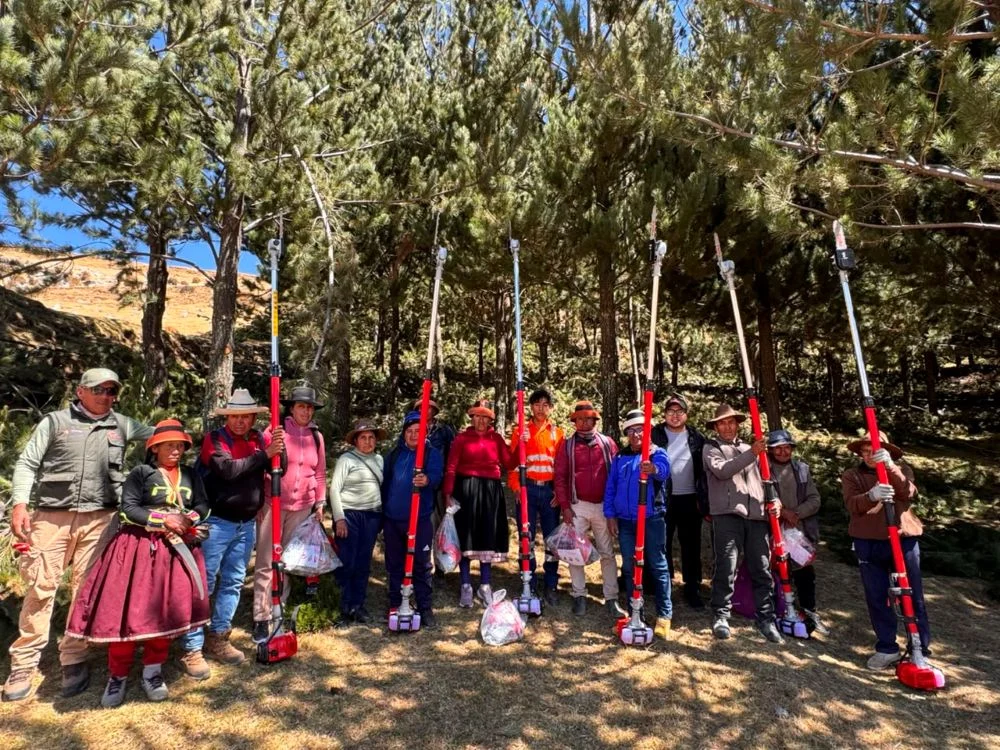
In a strategic move to optimize forest health and yield, Las Bambas recently delivered high-performance, gasoline-powered telescopic pruners to the communities participating in the "Viveros Forestales" (Forest Nurseries) project. These communities, which manage the largest tracts of forest in Challhuahuacho, were selected based on their commitment to the sustainable development of their communal lands.
The decision to provide this specific technology was the result of a rigorous technical assessment. While initial project proposals suggested the acquisition of chainsaws, field experts and community partners pivoted toward telescopic pruners. This shift was motivated by two primary factors: safety and forest health. Unlike chainsaws, which can cause significant trauma to trees if handled incorrectly, telescopic pruners allow for precise, surgical canopy management. This ensures that the structural integrity of the pine trees is maintained, promoting better growth cycles and protecting the ecosystem from unnecessary damage.
A Chronology of the Initiative
The journey toward this productive model did not happen overnight. It is the culmination of a long-term strategy implemented by Las Bambas to diversify the local economy.
- Early Implementation Phase (2024–2025): The foundation was laid through the establishment of forest nurseries. The focus was on reforestation and the identification of the symbiotic relationship between pine plantations and the growth of edible fungi (Suillus luteus).
- Capacity Building (Early 2026): Throughout the first half of the year, the project moved from a purely reforestation focus to an agricultural production model. Workshops were held to teach community members how to identify, harvest, and process mushrooms.
- The Technical Pivot (Mid-2026): Following a period of field observation, technical advisors determined that the quality of the forest canopy was directly linked to the yield of the mushrooms. Consequently, the procurement strategy was updated to prioritize equipment that favors silvicultural maintenance.
- August 2026 Distribution: The formal handover of the telescopic pruners occurred in August, accompanied by intensive training sessions, marking the transition of local producers into professional forest managers.
Supporting Data: The Fungi Economy
The impact of this project is best measured through its tangible economic output. In the year 2026 alone, the transformation of forest management has yielded impressive results that underscore the viability of non-timber forest products as a pillar of the local economy.
According to data released by the project, the participating communities have produced and successfully brought to market over 13 tons of edible mushrooms in the current year. This production has generated revenue exceeding S/ 200,000 (Peruvian Soles).

These figures are not merely statistical markers; they represent a significant increase in household income for families in Challhuahuacho. By professionalizing the harvest and providing the tools to manage the "habitat" (the pine forests) in which these fungi grow, Las Bambas has essentially created a secondary, recurring harvest that exists alongside the traditional agriculture of the region. This dual-stream income—from timber and non-timber products—provides a buffer against market fluctuations and climate volatility.
Professional Techniques: The Science of the Canopy
The training sessions accompanying the equipment handover were critical. The "science of the forest" is a central component of the project’s philosophy. Poda (pruning) is not simply the removal of branches; it is a calculated effort to influence the tree’s metabolism.
By training local community members in specialized pine pruning techniques, Las Bambas is achieving three specific goals:
- Improving Timber Quality: Properly pruned pines grow straighter and have fewer knots, increasing their future commercial value as lumber.
- Optimizing Light Penetration: By removing lower branches, more sunlight reaches the forest floor. This increase in ambient light and warmth is the precise catalyst required to stimulate the proliferation of the mycelium that produces the mushrooms.
- Longevity: Maintaining a healthy, non-stressed tree ensures that the forest remains a carbon sink and a productive asset for decades, rather than being exploited for short-term gain.
Implications: A New Model for Mining-Community Relations
The implications of this initiative extend far beyond the immediate production of mushrooms. This project serves as a blueprint for how mining companies can act as catalysts for local development that survives long after the mining operations have concluded.
Environmental Stewardship
By linking economic incentive to the health of the forest, the project creates a natural "policing" mechanism. The communities have a direct financial interest in protecting the forests from fires, pests, and illegal logging. When the health of the tree equals the health of the family’s wallet, conservation becomes a community-led priority rather than an external mandate.
Socioeconomic Diversification
One of the most persistent criticisms of mining regions is the "boom and bust" cycle. By investing in forestry, Las Bambas is helping to build an industry that is renewable. Once established, these forests can produce mushrooms and timber indefinitely with proper management. This diversification helps transition the local economy from one dependent on a singular industrial actor to one based on sustainable, community-owned agricultural and forestry enterprises.

Capacity Building and Empowerment
The shift from providing raw materials to providing high-tech tools and specialized training represents a move toward the empowerment of the local workforce. The participants are no longer just laborers; they are becoming forest technicians. This acquisition of specialized skills increases the human capital of the district, making the population more resilient and adaptable to the modern market.
Official Responses and Future Outlook
While specific quotes from company leadership emphasize the "commitment to shared value," the broader sentiment among project stakeholders is one of cautious optimism. The success of the 13-ton harvest has set a high bar, but it has also proven that the model is scalable.
Looking toward the future, the project aims to integrate more advanced supply chain management. This includes potential investments in drying and processing facilities within the communities. By adding value to the mushrooms—turning raw fungi into dehydrated, gourmet-grade products—the communities could capture a much larger share of the market value, potentially doubling or tripling their current income levels.
Furthermore, there is potential to replicate this model in other regions where Las Bambas operates. The combination of forest nurseries and non-timber product harvesting is a low-impact, high-yield strategy that aligns with international ESG (Environmental, Social, and Governance) standards.
Conclusion
The initiative in Challhuahuacho is a testament to the fact that industrial players can be pivotal in fostering sustainable development. By prioritizing the health of the forest and the economic well-being of the surrounding communities, Las Bambas has demonstrated that the most effective investments are often those that empower local people to cultivate their own resources.
As the 2026 harvest season continues, the communities of Challhuahuacho stand as a model for rural development in the Andes. They are proving that with the right tools, the right training, and a sustainable vision, the forests of the highlands can provide not just shade and lumber, but a sustainable pathway to prosperity. This project is more than a forestry program; it is an investment in the long-term dignity and autonomy of the people of Apurímac.