Date: July 31, 2026 | Source: RPP | Analysis by: Editorial Desk
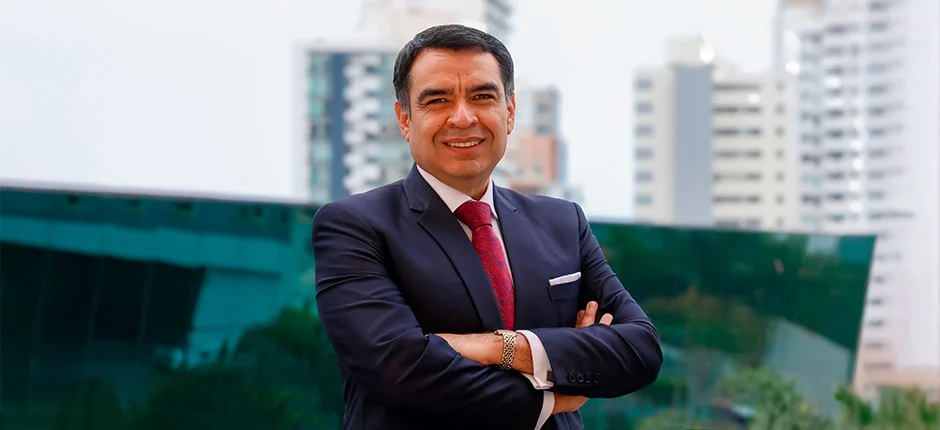
The Peruvian economic landscape is currently navigating a period of significant policy transition. Following the recent announcement by the Keiko Fujimori administration to raise the Minimum Vital Remuneration (RMV) to S/ 1,300, the private sector has signaled a mix of cautious acceptance and urgent demands for structural reform. Jorge Zapata Ríos, president of the National Confederation of Private Business Institutions (CONFIEP), has emerged as the primary voice for the business community, arguing that a salary increase in isolation could prove counterproductive without a parallel reduction in the systemic costs of formal employment.
Main Facts: The Proposed Wage Hike and Its Challenges
The government’s proposal to elevate the minimum wage to S/ 1,300 is positioned as a measure to bolster household purchasing power amidst evolving economic conditions. However, for the private sector, this move carries significant weight, particularly for micro and small enterprises (mypes) that operate on thin margins.
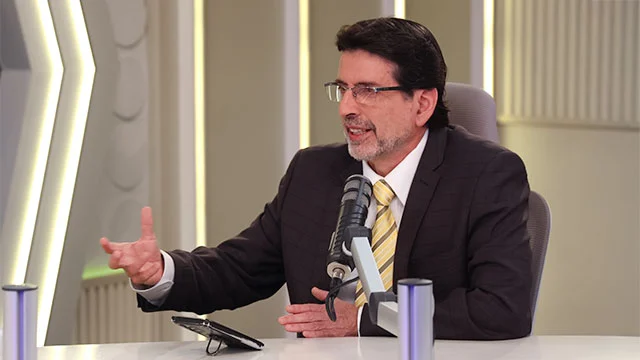
Zapata Ríos, representing the country’s largest business umbrella organization, emphasized in an interview with RPP that the focus must shift from a purely numerical increase to the broader ecosystem of labor costs. "We must discuss this within the National Labor Council (CNT) and find mechanisms to ensure that formal employment is not prohibitively expensive for the employer," he stated. According to the CONFIEP leader, the objective of any labor policy should be the expansion of the formal sector, yet current high overheads serve as a barrier to that very goal.
Chronology of the Policy Discussion
The discourse surrounding the minimum wage in Peru has been characterized by shifting political priorities and economic necessity.
- Initial Announcement: The Fujimori administration introduced the target of S/ 1,300 as part of its broader economic recovery plan.
- Government Clarification: Minister of Labor Juan Sheput subsequently clarified that the S/ 1,300 figure was a political directive intended to serve as a starting point for negotiations rather than a finalized decree.
- Institutional Engagement: The proposal has been formally referred to the National Labor Council, the tripartite body responsible for reaching consensus between the government, labor unions, and private sector representatives.
- Current Phase: Stakeholders are now engaged in technical evaluations regarding the timing of the increase and the potential implementation of compensatory measures for smaller businesses.
Supporting Data: The Burden of Labor Overheads
Central to the debate is the high cost of formalization in Peru. Zapata Ríos highlighted a sobering reality for businesses: the cost of a formal employee extends far beyond their monthly salary.
"Labor burdens in Peru typically range from 40% to 45%," Zapata explained. "This means that for every sol paid to the worker as a basic salary, the employer must account for an additional 40% to 45% in mandatory benefits, social security contributions, and payroll taxes. Effectively, if a worker receives 1 unit in salary, the employer’s cost is 1.45."
The Multiplier Effect of Informal Labor
This 45% surcharge acts as a significant deterrent to businesses looking to transition from the informal to the formal sector. For micro-enterprises—where productivity levels are often lower—this added cost makes legal compliance appear mathematically impossible. Zapata warned that when small businesses attempt to formalize under these conditions, they often find the fiscal weight unsustainable, eventually forcing them to retreat back into the informal economy to survive.
Official Responses and Strategic Reservations
The government’s strategy to mitigate the impact of the RMV increase involves the potential introduction of a "temporary bonus" for mypes. This bonus is intended to offset the immediate financial strain caused by the higher payroll obligations.
However, the private sector remains skeptical of the details. When asked about this proposed subsidy, Zapata Ríos was clear: "We need to see how this bonus will be applied, for what duration, and what the specific monetary value will be." The business community is calling for transparency and long-term planning rather than short-term fiscal patches that could disappear once the economic climate changes.
Minister Juan Sheput has maintained a conciliatory tone, acknowledging that the wage hike is a political decision that requires technical validation. The government appears to be moving toward a model of "concerted adjustment," where the wage hike is linked to productivity benchmarks—a move that CONFIEP has long advocated for as a way to ensure that salary growth does not trigger inflationary pressures or layoffs.
Implications for the Peruvian Economy
The implications of this policy debate extend far beyond the payroll of a single company. The outcome will likely dictate the trajectory of labor formalization in Peru for the next several years.
1. The Productivity Gap
CONFIEP’s core argument is that the RMV cannot be decoupled from national productivity. If wages rise without a corresponding increase in output per worker, the competitiveness of Peruvian goods and services in the international market could suffer. Furthermore, if the increase is forced upon businesses without a reduction in the "tax on formalization," the government risks stalling the engine of the economy—the small and medium enterprises.
2. The Formalization Goal
Peru suffers from a notoriously high rate of informal labor. By focusing on the 45% overhead cost, the business sector is signaling that the government’s path to a "formalized country" must involve tax and labor regulation reform. If the state continues to increase the floor (the minimum wage) while keeping the ceiling (the cost of compliance) high, the informal sector will likely expand rather than shrink.
3. Political Economy
For the Keiko Fujimori administration, the S/ 1,300 wage target is a political imperative to demonstrate support for the working class. For the business sector, it is a risk to economic stability. The successful navigation of these two interests within the National Labor Council will serve as a litmus test for the government’s ability to manage the country’s diverse stakeholders.
Conclusion: A Path Forward
The dialogue between CONFIEP and the Ministry of Labor represents a critical junction. While the intent to improve the standard of living for Peruvian workers is shared by all parties, the methodology remains a point of contention.
The path forward, as suggested by industry leaders, requires a multi-pronged approach:
- Phased Implementation: Moving away from a sudden, sharp increase toward a graduated scale that allows businesses to adjust their operational budgets.
- Regulatory Reform: Reducing the complexity and cost of the "45% burden" to make formalization an attractive, rather than punitive, choice for small entrepreneurs.
- Productivity Incentives: Linking wage increases to training, technological adoption, and infrastructure improvements that allow workers to generate more value.
As the National Labor Council begins its deliberations, the nation watches closely. The final decision on the S/ 1,300 minimum wage will define not only the monthly paychecks of millions of Peruvians but also the fundamental relationship between the state, the workforce, and the engine of private enterprise. The goal remains clear: to build an economy where dignity at work is sustained by a framework that allows businesses to thrive, rather than struggle under the weight of excessive regulation.