Main Facts: A Digital Homage to Peruvian Sovereignty
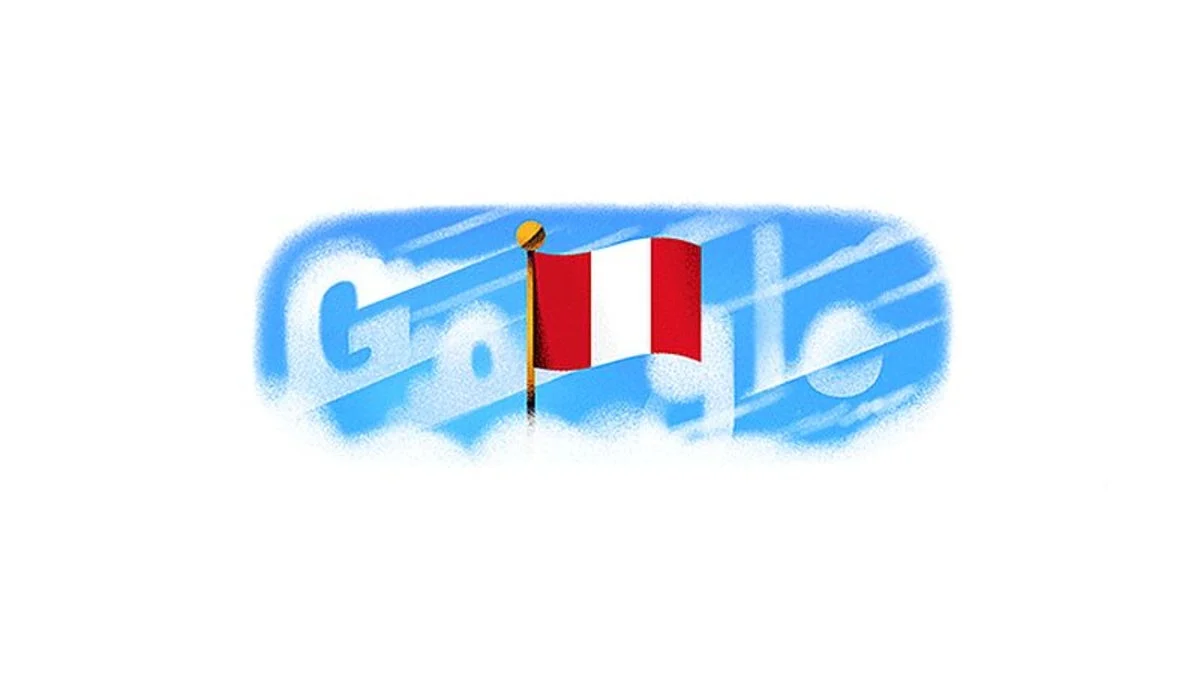
On July 28, the global technology giant Google transformed its iconic homepage to honor one of South America’s most significant historical milestones: the 205th anniversary of Peru’s independence. For millions of users across the Andean nation, the familiar multicolored letters of the search engine were replaced by a bespoke "Google Doodle," a digital illustration designed specifically to commemorate the birth of the Peruvian Republic.
The artwork, characterized by a clean and evocative aesthetic, features the Peruvian national flag—the bandera nacional—waving proudly against a vibrant, light-blue sky. In a clever integration of design, the clouds in the background are artistically shaped to form the letters of the "Google" brand, blending the digital identity of the company with the natural beauty associated with the Peruvian landscape.
This gesture is not merely an aesthetic choice; it serves as a digital bridge between a global platform and the local historical consciousness of a nation. When users click on the commemorative logo, they are redirected to a curated results page featuring historical context, news updates, and scholarly resources regarding the proclamation of independence. By leveraging its vast search infrastructure, Google ensures that the significance of July 28 remains at the forefront of the public discourse, reinforcing the connection between modern technology and historical heritage.
Chronology: The Path to 1821 and Beyond
To understand the weight of this celebration, one must look back at the arduous journey that led to the events of 1821. The independence of Peru was not an overnight victory but the culmination of years of ideological struggle, military campaigning, and the growing desire for self-determination against Spanish colonial rule.
The Pre-Independence Climate
By the early 19th century, the Viceroyalty of Peru was the heart of Spanish power in South America. However, the influence of the Enlightenment and the success of neighboring independence movements—most notably in Argentina, Chile, and Gran Colombia—created an environment of inevitable change.
The Arrival of the Liberator
The pivotal moment in this timeline occurred under the leadership of General José de San Martín. Following his successful campaign to liberate Chile, San Martín launched the Expedition Liberator of Peru. His strategy was both military and psychological; he sought to weaken royalist forces while rallying the local populace to the cause of liberty.
July 28, 1821: The Proclamation
The date that Google celebrates today marks the formal declaration made by San Martín in the Plaza Mayor of Lima. Before a massive crowd, he declared: "From this moment, Peru is free and independent by the general will of the peoples and the justice of their cause that God defends." This moment signaled the end of three centuries of colonial dominance and the beginning of a complex, often turbulent, journey toward nation-building.
The Decisive Conclusion
While 1821 marked the declaration, the struggle continued until 1824. It was not until the Battle of Ayacucho, led by Antonio José de Sucre, that the royalist army was definitively defeated, securing the independence of Peru and, by extension, the stability of South America.
Supporting Data: The Impact of Digital Commemoration
Google’s decision to dedicate a Doodle to Peru is backed by extensive data regarding user behavior and cultural engagement. In an age where digital interaction serves as the primary source of information, these localized Doodles act as educational catalysts.
Traffic and Engagement
Internal metrics from previous years suggest that on Fiestas Patrias, search queries related to "Independence of Peru," "José de San Martín," and "History of the Peruvian Flag" spike significantly. By providing a direct gateway to high-quality information, Google plays a role in the democratization of historical knowledge.
The Geography of the Doodle
It is important to note that this digital tribute is hyper-localized. The Doodle is only visible to users connecting from IP addresses within Peruvian territory. This strategy reflects Google’s commitment to cultural relevance, ensuring that the celebration remains focused on the local audience for whom this date carries profound personal and national significance. This "geo-fencing" of the Doodle highlights the distinction between global corporate branding and the respect for localized national identities.
Official Responses and Cultural Significance
The reception of the Doodle has been overwhelmingly positive, reflecting the pride of the Peruvian people. Government officials and cultural organizations often view these digital gestures as a form of "soft power" recognition, where international tech giants acknowledge the historical weight of a nation.
Cultural Identity in the Digital Age
Historians and sociologists suggest that such digital interventions are vital for preserving national memory among younger generations. In a world dominated by social media and rapid-fire content, having a historical event integrated into the daily tool used by millions—the search engine—prevents the erosion of cultural heritage.
The Role of Corporate Responsibility
Google’s Doodle team, which has created thousands of designs since its inception in 1998, carefully curates these celebrations based on historical accuracy and cultural sensitivity. The inclusion of the Peruvian flag and the sky-blue backdrop was chosen specifically to evoke a sense of national unity and hope. While the company remains a private entity, these actions are interpreted as a nod to the social responsibility that comes with being the primary gateway to the internet.
Implications: The Evolution of National Celebrations
The intersection of technology and patriotism in the 21st century creates a unique dynamic. The celebration of the 205th anniversary of Peru’s independence through a Google Doodle is indicative of how modern nations celebrate their heritage in an increasingly digitized society.
The Digital Archive of History
As we move further away from 1821, the ways in which we memorialize the past must adapt. The "live" nature of the internet allows for a living, breathing archive. Through the search results provided by Google, a student in a rural part of Peru and a businessman in Lima access the same verified historical data simultaneously, fostering a sense of shared national narrative.
Strengthening Global Ties
Beyond the borders of Peru, these Doodles serve as a point of interest for the global community. When international users encounter news about these localized celebrations, it fosters a better understanding of Peruvian history on a global scale. It highlights that Peru is not just a destination for tourism or trade, but a nation with a deep, complex, and storied past that is still actively commemorated today.
Future Outlook
As Peru looks toward the future, the integration of technology in civic life will likely continue to grow. The use of augmented reality, interactive historical maps, and further digital tributes suggests that the way we celebrate independence will become more immersive. For now, the simple yet effective design of the 205th-anniversary Doodle stands as a testament to the fact that even the most advanced technology can—and should—take a moment to pause and honor the history that shaped the present.
Conclusion
The 205th anniversary of Peru’s independence is a milestone that transcends simple political boundaries; it is a celebration of identity, resilience, and the enduring quest for freedom. By marking this occasion with a dedicated Doodle, Google has once again demonstrated the power of digital platforms to engage with and reflect the cultural values of the communities they serve.
As the sun sets on this year’s Fiestas Patrias, the legacy of the independence movement remains firmly embedded in both the physical landscape of the Peruvian nation and the digital landscape of the global internet. The flags continue to wave, the history continues to be written, and the search engine continues to connect the past to the future, ensuring that the significance of July 28, 1821, is never lost to time.