Introduction: A New Direction for Social Security
In a move that has sparked intense debate within the Peruvian political landscape, the administration of President Keiko Fujimori has officially appointed Dr. Zulema Tomás Gonzales as the new Executive President of the Social Health Insurance system, known as EsSalud. The appointment, which marks a significant shift in the government’s approach to public health management, has been met with both professional endorsements from the medical community and vocal skepticism from political critics.
The appointment comes at a critical juncture for EsSalud, an institution that has faced persistent challenges regarding service efficiency, infrastructure management, and institutional stability. As the government seeks to revitalize the agency, the decision to bring in Dr. Tomás—a figure with a complex political history—serves as a testament to the administration’s focus on technical experience over partisan alignment.
Official Defense: Juan Sheput on the Integrity of the Appointment
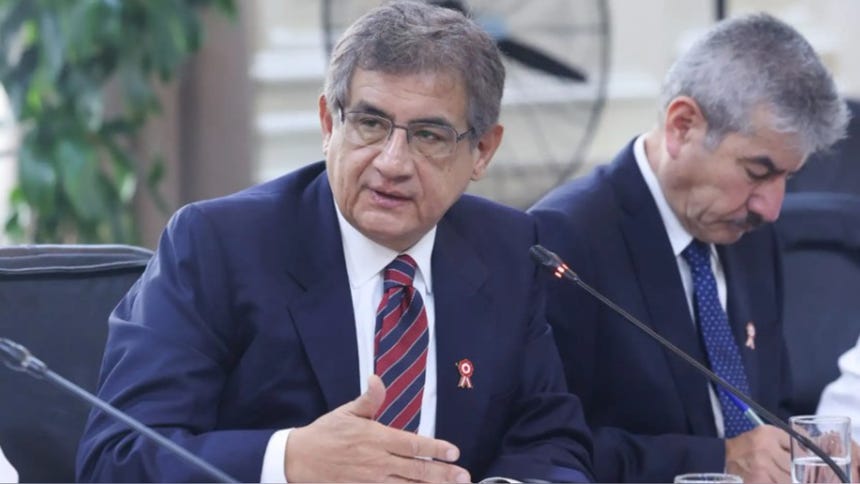
The defense of the appointment was spearheaded by the Minister of Labor, Juan Sheput, who oversees the sector to which EsSalud is attached. In a robust public statement released via social media, Sheput dismissed the criticism surrounding Dr. Tomás’s past, characterizing the backlash as the work of individuals who prioritize political score-settling over substantive discourse.
"The doctor has a distinguished trajectory, recognized by the Medical College of Peru, various former presidents of EsSalud, and multiple regional governments and academic institutions," Sheput stated. "She is, by any objective metric, a professional of great success."
The Minister took a pointed tone regarding the dissent, arguing that the critics are "individuals who only know how to criticize and dig into the past because they have nothing to contribute to the present." He emphasized that the government’s priority is the recovery and modernization of EsSalud, expressing full confidence that Dr. Tomás, in coordination with the Ministry of Labor, possesses the expertise required to turn the agency around.
Chronology: The Road to the Presidency of EsSalud
The transition in leadership at EsSalud did not occur in a vacuum. The institution has seen significant turnover in recent months, reflecting the broader challenges of the current administration’s health agenda.
- August 9: Following the formal removal of Jaime Moreno Eustaquio from the executive presidency of EsSalud, the government installed Hilda Sandoval Cornejo as an interim leader. Her tenure was defined by the need for stabilization during a period of transition.
- Early September: President Keiko Fujimori publicly acknowledged that her administration was vetting candidates for the permanent position, emphasizing a desire for high-level technical experience.
- September 11: Reports emerged regarding the potential selection of Dr. Zulema Tomás, fueling initial speculation and political scrutiny.
- September 13: The government formally confirmed the appointment, signaling the end of the interim leadership period.
- Present Day: Dr. Zulema Tomás assumes the role, tasked with addressing the systemic issues that led to the removal of her predecessor.
Background and Professional Trajectory
Dr. Zulema Tomás is no stranger to the upper echelons of public administration in Peru. Her career has been marked by high-stakes roles that demand both clinical expertise and administrative acumen.
Most notably, she served as the Minister of Health between January 7, 2019, and November 15, 2019, under the administration of then-President Martín Vizcarra. Her tenure in that role was a period of intense public scrutiny, during which she oversaw the national health agenda. Prior to her ministerial appointment, she served as the Director General of the National Institute of Child Health (Instituto Nacional de Salud del Niño), a position that established her reputation as a capable hospital administrator and a leader within the pediatric healthcare community.
President Keiko Fujimori, in an interview with RPP prior to the official confirmation, addressed the elephant in the room: the ideological differences between the current government and the administration under which Dr. Tomás previously served. "When I evaluate a curriculum, I do not fixate on whether the candidate has worked in a government that was an opponent to us," Fujimori stated. "I look at their experience in the sector and their ability to produce results."
Supporting Data: The Institutional Challenges of EsSalud
The appointment of Dr. Tomás occurs against a backdrop of deep-seated institutional challenges. EsSalud is the primary healthcare provider for millions of formal workers in Peru, and its performance is often cited as a key indicator of the state’s effectiveness.
Key Performance Indicators for the Incoming Leadership:
- Wait Times: Reducing the backlog for specialized consultations and elective surgeries remains a top priority for the insured population.
- Drug Availability: Addressing the persistent shortages of essential medicines in pharmacies across the country.
- Infrastructure: Managing the maintenance and expansion of hospital facilities that have faced years of underinvestment.
- Financial Sustainability: Optimizing the collection of contributions and managing expenditures to ensure long-term solvency.
The appointment of a career medical professional like Dr. Tomás is interpreted by analysts as an attempt to pivot away from political appointees and toward "technocratic management." By prioritizing someone with a clear track record in hospital administration, the Ministry of Labor is betting that operational experience will outweigh the political baggage of her previous service in a rival government.
Implications: The Political Landscape
The appointment has far-reaching implications for the Fujimori administration’s relationship with the legislative branch and the broader public.

1. The Strategy of "Pragmatism"
By selecting a minister from the Vizcarra era, Keiko Fujimori is attempting to demonstrate a "big tent" approach to governance. This sends a message to both the international community and the private sector that the government is willing to overlook partisan history in favor of professional competence. This pragmatism is a crucial component of the administration’s efforts to stabilize the economy and restore public confidence in state institutions.
2. The Nature of the Opposition
The criticism leveled against the appointment—which Minister Sheput so strongly rejected—highlights the polarized nature of the current Peruvian political scene. For the opposition, the focus on Dr. Tomás’s past serves as a reminder of the volatility that defined the 2019 political crisis. For the government, however, these critiques are viewed as distractions from the urgent need to manage the healthcare system.
3. Expectations for the Future
The success of Dr. Tomás will be measured by her ability to bridge the gap between institutional reform and the immediate needs of the patients. The medical community, represented by the Medical College of Peru, has largely welcomed the appointment, citing her technical background. However, the true test will be her capacity to implement structural changes without triggering further political backlash.
Conclusion
As Zulema Tomás takes the reins at EsSalud, she faces a dual challenge: she must navigate the complex bureaucracy of the Peruvian healthcare system while simultaneously managing the political optics of her appointment. Minister Juan Sheput’s firm defense of the decision suggests that the administration is fully committed to this path, prioritizing the "success" and "experience" of the appointee over the noise of political debate.
Whether this move will lead to the revitalization of EsSalud remains to be seen. However, the appointment underscores a significant trend in the current government’s strategy: the move toward a more technocratic, experience-led approach to public service, even at the risk of upsetting traditional political alliances. The coming months will be decisive as the new leadership attempts to implement its vision for a more efficient and responsive Social Health Insurance system.