Executive Summary: The Crisis of Confidence
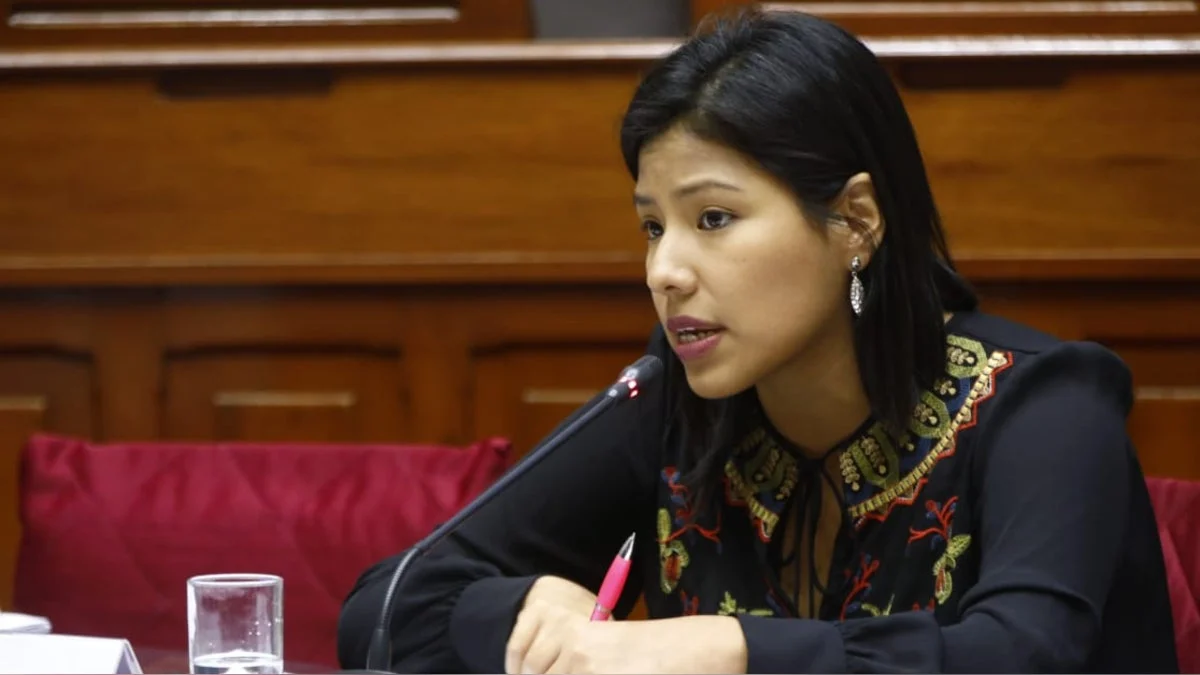
The political landscape in the national legislature has reached a boiling point as the debate over the censure of Minister of the Interior, César Astudillo, intensifies. Indira Huilca, a prominent deputy representing the "Ahora Nación" caucus, has publicly reaffirmed her intention to vote in favor of the motion of censure. Her stance highlights a growing disconnect between her personal convictions and the collective strategy of her parliamentary group.
Huilca’s position is rooted in a fundamental critique of the current administration’s security policy, which she characterizes as operating on "autopilot." Despite her resolute stance, she acknowledges a deep-seated internal divide within "Ahora Nación." While she advocates for immediate accountability, a significant portion of her colleagues remain committed to a "wait-and-see" approach, clinging to the hope that the government might demonstrate tangible improvements in public safety before the end of the year.
Chronology of the Political Escalation
The Security Vacuum
The move to censure Minister Astudillo did not emerge in a vacuum. For months, opposition lawmakers have signaled growing frustration with the executive branch’s inability to curb rising rates of organized crime and urban violence.
- Mid-Year: Concerns were initially raised regarding the efficacy of police leadership.
- The Trujillo Incident: A critical turning point occurred when violent criminal activity in Trujillo forced the administration to acknowledge the failure of its security strategy. This prompted the eventual removal of Óscar Arriola, a figure who had been the subject of persistent public questioning and ethical scrutiny.
- Present Week: The formal motion of censure was tabled, with the chamber scheduled to debate and vote on the measure this Thursday, October 1st.
The Legislative Tug-of-War
Simultaneous to the censure motion, the government has been navigating a contentious request for delegated legislative powers. The executive branch initially requested authority across eight distinct policy areas. However, negotiations in the Constitution Committee—chaired by opposition forces—have become stalled, with accusations of legislative maneuvering and bad faith negotiations flying between the government and the opposition benches.
Supporting Data and Policy Critique
The "Autopilot" Argument
In a recent appearance on the RPP program Prueba de Fuego, Deputy Huilca provided a scathing assessment of the Ministry of the Interior. She argued that the government lacks a comprehensive, proactive plan to address national insecurity.
"This government is failing the country," Huilca asserted. "It is entirely reactive. We saw this with the delayed removal of Óscar Arriola; it took a localized crisis in Trujillo to force their hand. We are not seeing a strategic vision; we are seeing a government that operates on autopilot, waiting for the next disaster before making personnel changes."
The Delegation of Powers Dispute
The complexity of the political landscape is further compounded by the government’s request for delegated powers. Huilca’s critique extends beyond the Minister of the Interior to the broader legislative strategy of the ruling party, "Renovación Popular."
- Scope Expansion: Despite public promises to narrow their legislative focus, the government’s revised proposal appears to have expanded from eight to nine distinct policy areas.
- The Opposition Counter-Proposal: Within the Constitution Committee, opposition parties, including those aligned with Huilca, proposed a streamlined approach. They argued that the government should be granted powers only in two critical areas: combating criminality and mitigating the risks associated with the El Niño phenomenon.
- Lack of Cooperation: According to Huilca, the ruling party has consistently ignored these good-faith efforts to reach a consensus, choosing instead to engage in procedural roadblocks, such as attempting to censure the chair of the Constitution Committee to delay proceedings.
Official Responses and Internal Dissent
The Harvey Colchado Factor
The internal dynamics of "Ahora Nación" are complicated by the vocal opposition of colleague Harvey Colchado. Colchado has publicly declared that he will vote against the censure of Minister Astudillo, citing his continued confidence in the government’s potential for reform and his support for the newly appointed commander of the National Police.
Huilca maintains a professional distance regarding Colchado’s position. "I respect Harvey’s perspective," she noted. "He holds significant expectations for the new leadership within the National Police. We clearly disagree on the necessity of this censure, but it is a difference of political judgment, not a sign of an ideological schism within the party."
Denying the "Quiebre"
Despite media reports suggesting an imminent fracture within "Ahora Nación," Huilca vehemently denied that the caucus is on the verge of splitting. She characterized the situation as a healthy, albeit difficult, debate regarding parliamentary responsibility. "There is no ‘break’ in the caucus," she insisted. "There are, however, profound discrepancies regarding how to hold the Executive accountable."
Implications for the Government and the Future
The October 1st Vote
The upcoming vote on the censure of César Astudillo will serve as a bellwether for the government’s stability. Should the motion pass, it would signify a massive defeat for the administration and a forced reorganization of the cabinet. Should it fail, it would provide the administration with a temporary reprieve, though it would likely leave the government politically weakened and isolated from key opposition sectors.
Governance Under Pressure
The failure to reach an agreement on the delegation of powers suggests a period of prolonged legislative gridlock. By refusing to limit their scope to the requested two areas—criminality and climate change mitigation—the government risks losing the legislative authority it claims is necessary to govern effectively.
Huilca’s critiques point to a broader concern: the perceived arrogance of the Executive in its dealings with the legislative branch. If the government continues to ignore the requests of the opposition for specific, actionable policy goals, it may find that its ability to pass any legislation in the coming months is severely compromised.
The Road to December
Huilca revealed that the primary reason many of her colleagues are withholding their support for the censure is a shared hope that by December, the administration will have met specific benchmarks. This effectively sets a "soft deadline" for the government. If, by the end of the year, the Ministry of the Interior has not shown measurable success in its crime-fighting efforts, the political cost for those currently supporting the minister will likely skyrocket, potentially triggering a second, more unified, push for his removal.
Conclusion: A Delicate Balance
The case of Indira Huilca and the "Ahora Nación" caucus serves as a microcosm of the current national political environment. It is a landscape defined by deep suspicion between the Executive and Legislative branches, internal tactical disagreements, and a citizenry increasingly impatient with the lack of results in public safety.
As the October 1st deadline approaches, the pressure on Minister Astudillo to provide a transparent, public, and effective plan against criminality has never been higher. Whether the government chooses to embrace transparency or continue its reactive path will determine not just the fate of the Minister, but the very viability of the current legislative agenda. For now, the nation watches, waiting to see if the promises of "future results" will materialize or if the government’s "autopilot" approach will lead to an inevitable political crash.