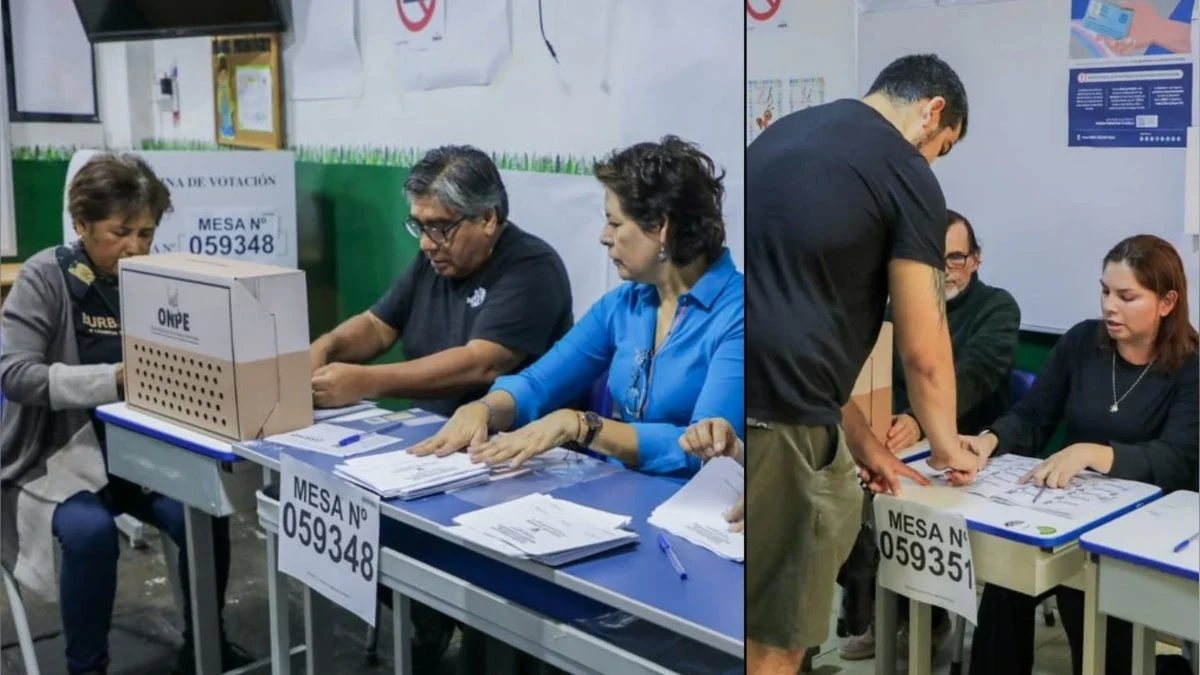
As Peru approaches the upcoming Regional and Municipal Elections scheduled for Sunday, October 4, 2026, the national electoral apparatus is preparing for a massive logistical undertaking. With over 89,000 polling stations set to be installed across the country, the integrity of the process rests not only on the officials of the National Office of Electoral Processes (ONPE) but also on the vigilant presence of party-appointed representatives known as personeros.
These individuals serve as the primary line of defense for political organizations, ensuring that the democratic process remains transparent, fair, and compliant with established regulations. As the date draws near, the challenge of covering these thousands of tables has become a focal point of concern for political analysts and election experts alike.
The Mechanics of Electoral Vigilance
The role of a personero is fundamental to the legitimacy of the vote. From the early morning installation of the polling stations to the final counting of ballots after the polls close, these representatives are authorized to observe every step of the process. Their presence provides a necessary layer of oversight, allowing them to lodge formal complaints or raise observations whenever they perceive a deviation from electoral norms.
According to the National Jury of Elections (JNE), the authority governing these processes, a personero does not possess the power to stop the voting process, but they are empowered to challenge the identity of a voter if they have legitimate grounds to do so. Román Campos, a spokesperson for the JNE, clarified the nuance of this authority: "A personero might challenge the identity of an elector during the voting phase. While the polling station members have the final say in the first instance, the personero retains the right to appeal that decision. Even if the voter is allowed to proceed, the personero must record their dissent in the official observation section of the log, ensuring that the Special Electoral Jury (JEE) can review the case in the second instance."
This mechanism extends into the critical phase of vote counting. If a representative believes a ballot has been improperly deemed valid or null, they are entitled to challenge that specific vote. If the polling station members reject the challenge, the personero can appeal, ensuring that the dispute is documented in the act for subsequent legal review. However, the JNE stresses that such challenges must be reasonable and evidence-based, cautioning against the practice of "challenging for the sake of challenging," which could unnecessarily disrupt the proceedings.
Eligibility and Accreditation
Contrary to popular belief, one does not need to be a card-carrying member of a political party to serve as a personero. The requirements are straightforward: the individual must be at least 18 years of age, hold a valid National Identity Document (DNI), and be authorized to vote. This flexibility allows political organizations to tap into a wider pool of supporters and volunteers to ensure their interests are protected across the vast geography of the nation.
The accreditation process is facilitated through the JNE’s digital infrastructure. Organizations can register their representatives via the "Declara+" platform up to seven days before the election. Furthermore, the JNE is preparing to launch a specialized "Personeros" mobile application to streamline this registration process, while also allowing for last-minute accreditations directly before the polling station members on the day of the vote.
Chronology of Preparations and Current Data
The mobilization of personeros has been a gradual process. As of late September, the JNE reported a significant uptick in registrations as the election date approached.
- September 23: The JNE reported 143 registered polling center representatives and 372 personeros of the table.
- September 25: By 4:00 p.m., these numbers had surged to 203 and 698, respectively.
Current data highlights the varied efforts of different political organizations. Acción Popular leads the charge with 364 personeros of the table, followed by Somos Perú with 100, and Perú Primero with 75. A similar trend is observed in the registration of polling center representatives, where Perú Primero takes the lead with 62, followed by Acción Popular and Somos Perú. These figures suggest that while major parties are making headway, the vast majority of the 89,000 polling stations remain without guaranteed oversight.
The Challenge of National Coverage
The sheer scale of the 2026 elections presents a logistical nightmare for political parties. Covering 89,000 tables requires a massive investment of human capital and financial resources. Fernando Rodríguez Patrón, a prominent electoral expert, characterizes the current situation as a "real problem that cannot be solved by political will alone."
"Some large parties are struggling to reach 50% coverage," Rodríguez Patrón noted during a recent briefing. "For smaller regional movements, the coverage is often minimal."
The expert identifies three critical factors that dictate the ability of a party to cover these stations:
- Militancy and Recruitment Capacity: The ability to mobilize a dedicated base of volunteers who are willing to commit to a full day of observation.
- Logistical Resources: The capital required to transport, feed, and support these representatives throughout the day, especially in remote or rural areas.
- The Accreditation Window: While the legal flexibility to register on the day of the vote allows for last-minute adjustments, it also fosters a culture of improvisation, often leading to poorly trained or unprepared observers.
Implications for Electoral Integrity
The absence of a personero at a polling station has significant consequences for a political organization. As Rodríguez Patrón explains, the personero is the "only authorized representative a party has to defend its vote in real-time." Without this presence, a party is effectively blind to what occurs inside the booth.
When a party fails to station a personero, they forfeit the right to witness the count firsthand, contest irregularities as they happen, and secure an immediate copy of the final tally. Once the act is signed and the personeros have left, the opportunity to challenge the integrity of the process at that specific table is effectively lost. While parties can still contest "arithmetic discrepancies" (errors in the math of the final tally), they cannot raise issues regarding voter coercion, improper campaigning near the polls, or technical failures in the setup of the table.
This creates a "fiscalization gap." In some urban districts, a single table might have four or five representatives from competing parties, resulting in intense scrutiny. Conversely, in other parts of the country, tables may be left entirely unmonitored. This disparity threatens to undermine the perception of a uniform and transparent election.
Restrictions and Behavioral Standards
While the personero is a vital component of the democratic process, they are not above the law. Their role is strictly observational and procedural. They are explicitly prohibited from interfering with the duties of the polling station members or causing disturbances that could impede the flow of the election.
The JNE has established a clear protocol for addressing disruptive behavior. The first step is a formal warning issued by the polling station officials. If the personero persists in their disruptive actions, the station members are authorized to request the intervention of the National Police or the Armed Forces present at the site to remove the individual from the premises. This ensures that while oversight is protected, the orderly conduct of the election remains the priority.
Conclusion: A Call for Civic Participation
As the October 4th election date approaches, the role of the personero stands as a testament to the participatory nature of Peruvian democracy. It is a responsibility that requires commitment, integrity, and a deep understanding of electoral law.
For the political parties, the final days before the vote are a race against time to ensure that their interests are represented across the country. For the citizenry, the presence of these observers serves as a reassurance that their vote is not just being counted, but is being defended against potential irregularities. Whether the political organizations succeed in covering the 89,000 tables will be one of the defining stories of the 2026 election, with the outcome ultimately shaping the public’s confidence in the elected regional and municipal leaders.
In a climate where transparency is the bedrock of institutional stability, the work of these volunteers remains, perhaps, the most important element of the entire electoral cycle.