The real estate landscape of Lima East is on the brink of a significant metamorphosis. El Agustino, a district traditionally characterized by its industrial roots and residential density, is positioning itself as a central hub for modern urban development. At the heart of this shift is the ambitious investment by the Vallejo Group, which has officially unveiled plans for a $46 million mixed-use project that promises to redefine the local skyline and commerce.
This project is not merely a collection of buildings; it is a sophisticated urban integration strategy. By blending residential high-rises with a multi-level commercial strip center and a direct subterranean connection to the Lima Metro Line 2, the Vallejo Group is betting on the transformative power of Transit-Oriented Development (TOD). As Lima continues to expand, the strategic convergence of housing, retail, and mass transit is becoming the gold standard for sustainable city planning.
The Vision: A New Landmark for Lima East
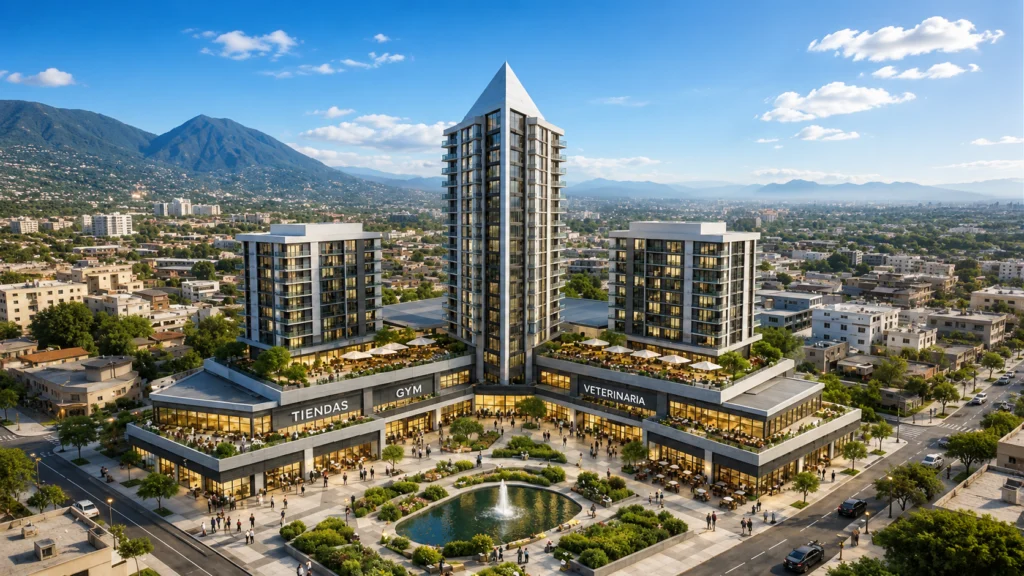
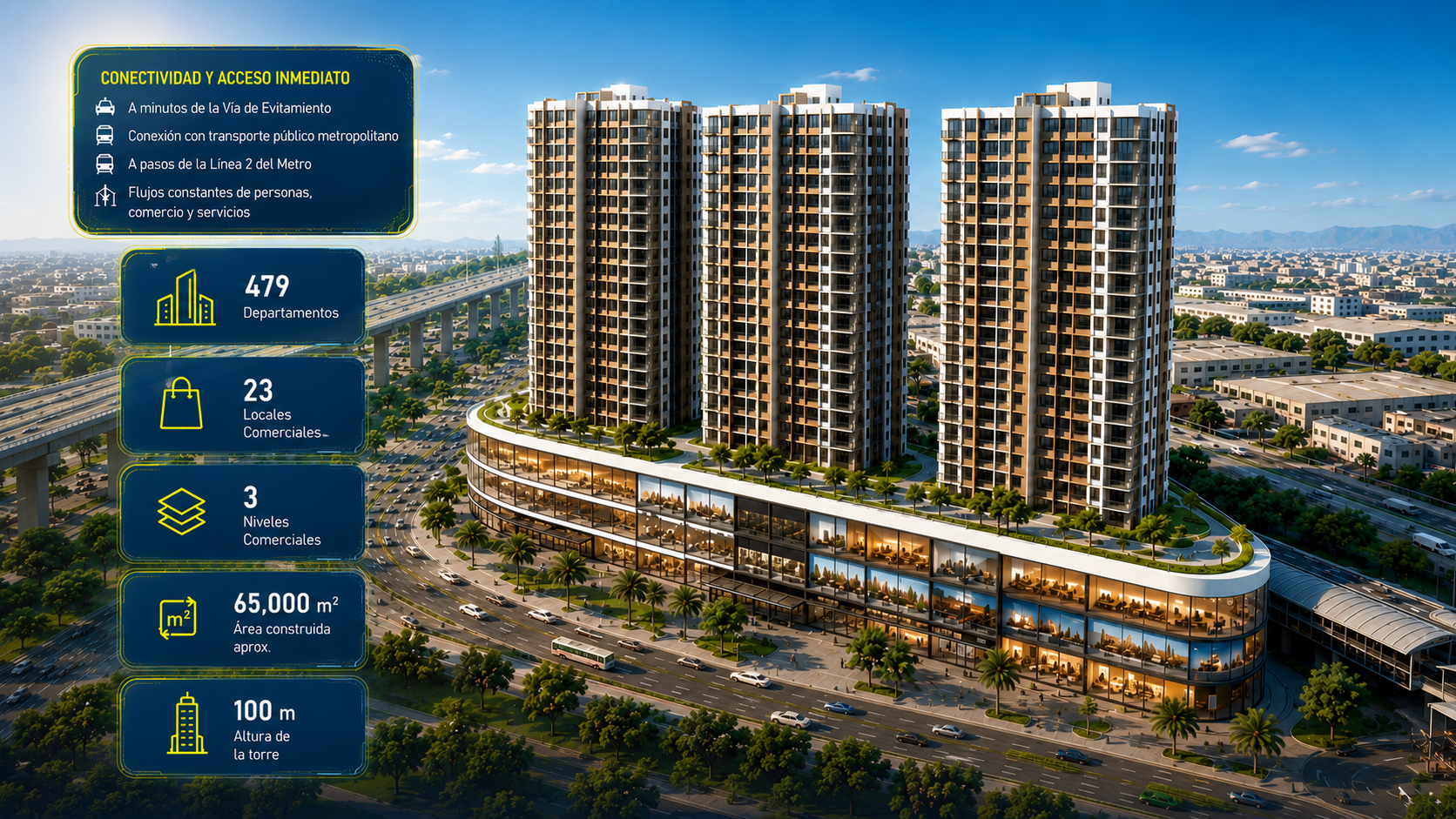
The development will be constructed on a prime plot of 3,541.84 square meters. The architectural design is as daring as it is functional, featuring a verticality rarely seen in this part of the city. The project will culminate in a maximum height of 100 meters, comprising three distinct towers: two 14-story residential blocks with rooftop terraces and one commanding 36-story tower that will serve as a visual landmark for the surrounding area.
The base of this architectural trio will house a three-level commercial complex. Designed to act as a neighborhood anchor, this strip center will host 23 retail units, each averaging approximately 115.90 square meters. The configuration includes a first-floor minimarket to serve the immediate needs of residents and commuters, while the second floor will host a curated food court, complete with various dining and café options.
Chronology and Development Roadmap
The journey to this point has been defined by meticulous planning and strategic navigation of municipal regulations. After successfully finalizing the zoning studies—a process that often proves to be the most significant hurdle for large-scale urban developments in Peru—Vallejo Group has accelerated its progress.
The company has now transitioned into the final stages of architectural design and has begun presenting the project’s master plan to both domestic and international investors. According to José Antonio Vallejo, CEO of the Vallejo Group, the evolution of the zoning landscape has provided an unexpected tailwind. "The most relevant aspect is that the project could move faster than initially anticipated," Vallejo noted in an exclusive interview with Perú Retail. "A zoning change can take up to a year, not to mention the associated costs. We have navigated this strategically to optimize our execution timeline."
Currently, the project has moved past the conceptual design phase and is entering the technical refinement stage, ensuring that the integration with the metro station and the logistical flow for the commercial areas meet international safety and accessibility standards.
Technical Specifications and Infrastructure
A project of this scale requires a robust infrastructure backbone. The development includes three levels of basement parking, a necessity for a high-density complex. The allocation of these spaces has been carefully planned to serve both the residential occupants and the commercial visitors:
- Residential Parking: 177 dedicated spaces.
- Commercial Parking: 23 dedicated spaces.
- Micro-mobility Support: 38 spaces for motorcycles and 11 for bicycles, highlighting the group’s commitment to modern, eco-friendly transport solutions.
- Basement Configuration: The second and third basement levels are exclusively for vehicular parking, while the first basement level will serve as a transition zone, hosting retail spaces and providing seamless elevator and staircase access to the upper levels of the complex.
The residential component is equally impressive, offering 479 apartments with an average area of 71.50 square meters. The units, featuring two and three-bedroom layouts, are designed to cater to modern urban families. The project’s shared amenities—which include landscaped patios, rooftop terraces, swimming pools, and dedicated grilling zones—are intended to foster a sense of community, a critical component in the success of modern residential towers.
The "Transit-Oriented" Edge: The Metro Line 2 Connection
Perhaps the most significant value proposition of this project is its physical integration with the Lima Metro Line 2. The developers are planning a subterranean tunnel that will link the complex directly to the vicinity of the Evitamiento station. This creates a "seamless mobility" experience for residents and shoppers, allowing them to traverse the city with unprecedented ease.
By tapping into the Metro Line 2 network, the project effectively links El Agustino to the rest of the capital, drastically reducing commute times for residents working in central or western Lima. This connectivity is a major draw for investors and potential tenants alike, as it transforms the project from a local development into a regional transit hub.
Official Strategy: A Managed Commercial Model
Unlike many developments where retail spaces are sold off individually—often leading to a fragmented, unmanaged, and chaotic commercial experience—Vallejo Group is taking a different path. The company plans to manage the commercial component through a professional investment fund.
"The only way a retail project can be truly profitable and sustainable is if the spaces are leased rather than sold," explains CEO José Antonio Vallejo. "When you sell the spaces, each owner does what they want, which distorts the demand and undermines the tenant mix. By utilizing an investment fund, we ensure that the retail experience is coherent, professional, and directly aligned with the actual needs of the local population."
This approach allows the developer to curate the brands, services, and dining options within the strip center, ensuring that the commercial component adds tangible value to the residential units above. It also allows for greater flexibility in updating the retail offerings as the neighborhood’s demographics evolve.
Implications for the Local Economy
The impact of this $46 million investment extends far beyond the construction site. By introducing a high-density, mixed-use model into El Agustino, the Vallejo Group is signaling to the market that the district is ready for a new level of economic activity.
- Urban Regeneration: The project acts as a catalyst for urban renewal, replacing underutilized space with a vibrant, safe, and modern facility.
- Increased Property Values: The introduction of modern residential and commercial inventory typically elevates the value of surrounding real estate, potentially triggering further investment in the immediate area.
- Employment Opportunities: Beyond the immediate construction jobs, the operation of the strip center, the food court, and the maintenance of the residential towers will create a permanent ecosystem of service and administrative roles.
- Integration of the Informal Economy: The planned logistics areas for urban services aim to provide a structured space for deliveries and micro-logistics, which is increasingly vital in the age of e-commerce.
Conclusion: A Blueprint for the Future of Lima
The Vallejo Group’s initiative is a prime example of how private capital can be leveraged to solve urban challenges. By solving the dual needs of high-quality, accessible housing and modern retail infrastructure, while simultaneously maximizing the utility of the government’s investment in the Metro Line 2, this project is a benchmark for future urban development in Peru.
As the construction progresses, the eyes of the real estate sector will remain fixed on El Agustino. If successful, this megaproject will likely become a template for other developers to follow, proving that Lima’s districts, when empowered by connectivity and strategic planning, have the potential to host world-class, mixed-use urban centers that cater to the needs of a growing, modernizing city. The transition from industrial fringe to a bustling, transit-connected heart is now well underway.