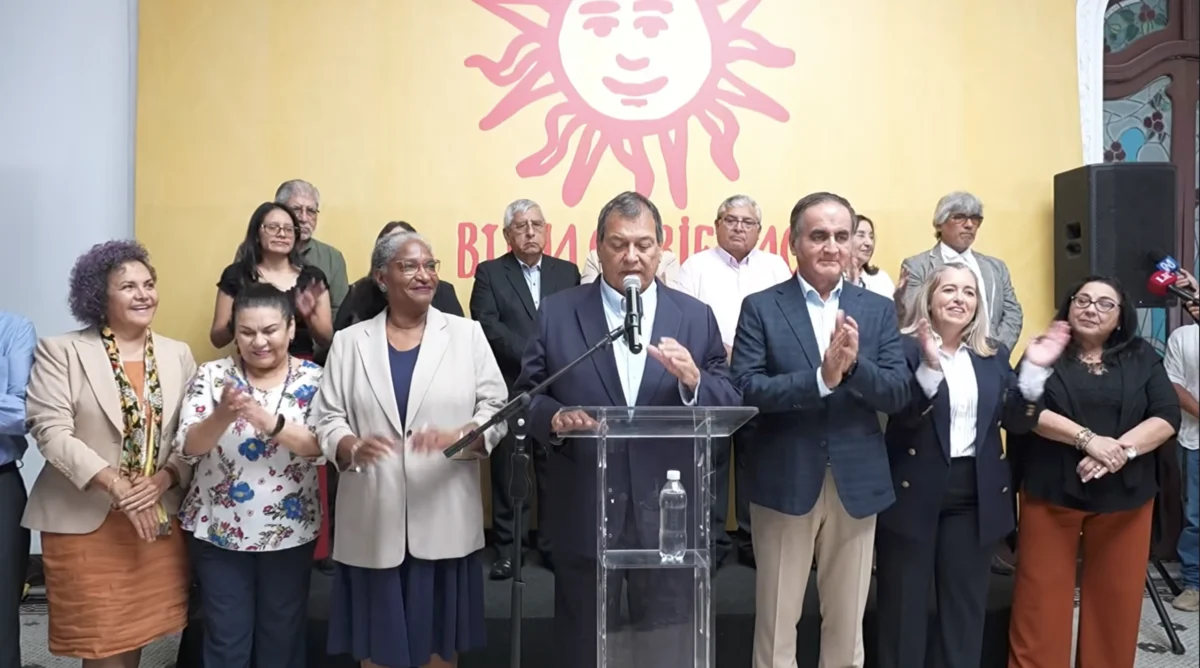
As Peru stands on the precipice of a decisive second-round election, the political landscape has become a stagnant, suffocating pool of disillusionment. On May 23, Jorge Nieto, a prominent political figure, announced that his party would officially spoil their ballots in the upcoming runoff. Their strategy—or perhaps their form of protest—is to write “For a Good Government” on the ballot, effectively voting for the name of their own party. It is a symbolic act of self-preservation in a system that many citizens feel no longer represents them.
Nieto’s rationale is rooted in a profound rejection of the binary choice presented to the Peruvian electorate. He argues that this second round offers no escape from the paralyzing polarization that has crippled the nation’s political stability. For many, the central question remains: how does one navigate a democracy that has been subverted from within?
The Anatomy of Polarization: A Historical Retrospective
To understand the current state of affairs in Peru, one must look back at the collapse of the fujimorato—the authoritarian regime of Alberto Fujimori. When the corruption scandals of the late 1990s and the subsequent fall of the dictatorship occurred, there was an immense, perhaps naive, hope for a clean, functional democracy. That optimism was short-lived.
Since 2006, anti-democratic forces have successfully weaponized public disillusionment. By erasing historical memory and masquerading as the only path toward "efficacy," these factions have forced the Peruvian electorate into a repetitive cycle of choosing the "lesser evil."
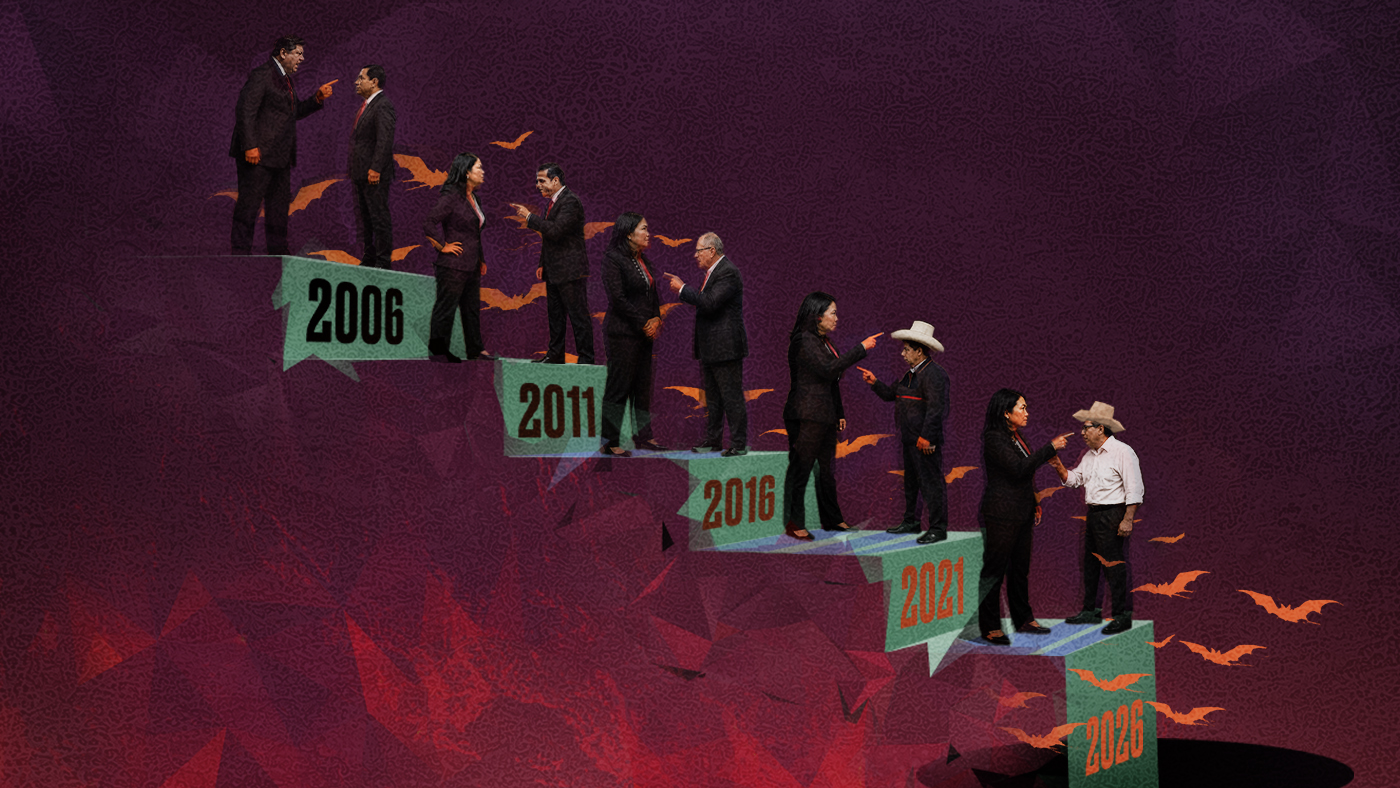
A Chronology of Declining Alternatives
- 2006: Ollanta Humala vs. Alan García.
- 2011: Ollanta Humala vs. Keiko Fujimori.
- 2016: Pedro Pablo Kuczynski vs. Keiko Fujimori.
- 2021: Pedro Castillo vs. Keiko Fujimori.
- 2026: Roberto Sánchez vs. Keiko Fujimori.
With the partial exception of Alan García, none of these candidates emerged as true statesmen. Humala, while fulfilling some campaign promises in 2011, ultimately proved to be a weak leader lacking charisma. Since 2016, the "lesser evil" strategy has done little more than prevent Keiko Fujimori from officially occupying the presidential palace. In practice, however, her control over the legislative branch allowed her to govern from the shadows, effectively directing the nation’s trajectory.
The Mafia Coalition and the Erosion of Institutions
The most alarming development of recent years has been the formation of a "mafia coalition"—an unnatural alliance between far-right factions like Renovación Popular and remnants of the left, such as Perú Libre. United by little more than a shared interest in self-preservation and the subversion of justice, this coalition has systematically dismantled the pillars of Peruvian democracy.
The capture of institutions has been methodical:
- Legislative Control: Laws and the Constitution have been rewritten to serve the interests of the coalition.
- Judiciary and Oversight: From the Constitutional Court to the National Board of Justice and the Public Prosecutor’s Office, key regulatory bodies have been staffed with loyalists.
- Suppression: Those who opposed the capture or threatened the status quo—including anti-corruption investigators—have been harassed, suspended, or outright disqualified.
This systematic degradation has gone largely unchecked by the public, as the sheer frequency of these scandals has induced a state of collective apathy. The recent actions of the National Board of Justice and the Public Prosecutor’s Office—ranging from scandalous cover-ups to the legitimization of pro-crime legislation—have become the new normal.

The Global Lesson: Hungary and the Strategy of Defiance
The urge to "depolarize" is often framed as a solution, yet international history suggests that in the face of autocracy, reconciliation is a trap. The case of Hungary serves as a sobering reminder. For years, observers argued that polarization was the enemy, but the recent electoral defeat of Viktor Orbán’s forces proved otherwise.
Péter Magyar’s movement in Hungary succeeded because it did not seek to "conciliate" with the existing regime; it sought to defeat it. The lesson for Peru is clear: when democracy is threatened by organized anti-democratic forces, the first step is not a "grand reconciliation" with the architects of decay, but rather a decisive victory for democratic legitimacy.
The Candidacy of Roberto Sánchez: A Fragile Alternative?
As the country faces the 2026 runoff, the candidacy of Roberto Sánchez presents a difficult puzzle. Is he merely the latest "lesser evil," or does he represent a viable, albeit weak, hope?
Sánchez spent five years in a Congress dominated by the opposition. Critics point to his record—including abstentions on controversial votes and his failure to take a firm stand against the legislative maneuvers of the fujimorista coalition—as evidence of weakness. Conversely, some argue his record is one of survival in a hostile environment, and his background as a psychologist and former seminarian with ties to liberation theology suggests a shift toward the democratic opposition.

However, the structural reality remains daunting. Even if elected, Sánchez would face a hostile Congress with only 14 representatives from his party in the Senate. He would be "impeachable" from day one. Unlike Keiko Fujimori, who possesses the machinery to potentially hold power for a full term (or longer), Sánchez’s presidency might last only months or even weeks, unless he can forge a coalition modeled on European parliamentary systems—a task requiring a level of political audacity that has yet to be demonstrated.
Implications: A Future in the Balance
The current political landscape in Peru suggests a country flying "at the level of the swamp." The prospects for a swift recovery are slim, and the risk of continued institutional decay is high. The "mafia coalition" has taken hold of nearly every lever of power, and the democratic path is currently littered with the debris of failed institutions.
Key Considerations for the Electorate:
- The Stability Trap: A vote for the status quo (Keiko Fujimori) guarantees a continuation of the current institutional capture, likely for the next five years.
- The Fragility of Change: A vote for an outsider like Sánchez is a gamble on the possibility of forming a governing coalition, despite the high likelihood of immediate legislative sabotage.
- The Crisis of Legitimacy: The growing trend of spoiled or blank ballots, as advocated by Jorge Nieto, reflects a total loss of faith in the electoral process—a phenomenon that typically precedes deeper systemic crises.
Conclusion: Preparing for Turbulence
As the nation approaches the ballot box, the mood is one of grim resignation. The Peruvian state is not predestined to be ruled by mafias, nor is it doomed to permanent decay. However, the path to reclaiming the democracy lost in the last quarter-century will require more than just a vote in a second-round runoff.
It will require a fundamental shift in how the citizenry perceives political accountability. For now, as the political class navigates this latest crisis, the advice to the public remains the same: "fasten your seatbelts." The period ahead will be defined by its volatility, and the survival of the Peruvian republic may depend on the ability of its people to recognize that the "lesser evil" is, ultimately, still an evil.

Whether the country chooses to attempt a radical restructuring of its political alliances or continues to drift toward the abyss of authoritarianism remains the defining question of the decade. The lessons of the world, from Budapest to Lima, suggest that until the coalition of the corrupt is decisively broken, the search for a "good government" will remain an elusive, albeit necessary, pursuit.