By Editorial Staff
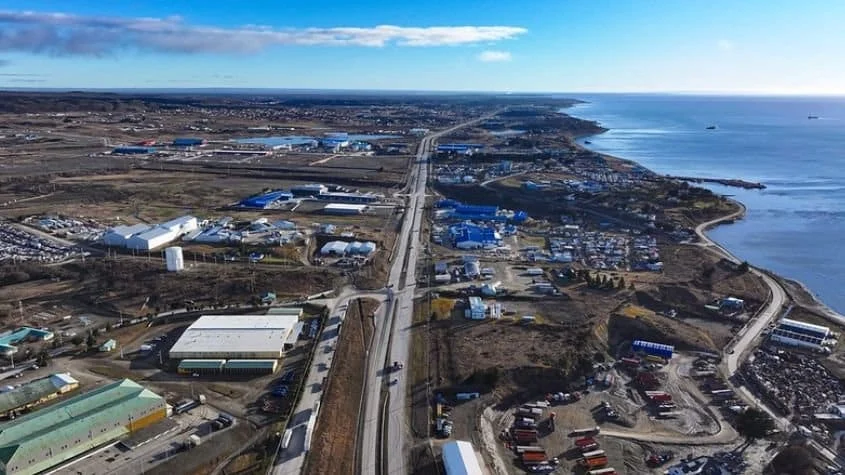
The Chilean Ministry of Public Works (MOP), acting through the Directorate of Roads, has officially broken ground on a transformative infrastructure project set to redefine connectivity in the Magallanes Region. The project, which targets a critical 12-kilometer stretch of the Route 9 North corridor, is designed to serve as the primary artery connecting the industrial heart of Punta Arenas with the strategic Presidente Carlos Ibáñez del Campo International Airport.
With a total investment reaching US$25 million, this initiative represents one of the most significant infrastructure undertakings in the region’s recent history. Beyond mere road surface improvements, the project aims to integrate advanced safety standards, modern energy-efficient lighting, and upgraded service road infrastructure, creating a safer and more efficient environment for both commercial logistics and local residents.
Project Scope and Technical Specifications
The scope of the intervention is extensive, covering approximately 12 kilometers of roadway. The project begins at the 7.72-kilometer mark near the Industrial Barrio (Industrial District) and stretches to the intersection with Route 252-CH at the 18.4-kilometer mark, eventually extending all the way to the gateway of the international airport.

The technical specifications of the project highlight a comprehensive approach to civil engineering and public safety. Key components include:
- Pavement and Service Roads: The project mandates the construction and paving of 11 kilometers of service roads (caleteras) using high-durability reinforced concrete. This will effectively separate local traffic from the high-speed flow of the main highway, reducing congestion and the risk of accidents.
- Safety Infrastructure: The initiative includes the installation of new, high-standard containment barriers, updated signage, and high-visibility road markings to assist drivers in the often challenging weather conditions characteristic of the southern region.
- Advanced Illumination: Perhaps the most visible change will be the installation of 453 new utility poles, supporting a total of 673 high-efficiency LED luminaires. This shift to high-potency, white-light LED technology is expected to drastically improve nighttime visibility for commuters and transport operators alike.
Chronology of Development and Execution
The project follows a rigorous timeline aimed at minimizing disruption while ensuring long-term structural integrity.
- Preliminary Planning: Over the last 24 months, the MOP conducted comprehensive traffic density studies and geological surveys to ensure the design of the Route 9 corridor met modern international safety benchmarks.
- Inception (September 2026): The formal “First Stone” ceremony, led by government officials, signaled the transition from the bidding and design phase to the active construction phase.
- Execution Period: The project is slated for a 990-day execution window. This timeline accounts for the logistical challenges of working in the Patagonian climate, which often necessitates seasonal pauses or specialized material handling.
- Completion Target (2029): The final delivery and commissioning of the upgraded corridor are scheduled for 2029, at which point the region expects to see a marked decrease in transit times and a reduction in traffic-related incidents.
Official Statements and Political Significance
The commencement of the project was marked by a high-profile ceremony attended by the biminister of Public Works, Transport, and Telecommunications, Louis de Grange, alongside local authorities including the Presidential Delegate, Ericka Farías, and the Mayor of Punta Arenas, Claudio Radonich.
In his address, Minister de Grange emphasized the government’s commitment to regional decentralization. “We arrived in the region yesterday alongside President José Antonio Kast, and today we are delivering substantial news,” de Grange stated. “We are initiating the improvement of Route 9, which provides a vital connection not only to the airport but also to the surrounding local communities. This is a project that bridges the gap between industrial necessity and citizen quality of life.”

The inclusion of local stakeholders, including port authorities, transport sector representatives, and members of neighborhood associations, underscores the collaborative nature of the development. For the Mayor of Punta Arenas, the project is a long-awaited solution to the growing traffic demands placed on the city’s outskirts.
Implications for the Magallanes Region
The implications of this $25 million investment extend far beyond the asphalt and lighting. For the Magallanes Region, this project represents a fundamental shift in how the government approaches regional infrastructure.
Economic and Logistics Impact
The Route 9 corridor serves as the backbone for the local industrial sector. By improving the surface quality and expanding the service roads, the Ministry is effectively reducing the "logistics tax" paid by companies moving goods from the Industrial District to the airport and the wider port network. More efficient freight movement correlates directly with lower operational costs and enhanced competitiveness for regional exports.
Enhanced Public Safety
Traffic safety is a primary concern for the residents of Punta Arenas. The current configuration of the route has long been a source of anxiety, particularly during the winter months when low visibility and slippery conditions increase the risk of accidents. The introduction of 673 LED lights will transform the night-driving experience, while the new containment barriers will provide a necessary buffer for pedestrians and cyclists traversing the roadside.

Socio-Economic Connectivity
By integrating the communities along the route with the upgraded infrastructure, the government is ensuring that urban expansion does not come at the cost of safety. The pavement of 11 kilometers of service roads will allow for better integration of residential areas, making it easier for residents to access the main transit corridor without compromising the flow of airport-bound traffic.
A Vision for Future Regional Infrastructure
The decision to utilize energy-efficient LED technology is reflective of a broader, national strategy to integrate sustainability into public works. By choosing high-efficiency systems, the Ministry is reducing the long-term maintenance costs for the municipality and minimizing the project’s carbon footprint—a critical consideration in the pristine environment of the far south.
Furthermore, the involvement of diverse community leaders during the launch ceremony suggests that this project is viewed as a pillar of regional development. As the project advances toward its 2029 completion date, the MOP has committed to keeping the public informed of construction phases and traffic detours, ensuring that the transition period is as seamless as possible for the thousands of daily users of the highway.
In conclusion, the upgrade of Route 9 is more than just a road project; it is a strategic investment in the future of the Magallanes Region. By addressing the nexus of industrial logistics, public safety, and community integration, the Chilean government is laying the groundwork for a more resilient and connected southern gateway. As construction teams begin their work, the anticipation among residents and industry leaders is clear: the road ahead promises to be safer, faster, and significantly more efficient.