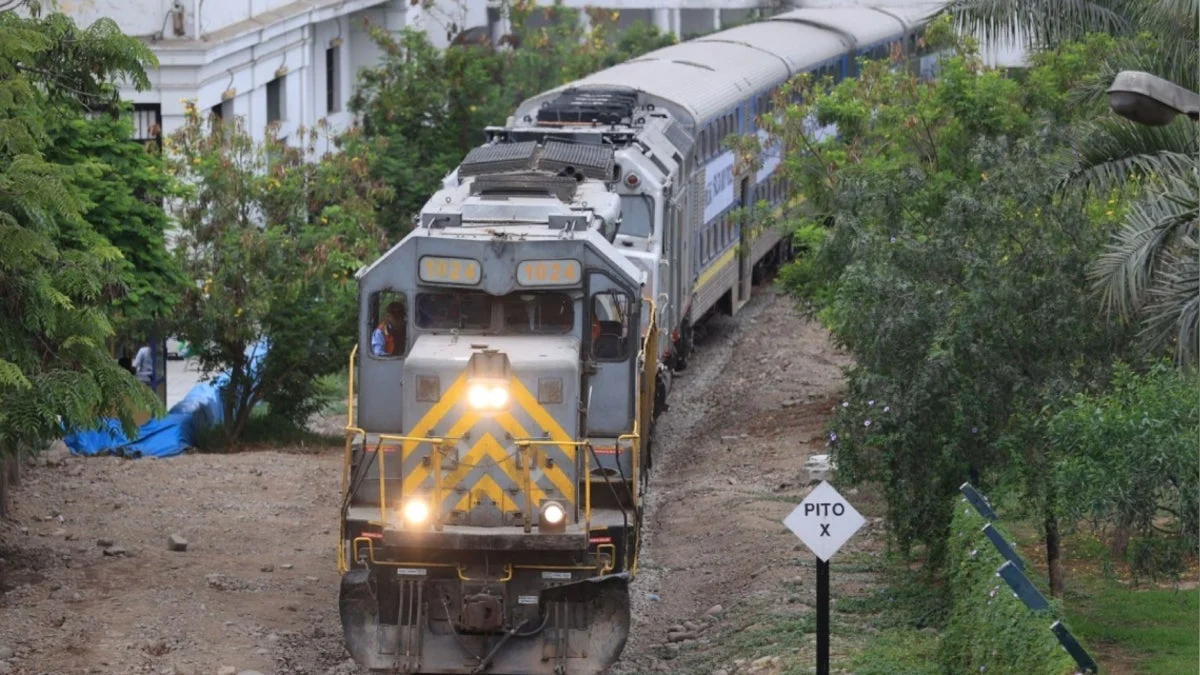
The ambitious project to reconnect Lima and Chosica via a modern, high-capacity commuter rail service has officially entered a decisive phase. After years of logistical uncertainty and administrative handovers, the Peruvian government has entrusted the project’s technical and legal execution to ProInversión, the state agency responsible for promoting private investment.
Luis del Carpio, the executive president of ProInversión, confirmed that his agency has officially assumed the lead role in negotiating the critical "Adenda 11" (Addendum 11) to the existing railway concession contract. This milestone is considered the key to unlocking the implementation of the service, which will utilize the high-quality passenger train cars previously acquired from the American transit operator, Caltrain.
A Strategic Mandate: The Path to Modernization
The project, which seeks to alleviate the heavy congestion on the Central Highway—one of Peru’s most vital and saturated transport arteries—has finally received a clear roadmap. The Ministry of Transport and Communications (MTC) has formally handed over the project to ProInversión, tasking the agency with streamlining the legal framework required to make the train a reality.
"The commitment is to sign the addendum this year," Del Carpio stated in a recent interview with RPP. "We are in September, and our priority is to optimize timelines to the maximum extent possible."
The core of the initiative involves the integration of the Caltrain fleet, which includes multi-level cars, air conditioning, and sanitary facilities, into the existing rail infrastructure currently managed by Ferrovías Central Andina.
Chronology of a Long-Awaited Infrastructure Project
The journey to restore passenger rail service between the capital and the district of Chosica has been marked by complex negotiations and evolving political priorities.
- 1999: The state grants the concession for the Central Railway to Ferrovías Central Andina, primarily focusing on cargo operations.
- 2023-2024: Intense public and political debate arises regarding the acquisition of second-hand rolling stock from Caltrain, with critics questioning the logistical viability of adapting the US-based equipment to the specific conditions of the Peruvian Andes and the Lima metropolitan area.
- August 2025: A pivotal moment occurs when Ferrovías Central Andina presents a formal proposal to the state. The company offers to leverage its existing infrastructure and perform the necessary upgrades to accommodate passenger traffic.
- September 2026: The MTC formally transfers the project to ProInversión. The agency begins a comprehensive technical and legal evaluation of the tracks, signaling that the project is no longer just a proposal, but a functional administrative priority.
Technical Scope: The Challenge of Integration
The primary task currently facing ProInversión is not merely administrative; it is deeply technical. The agency must verify that the existing rail infrastructure is compatible with the specifications of the Caltrain equipment.
The Inspection Process
Del Carpio emphasized that while the agency has been observing the project for several months, the formal takeover requires a deep dive into the following areas:
- Track Geometry and Signaling: Ensuring that the current line can support the frequency and weight of a passenger service without disrupting the existing, highly profitable freight operations.
- Rolling Stock Adaptation: Assessing the modifications required for the Caltrain cars to run efficiently within the unique climate and elevation transitions of the Lima-Chosica corridor.
- Station Rehabilitation: Determining the initial network of stations required to maximize passenger uptake in the first phase.
"We have to verify the aspects that need to be adapted in the tracks, the cars, and the locomotives," Del Carpio noted. He remains optimistic, stating that the preliminary technical information received so far indicates that the required modifications are "fully addressable" and within the reach of current engineering standards.
Official Responses and Political Alignment
The project has received broad support from the municipal government. Current leadership in Lima has highlighted that the equipment is not only available but represents a significant leap in quality for public transit.
The administration has underscored that the trains come equipped with modern amenities that are currently lacking in the informal bus transport sector, including climate control and multi-level seating. By moving forward with the concession modification, the government aims to demonstrate a tangible improvement in the quality of life for thousands of daily commuters who spend hours in traffic on the Central Highway.
The transition to ProInversión’s management is seen as a move to depoliticize the technical execution of the project, placing it under the purview of an agency that specializes in Public-Private Partnerships (PPPs).
A Phased Development Strategy
Rather than attempting a total overhaul of the railway network in one massive undertaking, the authorities have opted for a "phased approach." This strategy is designed to minimize risk and allow for the early launch of the service.
Phase 1: Utilization of Existing Assets
The immediate goal is to utilize the existing infrastructure and the acquired rolling stock to begin operations as soon as the legal hurdles of the Adenda 11 are cleared. This initial phase will connect key points between Lima and Chosica with a limited but efficient stop schedule.
Phase 2: Scaling and Infrastructure Upgrades
Once the service is operational, the project envisions:
- Expansion of Stops: Increasing the number of stations to provide better access for underserved communities.
- Track Duplication: Future plans include the potential construction of additional tracks to allow for simultaneous passenger and cargo movement without congestion, a crucial step for the long-term sustainability of the line.
Implications for the Lima Metropolitan Region
The socio-economic implications of this project are significant. The Lima-Chosica route is a bottleneck for both labor and commerce.
Economic Impact
- Reduction in Travel Time: By providing an alternative to road transport, the train is expected to reduce commute times significantly, directly impacting worker productivity.
- Safety and Environmental Benefits: Moving passengers from buses to a rail-based system will lower the carbon footprint per passenger and reduce the high rate of traffic accidents associated with the narrow and winding stretches of the Central Highway.
- Regional Integration: The project acts as a precursor to broader regional connectivity, potentially setting a model for how Peru can revitalize its dormant or underutilized railway assets across the country.
Conclusion: A Race Against Time
As September 2026 progresses, the pressure on ProInversión to finalize the legal framework is mounting. The signing of Adenda 11 will serve as the "green light" for the physical work to begin.
For the thousands of citizens who rely on the precarious transport infrastructure of the capital’s eastern outskirts, the promise of a modern, reliable, and comfortable train service is a glimmer of hope. With the project now firmly under the management of ProInversión and a clear mandate to accelerate the process, the long-standing dream of a Lima-Chosica rail link appears closer to reality than ever before. The technical evaluations in the coming months will be the final judge of how quickly the first train can pull out of the station.