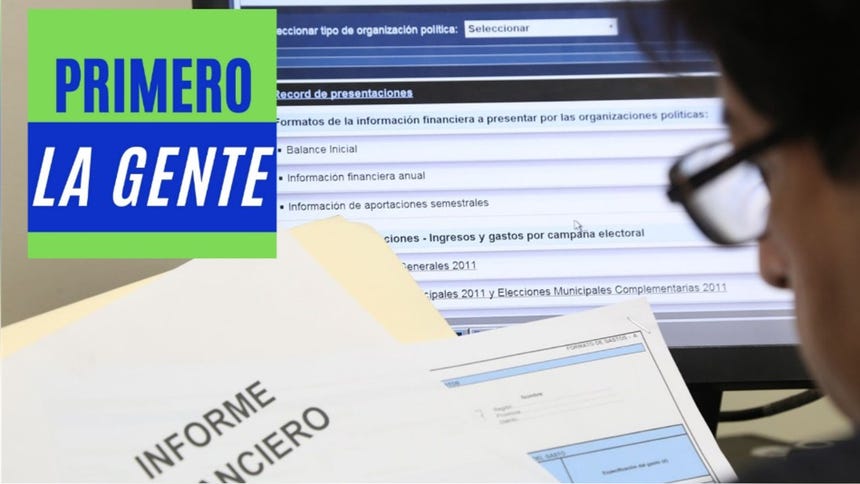
In a significant move aimed at upholding the transparency of political financing, the National Office of Electoral Processes (ONPE) has sanctioned the political organization Primero La Gente – Comunidad, Ecología, Libertad y Progreso. The electoral authority issued a formal resolution penalizing the party for failing to comply with mandatory reporting requirements regarding cash contributions received throughout the 2024 fiscal year.
The sanction, formalized under Resolution PAS N° 000045-2026-JN/ONPE, marks a critical moment for the organization, which now faces a substantial financial penalty and a strict deadline to rectify its administrative procedures.
The Core of the Controversy: Missing Signatures and Incomplete Records
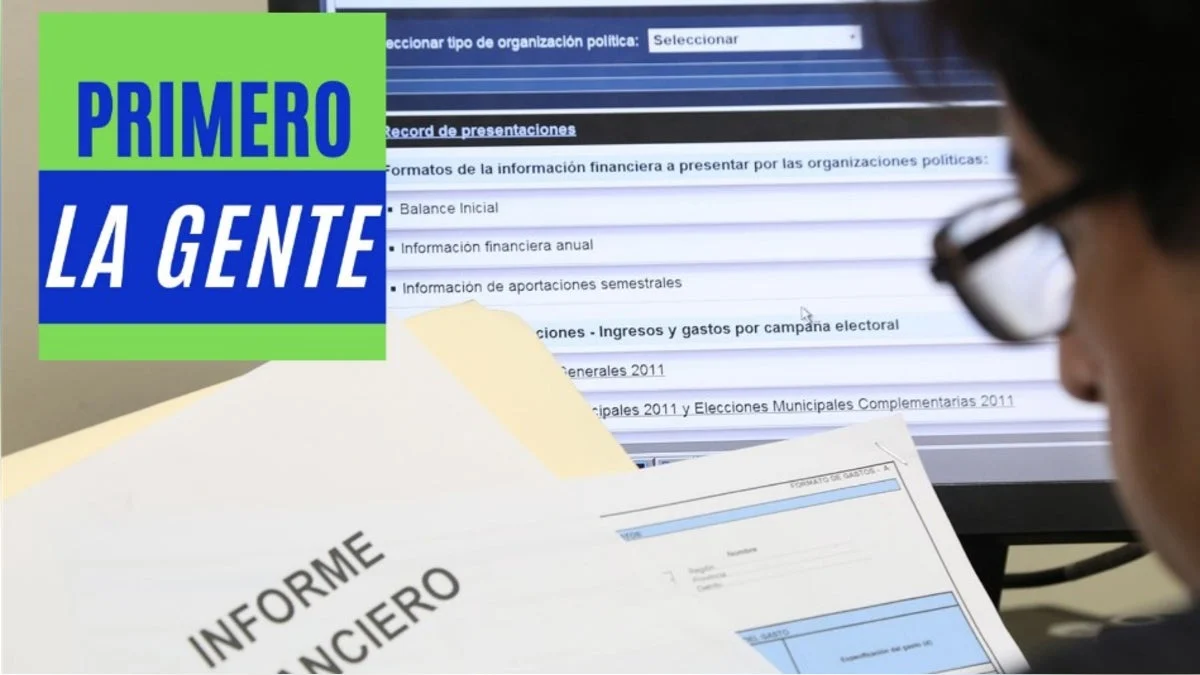
The sanction stems from a rigorous audit conducted by the ONPE’s Supervision of Party Funds Management division. Upon reviewing the party’s 2024 annual financial report—and the subsequent rectification submitted in August 2025—auditors uncovered a series of procedural lapses.
While the party declared a large volume of contributions, the ONPE flagged 17 specific cash donations that failed to meet the legal requirements stipulated in Article 30 of the Law of Political Organizations (LOP). The primary violation identified was the absence of the donor’s signature on the corresponding receipts. Under Peruvian law, these signatures are not merely formalities; they serve as a critical audit trail to prevent the injection of illicit funds into the political system.
The ONPE investigation revealed that for these 17 transactions, which occurred between August 20, 2024, and November 10, 2024, the necessary documentation was incomplete. While the individual amounts of these contributions were relatively modest—ranging from S/ 5 to S/ 1,000—the aggregate total of the irregular contributions amounted to S/ 5,705. The auditors emphasized that even for contributions falling well below the 25% threshold of a Tax Unit (UIT), the law demands strict adherence to documentation standards, including the signatures of both the donor and the party’s authorized treasurer.
A Chronology of Compliance and Oversight
The timeline of this administrative procedure highlights a series of missed opportunities for the political organization to address the issues before they escalated into a formal sanction.
- July 1–3, 2025: Primero La Gente submits its annual financial information for the 2024 fiscal year to the ONPE.
- August 19, 2025: Recognizing potential errors, the party submits a rectification of its previously filed financial data.
- March 31, 2026: The ONPE notifies the party of the final audit report via Official Letters (Oficios-PAS) N° 000057 and 000058. In this communication, the party was granted a five-day window to provide formal arguments or "descargos."
- April 2026: The organization fails to present a formal defense, leading the ONPE to proceed with the sanctioning process.
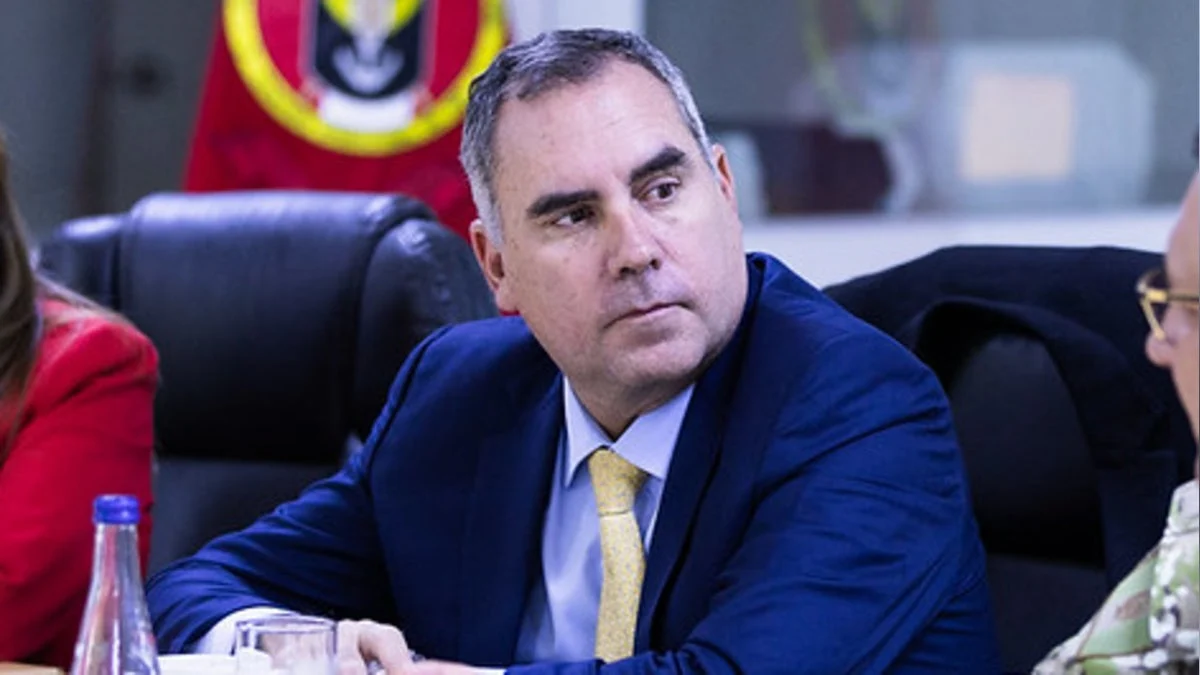
- September 1, 2026: Bernardo Pachas, the interim national chief of the ONPE, signs Resolution PAS N° 000045-2026-JN/ONPE, officially imposing the fine.
The failure of the party to respond to the initial notification regarding their financial discrepancies significantly weakened their position, leaving the ONPE with sufficient evidence to conclude that a regulatory infraction had occurred.
Financial Implications: Analyzing the 16 UIT Penalty
The penalty imposed on Primero La Gente is a direct consequence of the classification of the infraction as "grave." Under the current regulatory framework, such violations carry a penalty ranging from 16 to 30 UIT.
The ONPE, in an attempt to balance administrative discipline with the circumstances of the case, opted for the minimum fine of 16 UIT. Given that the value of the UIT in 2024 was S/ 5,150, the resulting penalty totals S/ 82,400.
In its justification for the penalty, the electoral body noted several mitigating factors. The ONPE acknowledged that there was no evidence of illicit gain, nor was there proof of intentionality to defraud the system or evidence of reoffending. Despite these mitigating circumstances, the breach of basic documentation standards was considered too significant to ignore, as it compromises the integrity of party oversight.
Official Responses and the Defense of ‘Primero La Gente’
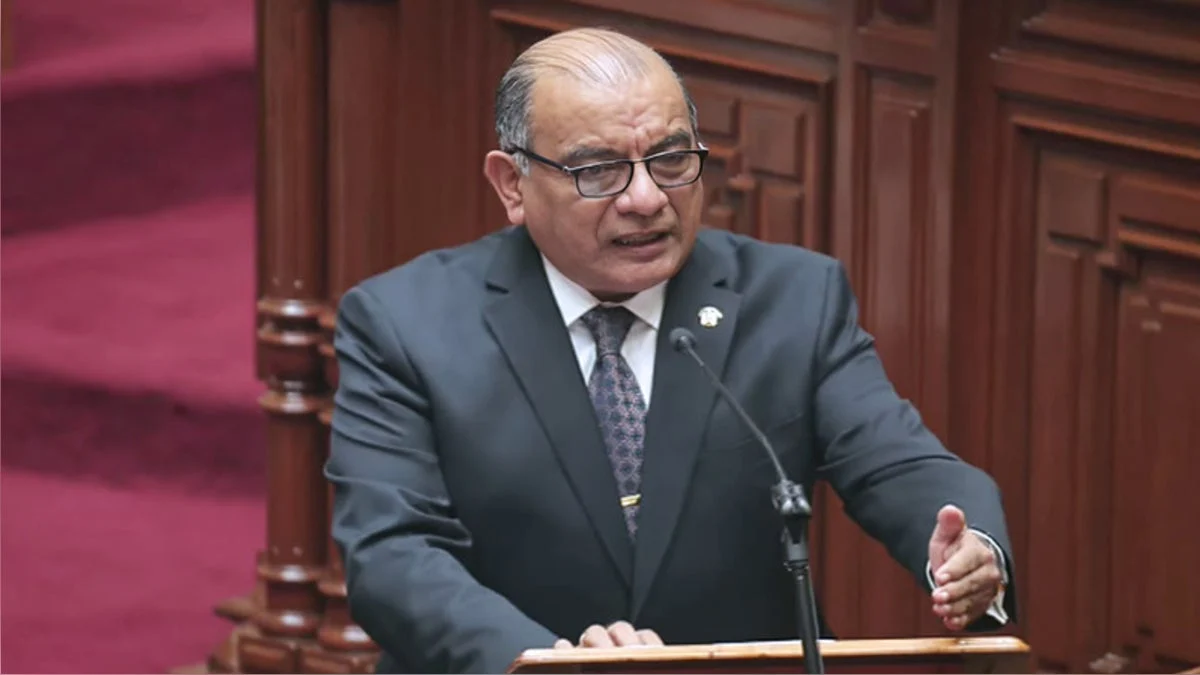
The leadership of Primero La Gente has expressed strong disagreement with the severity of the sanction. Marco Zevallos, president of the party’s National Executive Committee, addressed the findings in an interview, characterizing the error as purely administrative rather than malicious.
"There is no malicious intent to hide financial or economic information," Zevallos stated. "We are talking about missing signatures on receipts for amounts as small as fifty, one hundred, or two hundred soles. To impose a fine of 16 UIT for this seems completely disproportionate."
Zevallos highlighted the precarious financial state of smaller political organizations that do not receive public funding, noting that they rely entirely on the voluntary contributions of their membership. "For a party that survives on the contributions of its militants, a fine of more than 80,000 soles is, in effect, a lethal blow," he added.
The party is currently conducting an internal review of the resolution to determine whether they will file an appeal. Zevallos emphasized that they are evaluating the legal pathways to challenge the decision, as the current fine exceeds the organization’s available financial resources.
The Path Ahead: Rectification and Future Risks
The ONPE’s resolution is not only a punitive measure but also a directive for future conduct. The party has been granted a strict 30-day window to rectify the identified administrative failings. Failure to do so will result in further escalation, with the ONPE explicitly warning that continued non-compliance could lead to a second, more severe, procedure for a "very grave" infraction.
To facilitate the resolution of the debt, the ONPE has offered two main avenues for relief:
- Early Payment Discount: The party may avail itself of a 25% reduction in the total fine if the payment is made before the deadline for filing an appeal.
- Payment Installments: The organization is permitted to request a payment plan (fraccionamiento), which would allow them to settle the debt over time, potentially easing the immediate financial burden.
Implications for the Broader Electoral Landscape
This case serves as a stark reminder to all political organizations in Peru regarding the necessity of rigorous internal accounting. As the ONPE continues to sharpen its supervision of party funds, small and large parties alike are finding that "administrative errors" are no longer viewed as trivial oversights.
For Primero La Gente, the coming weeks are critical. The decision to either pay the fine—potentially utilizing the discount or installment plan—or to engage in a lengthy legal battle against the ONPE will define the party’s standing for the remainder of the election cycle.
The incident also highlights a broader debate within the political sphere: the tension between the strict enforcement of electoral laws and the operational realities of smaller, grassroots organizations. While the ONPE maintains that these laws are essential to prevent the infiltration of "dark money" into politics, party leaders argue that the current fine structure may be stifling smaller political movements that lack the professional administrative infrastructure of established, well-funded parties.
As the 30-day clock ticks down, the case of Primero La Gente will likely be watched closely by other political organizations, serving as a cautionary tale on the high cost of incomplete paperwork in an era of heightened electoral transparency.