Introduction: A Shift in Mining Governance
In a decisive move to overhaul the regulatory framework of the nation’s mining sector, the President of the Council of Ministers, Luis Galarreta, has publicly defended the government’s recently introduced MAPE Law (Small-Scale Mining and Artisanal Mining Law). The initiative, which proposes the creation of the Formape (National Agency for the Strengthening of Small-Scale and Artisanal Mining), marks a significant departure from previous administrative efforts.
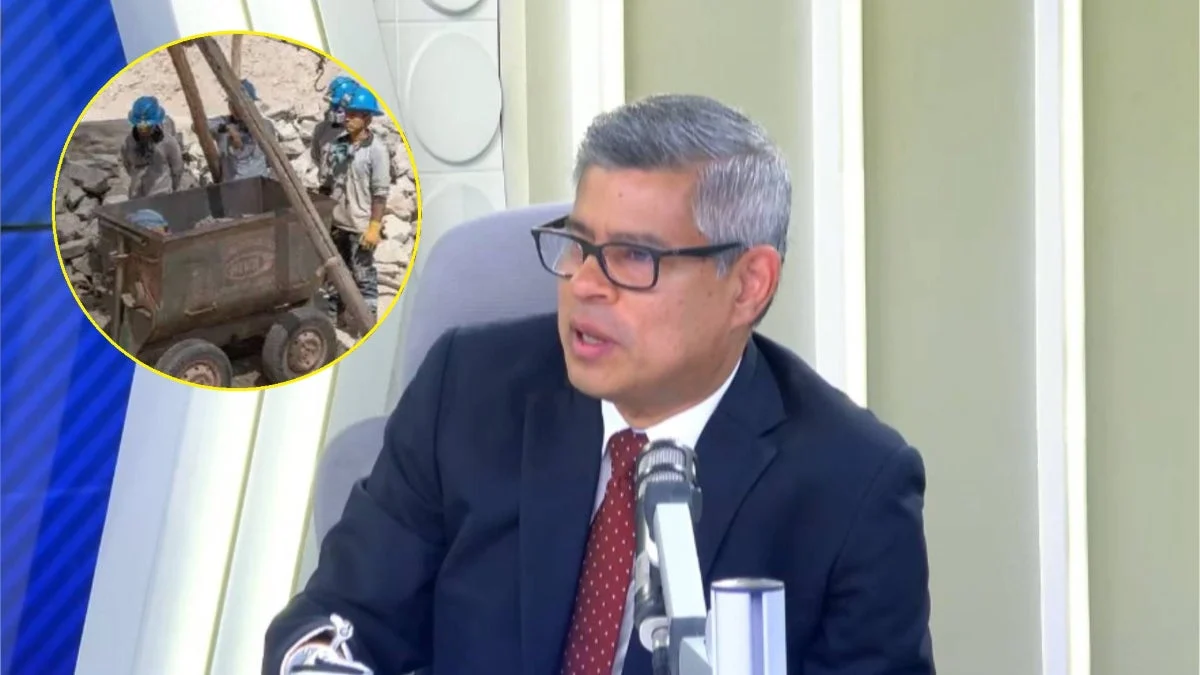
During an interview on Enfoque de los Sábados, Galarreta addressed mounting criticism regarding the government’s approach to the informal mining sector. By proposing the dissolution of the existing Registro Integral de Formalización Minera (REINFO)—a system widely perceived as having failed to achieve its objectives—and replacing it with a more robust, state-led regulatory body, the administration of Keiko Fujimori is attempting to draw a definitive line in the sand. The message from the executive branch is clear: the era of indefinite extensions and bureaucratic stagnation in mining formalization must come to an end.
Main Facts: What the MAPE Law Proposes
The core of the proposed legislation lies in the transition from the current REINFO framework to the Formape agency. The government aims to centralize the formalization process, providing a structured timeline for miners to achieve compliance before the door to legality is permanently closed.
Key Pillars of the Proposal:
- Establishment of Formape: A specialized state entity designed to oversee, support, and regulate the formalization process, moving away from the decentralized and ineffective oversight of the past.
- The Consolidation Regime: The project introduces a "temporary consolidation regime" scheduled to run from January 1, 2027, to June 30, 2028. This period is intended to be the final opportunity for operators currently in the REINFO system to meet the necessary technical, environmental, and legal requirements to transition into the ordinary mining regime.
- Exclusionary Criteria: Galarreta clarified that the new framework is not an open invitation for all. It specifically targets approximately 30,000 operators currently in the pipeline, explicitly excluding the 50,000 previously inactive or non-compliant operators who have been at the center of political debate.
Chronology of the Formalization Crisis
To understand the urgency behind the MAPE Law, it is necessary to examine the evolution of the mining sector’s regulatory landscape:
- The Inception of REINFO: Initially established as a mechanism to bring artisanal and small-scale miners into the legal economy, the system became bogged down by years of administrative delays, overlapping competencies, and a lack of enforcement.
- Cumulative Failures: Over the past decade, successive legislative extensions granted to miners within the REINFO framework created a "perpetual legality" loophole, where operators could remain in the system indefinitely without fulfilling their environmental or safety obligations.
- The Current Administration’s Entry: Upon taking office, the Fujimori government identified the mismanagement of mining formalization as a primary driver of both economic informality and regional insecurity.
- The October 2026 Shift: With the introduction of the MAPE Law, the executive branch moved to stop the cycle of extensions, signaling to the mining sector that the current proposal is the final legislative attempt to structure the industry before stricter, enforcement-heavy policies take hold.
Supporting Data and Technical Context
The government’s decision to limit the scope of the new law to 30,000 operators is based on technical assessments of the current mining registry. According to official figures, these 30,000 individuals represent the "active" segment of the informal population—those who have consistently engaged with the formalization process but have been hampered by administrative hurdles.
In contrast, the 50,000 operators excluded from this proposal represent a significant portion of the sector that has failed to provide the necessary documentation or has remained dormant. By isolating the 30,000, the government aims to allocate its limited technical and financial resources toward those who are actually interested in legalizing their operations, thereby increasing the efficiency of the formalization process.
Official Responses and Political Debate
During his interview, Luis Galarreta was firm in his rejection of the narrative that the MAPE Law is merely a "REINFO 2.0." He emphasized that the government is fully aware of the failures of the past.
"We have a clear understanding that the REINFO has not functioned; that is evident," Galarreta stated. "However, it is crucial to state that this is not just another REINFO. We have the firm decision to end these formalization processes. What is formalized within this specific window will be formalized; after that, it will not."
Galarreta further differentiated this administration’s actions from those of previous governments, noting that this is the first time the Fujimori administration has proposed an extension. He argued that the responsibility for the repeated, failed extensions of the past does not lie with his government, but with the methods employed by previous administrations that failed to set a hard deadline.
Security Implications: The Role of PNP and the Armed Forces
Beyond the mining sector, the executive branch has outlined a new security doctrine to combat the rising tide of insecurity, particularly in mining-intensive regions like Pataz and the VRAEM.
The Unified Command Model
Galarreta clarified the operational structure of the "Unified Command" (Comando Unificado), aimed at curbing organized crime in regions where illegal mining often acts as a front for illicit activities.
- Institutional Rectorate: The government is not creating a "super-authority" that overrides existing institutions. Instead, the command structure follows the principle of primary responsibility:
- Police-Led Zones: In urban or general security areas, the National Police (PNP) retains the lead, with the ability to request military support.
- Military-Led Zones: In high-conflict areas like Pataz or the VRAEM, where illegal mining syndicates often utilize heavy weaponry, the Armed Forces maintain the lead, leveraging their superior combat capabilities.
- Operational Synergy: Galarreta explained that the military is now "activated" whenever the police require their assistance, moving away from rigid jurisdictional boundaries that previously hampered inter-agency cooperation.
International Cooperation
The government also confirmed that it is actively collaborating with international intelligence agencies. Specifically, the FBI is providing intelligence and support for investigations in Pataz. This data is being funneled directly to ministerial channels and subjected to internal inspection to ensure integrity. This move reflects a broader government strategy to treat illegal mining not just as a labor or administrative issue, but as a national security threat involving international criminal networks.
Conclusion: The Path Forward
The proposal of the MAPE Law and the restructuring of security operations in volatile regions represent a pivot toward institutional discipline. The government is betting that by clearly defining the criteria for formalization and strengthening the hand of security forces, it can simultaneously stabilize the mining sector and regain control over territory lost to illegal syndicates.
As the legislative debate continues, the success of these measures will depend on the government’s ability to adhere to its self-imposed deadlines and the effectiveness of the proposed Formape agency. For the 30,000 operators currently in the system, the clock is now officially ticking. For the nation, the hope is that these reforms will provide the clarity and stability needed to foster a truly sustainable and legal mining industry.
The administration’s commitment to "ending the process" suggests a high-stakes gamble: either the sector achieves a significant degree of formalization within the next 18 months, or the government will be forced to transition into a phase of total enforcement, likely leading to widespread economic and social consequences in mining-dependent regions. Regardless of the outcome, the policy signals a definitive end to the era of administrative complacency.