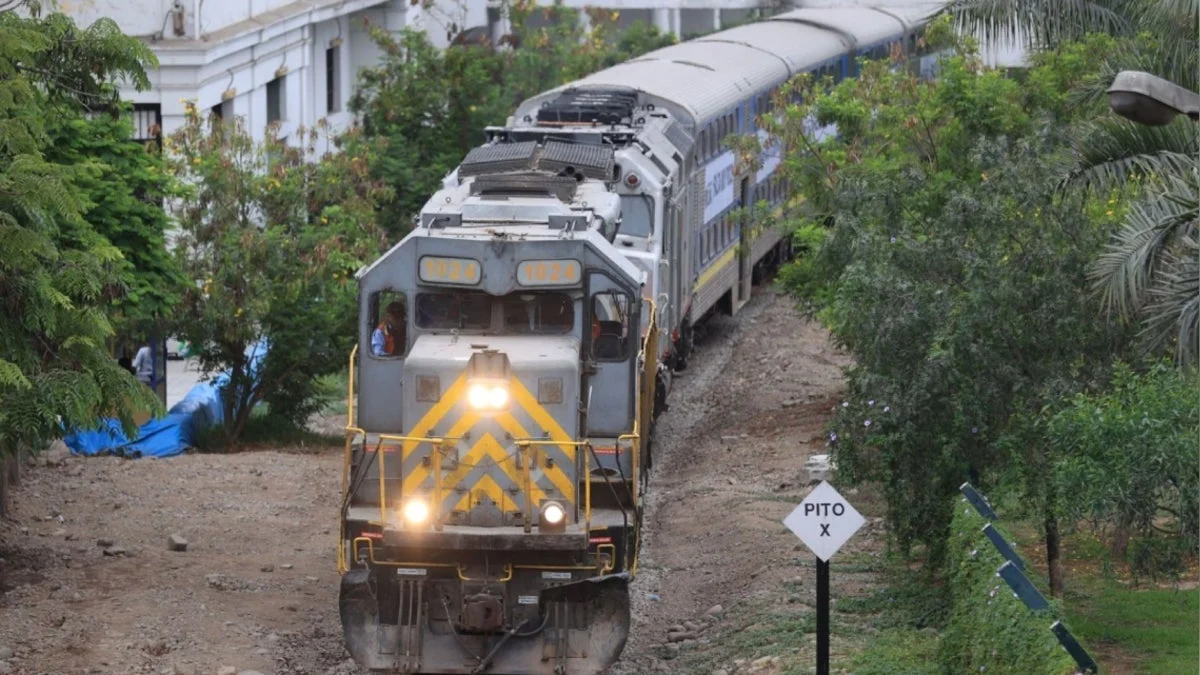
The long-awaited project to establish a passenger rail service between Lima and Chosica has entered a critical new phase. With the Ministry of Transport and Communications (MTC) officially delegating the responsibility of the concession process to ProInversión, the agency is now spearheading the technical and legal evaluations required to operationalize the train fleet acquired from the American operator Caltrain.
Luis del Carpio, the Executive Director of ProInversión, has confirmed that the agency is prioritizing the signing of "Addendum 11" to the existing concession contract before the end of the current year. This milestone is widely viewed as the "green light" necessary to transform dormant rolling stock into a functioning urban transit solution for thousands of commuters navigating the congested corridor between the capital and the eastern district of Chosica.
A Strategic Shift in Governance
For years, the project involving the Caltrain locomotives and carriages—which feature modern amenities such as air conditioning, restrooms, and two-level seating—has faced administrative hurdles and questions regarding its viability. By transferring the project from the MTC to ProInversión, the Peruvian government is signaling a shift toward a more streamlined, specialized, and transparent management of infrastructure concessions.
ProInversión’s role is to ensure that the integration of these foreign-sourced trains into the existing Ferrovías Central Andina (FCA) rail network is not only technically sound but also legally binding under the terms of the concession. According to Del Carpio, the agency has already been performing due diligence over the past few months, moving from a preliminary assessment to a formal, binding oversight role.
Chronology: From Purchase to Present
To understand the urgency behind the current push for Addendum 11, one must look at the timeline of the project’s development:
- Initial Acquisition: Several years ago, the municipal government acquired a fleet of decommissioned Caltrain rail cars from the United States, sparking debate over the logistics of their deployment and the necessary modifications to existing Peruvian tracks.
- August 2025: Ferrovías Central Andina, the current concessionaire for the Central Railway, presented a formal proposal to the state. The proposal outlined necessary capital investments in infrastructure to allow for a dual-purpose rail line (freight and passenger) between Lima and Chosica.
- Late 2025 – Early 2026: The MTC continued to evaluate the feasibility of the project while facing mounting pressure to reduce traffic congestion on the Carretera Central.
- September 2026: ProInversión officially assumes the leadership of the concession process, with a public commitment from its leadership to finalize the contractual framework before the calendar year closes.
Technical Hurdles: Ensuring Safety and Compatibility
The integration of imported rolling stock into a South American rail system is a complex engineering feat. The "technical and legal evaluation" mentioned by Del Carpio is not merely a formality; it involves a rigorous inspection of the compatibility between the Caltrain cars and the local tracks.
ProInversión’s mandate includes a comprehensive audit of:
- Track Geometry: Assessing whether the current rail infrastructure can support the weight and speed of the Caltrain passenger cars without causing excessive wear or safety hazards.
- Rolling Stock Adaptation: Determining the modifications required for the locomotives to function efficiently on the specific voltage and signaling systems used in Peru.
- Station Infrastructure: Identifying the necessary upgrades for existing platforms to accommodate passenger boarding and disembarking, specifically concerning safety protocols and accessibility for persons with disabilities.
Del Carpio has noted that while the information received thus far is "attentive"—meaning the technical challenges are solvable—the agency must formalize these findings into the legal document known as Addendum 11 to ensure that the concessionaire, Ferrovías Central Andina, has the clear mandate and the budgetary framework to proceed with the upgrades.
A Phased Approach to Urban Mobility
ProInversión has adopted a pragmatic strategy for the launch of the service. Rather than attempting a massive, all-at-once rollout that could lead to operational delays, the agency is opting for a phased implementation.
The first phase, according to project planners, will focus on utilizing existing infrastructure and the current inventory of locomotives to establish a baseline service. This "lean" approach allows for the system to begin operations as quickly as possible, providing immediate relief to commuters who currently depend on buses and informal transport services along the congested route.
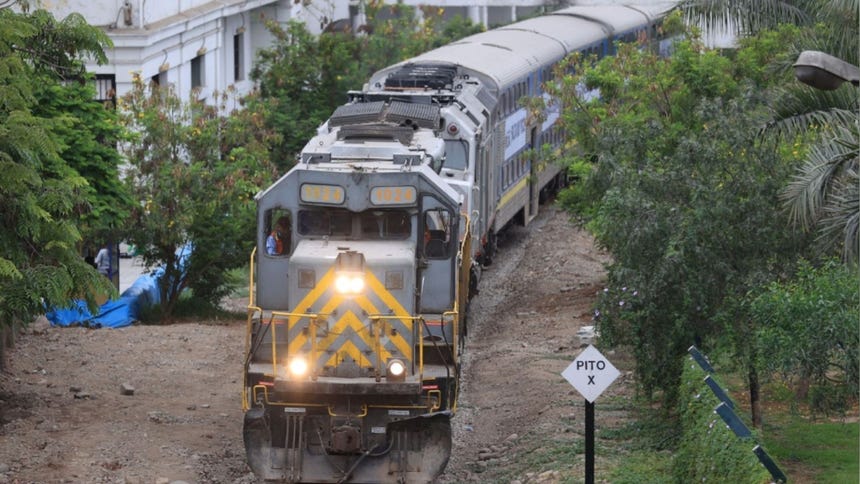
"Once we have the first phase running," Del Carpio explained, "we will look to expand. We envision the gradual habilitation of additional stops, more frequent service, and eventually, the construction of a dedicated second track to increase capacity and reduce transit times." This long-term vision seeks to transform the rail line into a high-capacity commuter artery that could serve as a model for other regional rail projects across Peru.
Implications for Lima’s Commuters
The socioeconomic impact of the Lima-Chosica train service cannot be overstated. The Carretera Central is one of the most bottlenecked highways in the country, and thousands of residents from Chosica and surrounding districts face hours of daily travel to reach the city center.
Efficiency and Quality of Life
The introduction of the Caltrain fleet represents a significant upgrade in quality for the average user. With features like climate control and double-decker carriages, the service aims to attract middle-class commuters who might otherwise opt for private vehicles. By shifting a portion of this traffic to rail, the city hopes to reduce both the carbon footprint of daily commutes and the economic drain caused by traffic congestion.
Integration with Existing Concessions
The project is unique because it relies on the cooperation of Ferrovías Central Andina, a company that has held the concession for the Central Railway since 1999. Because the railway primarily serves the mining and freight industries, the addition of a passenger service requires a delicate balancing act to ensure that freight schedules are not disrupted while passenger safety and frequency are maintained. ProInversión’s role as the arbiter in this negotiation is essential for managing the conflicting priorities of freight logistics and public transit.
Official Stances and Public Expectations
Local authorities have remained vocal about the necessity of the project. Renzo Reggiardo, in his capacity as a representative of the Lima municipal leadership, has frequently highlighted the readiness of the equipment. According to his statements, the Caltrain cars are not merely "donations" or "junk," as some critics have alleged, but rather high-quality assets that have been sitting in wait for the political and administrative will to deploy them.
The transition to ProInversión is viewed by many as a turning point. By removing the project from the direct, often politicized, cycle of ministerial changes and placing it under the technical supervision of an agency focused on private-public partnerships, the government hopes to depoliticize the project and focus entirely on engineering and financial feasibility.
Looking Toward the Future
As the year progresses, the eyes of urban planners and the public will be on the offices of ProInversión. The signing of Addendum 11 will be the first of many hurdles, followed by the actual procurement of construction services to upgrade the tracks and stations.
If successful, the Lima-Chosica rail line will serve as a pilot project for a broader, national strategy of rail-based transport. It proves that with proper planning and the utilization of existing assets—even those acquired from abroad—the gap between the need for infrastructure and the reality of limited government budgets can be bridged.
"We are looking to optimize every single day," Del Carpio concluded. "The goal is to get people moving, safely and reliably, in the shortest time possible." As the technical evaluations conclude, the hope is that the whistles of the train will soon signal a new era of connectivity for the residents of Lima and Chosica.