In a decisive move to address the long-standing infrastructure deficit in the capital, the Minister of Housing, Construction, and Sanitation, Mauricio Arnillas, has launched an intensive series of inspections across the northern districts of Lima and the Callao region. The initiative, which spans Ventanilla, Mi Perú, Santa Rosa, Ancón, and Puente Piedra, aims to fast-track the execution of critical water and sewage projects that have languished for decades, ultimately promising to provide essential services to over 279,000 residents.
The Scale of the Challenge: Breaking the Stagnation
For millions of residents in the periphery of Lima and Callao, the lack of reliable access to potable water and proper sanitation is a daily reality. The current administration has inherited a staggering backlog of 565 projects, of which 252 were classified as "paralyzed" due to administrative, technical, or financial hurdles.
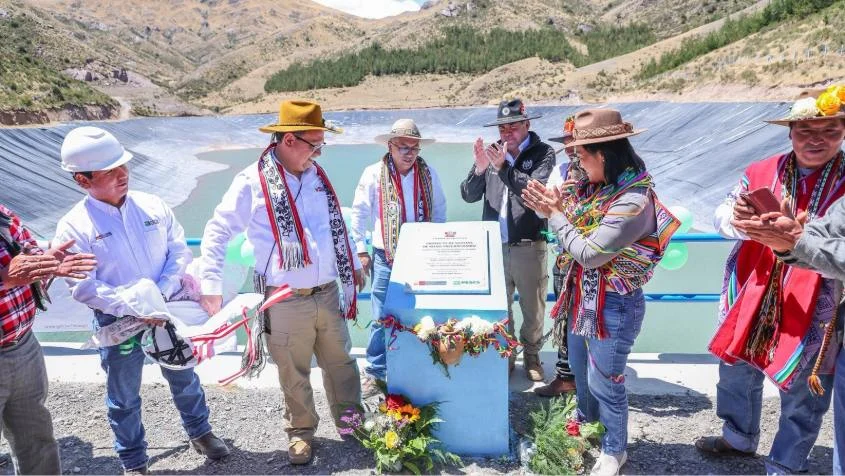
Minister Arnillas’s recent field tour was not merely ceremonial; it was a strategic intervention designed to identify bottlenecks and apply immediate corrective measures. "When we took office, we found hundreds of projects stuck in a bureaucratic limbo. We are now systematically unlocking these works," the Minister stated during his visit to the A.H. Jesús Nazareno–El Arenal in Mi Perú.
This specific project in Mi Perú, which had been stalled for 19 years, is one of the 39 projects the Ministry has successfully "unlocked" in recent weeks, signaling a shift in government policy toward active project management rather than passive oversight.

Chronology of Infrastructure Development and Oversight
The progress of these projects follows a complex trajectory of planning, funding, and construction. To understand the significance of the Minister’s visit, one must examine the specific timelines of these high-impact works:
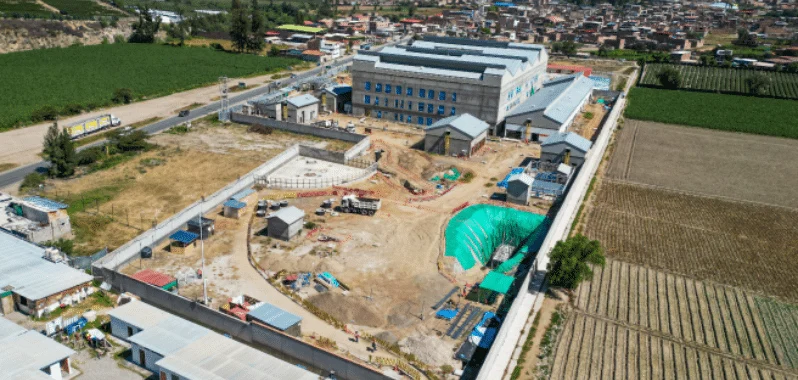
- Ventanilla 273 (The Flagship Project): With a monumental investment of S/ 803.6 million, this project represents the hope of 163,381 residents across 157 urban settlements. After a 17-year wait, the project has reached a 45.21% physical completion rate.
- The "Unlocking" Phase (2025-2026): Following the initial audit of stalled projects, the Ministry identified key technical gaps. The current period marks the transition from planning to full-scale construction, with guaranteed financing secured through the 2026 and 2027 fiscal years.
- The Upcoming Technical Tables: As of October 16, 2026, the Ministry has mandated the activation of specialized technical tables. These meetings, involving the board of directors of Sedapal (the state water utility) and local municipal leaders, are intended to finalize the engineering details for the Ancón and Santa Rosa sectors.
Supporting Data: Investment and Reach
The sheer volume of capital being deployed into these regions underscores the government’s commitment to social equity. The following table illustrates the distribution of investment and the expected impact on the population:
| Project Location | Investment (S/) | Beneficiaries | Key Components |
|---|---|---|---|
| Ventanilla 273 | 803.6 Million | 163,381 | 34 reservoirs, 150km of piping |
| Santa Rosa & Ancón | 381 Million | 18,709 | 7,897 new connections |
| Villas de Ancón | 620 Million | 20,770 | New PTAR, submarine emissary |
| Piedras Gordas | 67 Million | 76,481 | 5,590 connections, 4 reservoirs |
The total investment across Lima Norte alone exceeds S/ 1,000 million, targeting a total of over 115,000 direct beneficiaries in those specific sectors, highlighting the prioritization of low-income areas that have historically lacked basic utility coverage.
Official Responses and Strategic Directives
Minister Arnillas utilized the visits to communicate directly with local stakeholders and municipal authorities, including the mayors of Mi Perú, Ventanilla, and Ancón. A key highlight of his announcements was the guarantee that, for the Ventanilla 273 project, all residential water connections will be provided free of charge to the users.

"The financing is secured. Our goal is not just to build, but to ensure that these systems are sustainable and that the burden on the end-user is minimized," Arnillas remarked.
Addressing the complexity of the "Villas de Ancón" project—a massive undertaking that has been pending for three decades—the Minister emphasized the necessity of a multidisciplinary approach. By bringing the leadership of Sedapal and the Program for Safe Water for Lima and Callao (PASLC) to the table, the Ministry is attempting to bridge the gap between high-level policy and field-level execution. The involvement of the Office of Dialogue and Social Management (ODGS) further suggests an effort to mitigate potential community resistance and ensure transparency throughout the construction process.
Implications for Public Health and Urban Development
The implications of completing these water and sanitation works extend far beyond the immediate construction sector. In urban centers like Callao and Northern Lima, where rapid, often informal, urban expansion has outpaced utility infrastructure, the lack of sewage systems poses a constant public health risk.
- Public Health Improvement: The installation of proper sewage networks and the construction of new Plants for the Treatment of Wastewater (PTAR), such as the one planned for Villas de Ancón, will drastically reduce the prevalence of waterborne diseases and improve the living conditions of thousands of families.
- Economic Stimulation: Large-scale infrastructure projects act as economic multipliers. The influx of S/ 1,000 million into the Lima Norte economy will stimulate local employment, demand for construction materials, and the development of surrounding services.
- Governance and Trust: For a population that has waited between 17 and 30 years for basic services, these projects are a litmus test for government efficacy. Successfully delivering these works will restore a degree of public trust in state institutions.
A Look Ahead: Overcoming Future Hurdles
While the current progress is significant, the path forward is not without challenges. The technical complexity of installing deep-trench piping in densified urban areas, the need for consistent coordination with local municipalities, and the management of large-scale engineering contracts require constant vigilance.

The Ministry’s decision to establish permanent technical tables starting in mid-October is a strategic response to the historical failure of isolated project management. By maintaining a continuous dialogue between the central government, the state utility (Sedapal), and the local governments, the Ministry aims to create a "fail-safe" mechanism where technical disputes can be resolved in real-time, preventing the common "stop-and-go" cycles that have plagued these works for decades.
Furthermore, the focus on the Villas de Ancón project, which includes an ambitious submarine emissary, demonstrates that the Ministry is not opting for "quick-fix" solutions but is investing in robust, long-term engineering that will serve the region for the next half-century.
Conclusion
The recent inspection tour by Minister Mauricio Arnillas marks a pivotal moment for the residents of Lima’s northern cone and the Callao region. By transforming the government’s approach from reactive crisis management to proactive project acceleration, the Ministry of Housing is making a significant effort to bridge the inequality gap in basic utility access. With over S/ 1,000 million being funneled into these critical projects, the success of these initiatives will be measured by the speed of their completion and the eventual integration of hundreds of thousands of citizens into a modernized, reliable water and sanitation grid. The coming months will be crucial as the established technical tables begin their work, setting the stage for what the administration hopes will be a transformative chapter in the history of Peruvian urban infrastructure.