Executive Summary
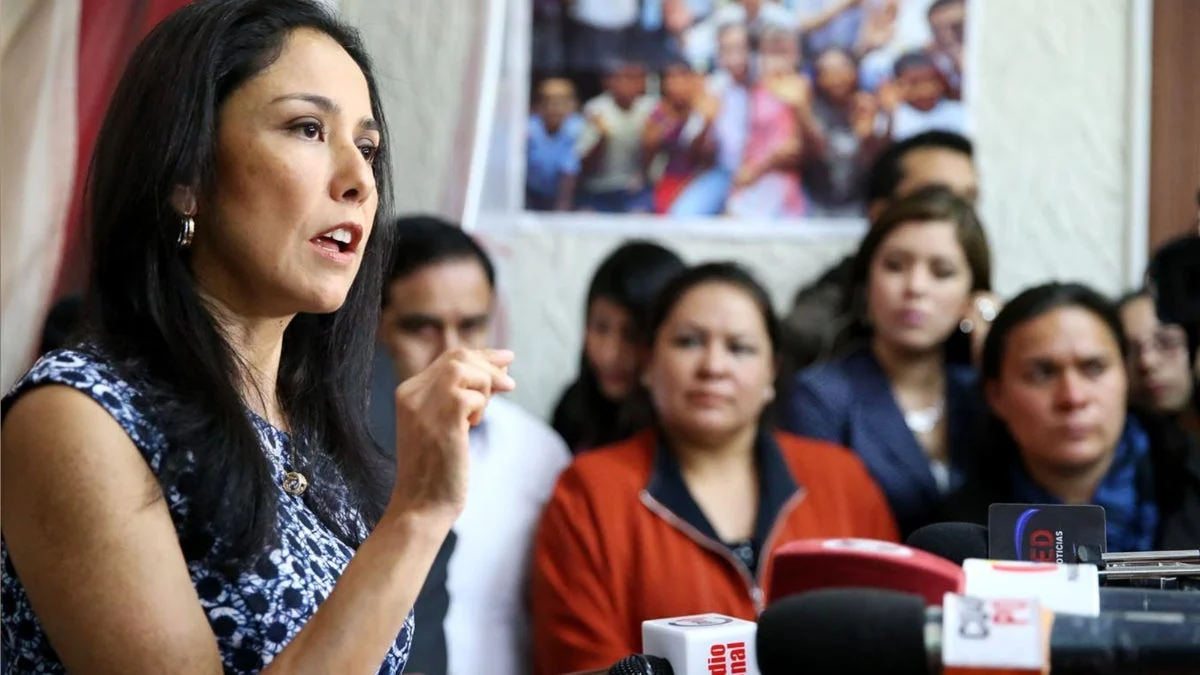
In a pivotal development for one of Peru’s most high-profile corruption investigations, the Third National Criminal Appeals Chamber has solidified the judicial oversight of the Gasoducto Sur Peruano (Southern Gas Pipeline) case. By declaring the recusal request filed by former First Lady Nadine Heredia "infundada" (unfounded), the appellate court has affirmed that Judge Leodan Cristóbal Ayala will continue to preside over the control of the fiscal accusation against former President Ollanta Humala, his wife, and other co-defendants. This decision effectively ends months of procedural friction and allows the court to proceed with the critical intermediate stage of the trial.
Chronology of the Judicial Dispute
The path to this recent decision has been marked by a series of legal maneuvers characteristic of the complex Lava Jato investigations in Peru.
- Initial Allegations: The defense for Nadine Heredia raised concerns regarding the impartiality of Judge Leodan Cristóbal Ayala, arguing that the magistrate’s conduct during the preliminary hearings suggested a bias that would prevent a fair trial.
- Formal Recusal Filing: Leveraging procedural rights, the legal team for the former First Lady formally requested the judge’s removal from the case, a move aimed at halting the current proceedings and forcing a change in judicial leadership.
- Deliberation Phase: The Third National Criminal Appeals Chamber took the request under advisement, reviewing evidence and arguments presented by both the defense and the Public Ministry.
- The September 7th Ruling: The appellate court issued its final resolution, rejecting the arguments for recusal. The ruling stated clearly that the grounds presented by the defense did not meet the legal threshold required to disqualify a judge.
- Final Archiving: Following the notification of the parties, Judge Cristóbal Ayala officially ordered the permanent archiving of the recusal incident, signaling a return to business as usual for the presiding court.
The Role of the Intermediate Stage
To understand the significance of this ruling, one must examine the specific stage of the proceedings currently underway: the Control of the Fiscal Accusation.
In the Peruvian legal system, the intermediate stage acts as a filter between the investigation and the trial. During this phase, Judge Cristóbal Ayala is tasked with a monumental responsibility:
- Review of Evidence: The judge must evaluate the evidence gathered by the Special Prosecution Team for the Odebrecht and Lava Jato cases to determine if it is sufficient to warrant a public trial.
- Addressing Procedural Objections: Both the prosecution and the various defense teams present motions, challenge evidence, and raise formal objections. The judge’s role is to resolve these disputes, ensuring that the process remains transparent and adheres to constitutional mandates.
- Determining Admissibility: The court must verify that the fiscal accusation meets all formal and material requirements established by law. If the judge approves the accusation, the case moves to the oral trial phase; if not, the prosecution may be required to rectify its errors.
The continuity of Judge Cristóbal Ayala is critical here, as he has already invested significant time in mastering the thousands of pages of documentation associated with the Gasoducto Sur Peruano case. A change in judge would have necessitated a reset of these evaluations, leading to significant delays.
The Weight of the Prosecution: The Gasoducto Sur Peruano Case
The case in question centers on the massive infrastructure project known as the Gasoducto Sur Peruano. Prosecutors, led by figures such as Fiscal Geovana Mori, allege that the project became a vehicle for illicit financial flows.
The Allegations
The core of the accusation involves allegations of money laundering and criminal association. The prosecution contends that the former presidential couple facilitated favorable conditions for the Brazilian construction giant Odebrecht to secure the concession for the gas pipeline in exchange for illicit payments.
The Requested Penalties
The scale of the prosecution’s demand underscores the severity of the charges. The Public Ministry has requested a sentence of 35 years of imprisonment for both Ollanta Humala and Nadine Heredia. These figures represent one of the most severe potential sentences sought in the broader Lava Jato scandal in Peru, reflecting the prosecution’s stance on the gravity of the institutional damage allegedly caused.
Official Responses and Procedural Transparency
Following the appellate court’s decision, the judicial machinery moved quickly to restore order. The Third National Criminal Appeals Chamber notified all involved parties, including the defense of the accused, the prosecutors, and the presiding judge.
Judge Cristóbal Ayala, upon receiving the notification, acted in accordance with the law by ordering the formal archiving of the recusal incident. The documentation related to this dispute has been sent to the Archive of the Superior Court of Specialized Penal Justice. This administrative step ensures that the record is preserved, but it also signals that the court will no longer entertain motions related to this specific challenge.
Legal experts note that such recusal attempts are a common, if often unsuccessful, strategy in high-stakes corruption cases. They serve as a mechanism to test the judge’s mettle and, in some cases, to create procedural delays. However, by upholding the judge’s mandate, the appellate court has reinforced the principle of judicial stability.
Implications for the Future of the Case
The removal of the recusal hurdle has significant implications for the timeline and trajectory of the case:
1. Avoidance of Procedural Stagnation
Had the recusal been granted, the case would have likely faced a "restart" or a period of suspension while a new judge familiarized themselves with the case. In a case as complex as Gasoducto Sur Peruano, this could have resulted in months of lost time. The current stability allows for a continuous and more predictable trial schedule.
2. Strengthening Public Confidence
For the public and international observers, the judiciary’s ability to resolve internal disputes efficiently is essential for maintaining confidence in the rule of law. By ruling decisively on the recusal, the appellate court has signaled that the judicial process is functioning according to established norms, regardless of the political stature of the defendants.
3. Preparation for the Oral Trial
With the intermediate stage once again the primary focus, the parties can now dedicate their full resources to preparing for the potential oral trial. This includes finalizing witness lists, organizing documentary evidence, and refining legal arguments. The scrutiny that Judge Cristóbal Ayala applies to the fiscal accusation now serves as a preview of the rigor that will be applied to the trial itself.
Conclusion
The decision to keep Judge Leodan Cristóbal Ayala at the helm of the Gasoducto Sur Peruano case is a significant milestone in the prosecution of one of Peru’s most controversial corruption scandals. As the case moves forward, the scrutiny will remain high, and the legal arguments will intensify.
The 35-year prison requests remain the focal point of the prosecution’s strategy, and the judicial oversight provided by the court will continue to be the primary battleground. For now, the legal path is clear: the intermediate stage will proceed, the fiscal accusation will be vetted, and the wheels of justice will continue to turn in their pursuit of accountability in the Odebrecht era. The stability provided by the appellate court’s ruling ensures that the process will continue with a sense of continuity, bringing the country one step closer to a final verdict in this defining chapter of Peruvian political history.