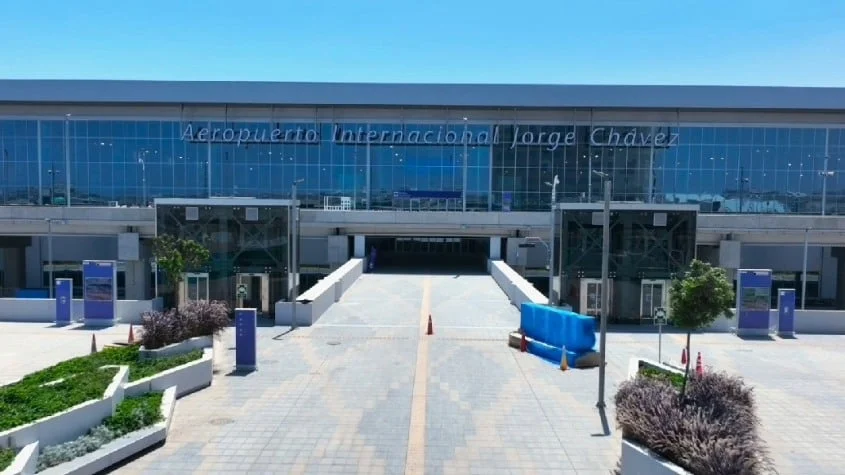
The landscape of Peruvian infrastructure is undergoing a seismic shift. In a high-level briefing hosted by the Peruvian Chamber of Construction (CAPECO), industry leaders and government officials convened to outline a master plan that aims to transition Lima from a regional hub into a world-class logistical and tourist powerhouse. The focus of the discourse centered on the operational expansion of the Jorge Chávez International Airport and the surrounding web of strategic transport arteries designed to integrate the facility with the heart of the capital.
Main Facts: A Hub of Economic Dynamism
The Jorge Chávez International Airport is no longer merely a transit point; it has evolved into a vital economic engine. Juan José Salmón, CEO of Lima Airport Partners (LAP), revealed during the CAPECO conference that the terminal currently anchors an extensive ecosystem comprising 150 diverse companies and a workforce of 27,000 professionals.
This ecosystem is the bedrock of a broader strategy to solidify Peru’s position in global aviation. The expansion of the airport is inextricably linked to a vision for 2031, which targets the attraction of at least 6 million international tourists. Achieving this requires a dual approach: internal infrastructure optimization and the aggressive liberalization of airspace to invite new international carriers and increase flight frequencies.
The Role of PMO VÍAS: Engineering the Future
While the airport undergoes physical expansion, the secondary objective—and perhaps the most complex—is connectivity. Marc Chassande, representative of Setec International and director of PMO VÍAS, provided a detailed update on the projects managed under the Government-to-Government (G2G) agreement between Peru and France.
The portfolio of projects overseen by PMO VÍAS is designed to eliminate the notorious "bottlenecks" that have historically plagued access to the Callao region. Key interventions include:

- The Vía Expresa Santa Rosa: A critical elevated corridor designed to provide rapid transit to the airport.
- The Santa Rosa Bridge: A structural centerpiece that will cut transit time between the Costa Verde and the airport to a mere five minutes.
- The New Central Highway (Nueva Carretera Central): A monumental engineering feat intended to bridge the Andes with the coast, facilitating the efficient transport of goods and passengers.
These projects do not exist in a vacuum. They are being engineered to interlock with existing and future transport master plans, including the Line 2 of the Lima and Callao Metro, the Yellow Line (Línea Amarilla), the Port of Callao, and the Peripheral Road Ring (Anillo Vial Periférico).
Chronology: From Planning to Execution
The transformation of the Jorge Chávez airport is the culmination of years of logistical planning and international cooperation.
- Initial Phases: The groundwork was laid with the expansion of the airport’s physical capacity, including the construction of the new terminal building and second runway, designed to handle the anticipated surge in passenger volume.
- Current State: The focus has now shifted to "last-mile" connectivity. Projects such as the Santa Rosa Bridge are currently in the advanced planning and management phase under the G2G framework, ensuring international technical standards are met.
- Future Milestones: The 2031 horizon serves as the primary benchmark. By this date, the government and private sector aim to have a fully integrated "Airport City" model, where logistics, commercial retail, and hospitality operate in a seamless, high-efficiency environment.
Supporting Data: Why Connectivity Matters
The data presented by LAP and CAPECO underscores the urgency of these investments. With 27,000 jobs currently tied to the airport’s operations, the multiplier effect of this connectivity project is substantial.
For the tourism sector, the current limitations in infrastructure act as a "soft cap" on growth. By reducing the time and cost associated with moving tourists from the arrival gate to the city centers (or to other regional hubs), Peru increases its competitive index against regional neighbors like Chile, Colombia, and Brazil.
Furthermore, the urban impact on the districts of La Perla, Bellavista, and Callao is significant. The integration of new public spaces, pedestrian bridges, and bicycle lanes alongside the Vía Expresa Santa Rosa represents a "human-centric" approach to infrastructure, ensuring that the development benefits the local population rather than just transit users.

Official Responses and Strategic Perspectives
Alejandro Garland, President of CAPECO, provided a sobering but optimistic assessment of the road ahead. He emphasized that the sheer scale of the investment—billions of dollars in public and private capital—requires a "high-precision" articulation between the public and private sectors.
"We are not just building roads or terminals," Garland noted. "We are creating a ‘City Airport’ ecosystem that requires a new generation of construction firms capable of handling high-complexity engineering challenges and rigorous management standards."
From the government side, the partnership with France via PMO VÍAS is viewed as a guarantor of transparency and technical excellence. By importing European expertise, the project seeks to mitigate risks associated with corruption, budget overruns, and administrative delays, which have stalled Peruvian infrastructure in the past.
Implications: The Emergence of the "Airport City"
The ultimate implication of these developments is the birth of an "Airport City." This concept shifts the role of the airport from a point of departure to a commercial hub in its own right.
Economic Implications
The development of the surrounding areas will likely see a surge in real estate demand, particularly for logistics centers, warehouses, and hotels. Businesses that rely on "just-in-time" supply chains will find the Callao area significantly more attractive, potentially decentralizing some of the commercial pressure from downtown Lima.

Urban Planning Implications
The commitment to new public spaces and urban renewal in Callao is a vital component of social sustainability. By investing in the urban fabric of the surrounding districts, the project ensures that the airport becomes a neighbor that contributes to, rather than isolates itself from, the community.
Technical and Managerial Challenges
Despite the optimism, the path forward is fraught with challenges. The integration of the Metro, the Peripheral Road Ring, and the airport access roads requires a level of inter-institutional coordination that is historically difficult in the Peruvian bureaucracy. As Marc Chassande highlighted, the success of these projects hinges on the consistent application of G2G management protocols.
Conclusion: A New Era for Peru
The presentation at CAPECO marks a definitive turning point. Peru is moving away from fragmented, small-scale infrastructure towards a holistic, systemic approach. If the objectives for 2031 are met, the combination of the new Jorge Chávez terminal, the expanded road network, and the integration of the metropolitan rail system will redefine the Peruvian economy.
The message from the speakers was clear: the infrastructure of the future is not just about concrete and steel. It is about connectivity, efficiency, and the creation of an environment where the private sector can thrive, tourists can travel with ease, and the local workforce can benefit from the economic prosperity that follows in the wake of such monumental development. As the projects advance, all eyes will be on the execution, as this plan represents the most significant push for national modernization in recent history.