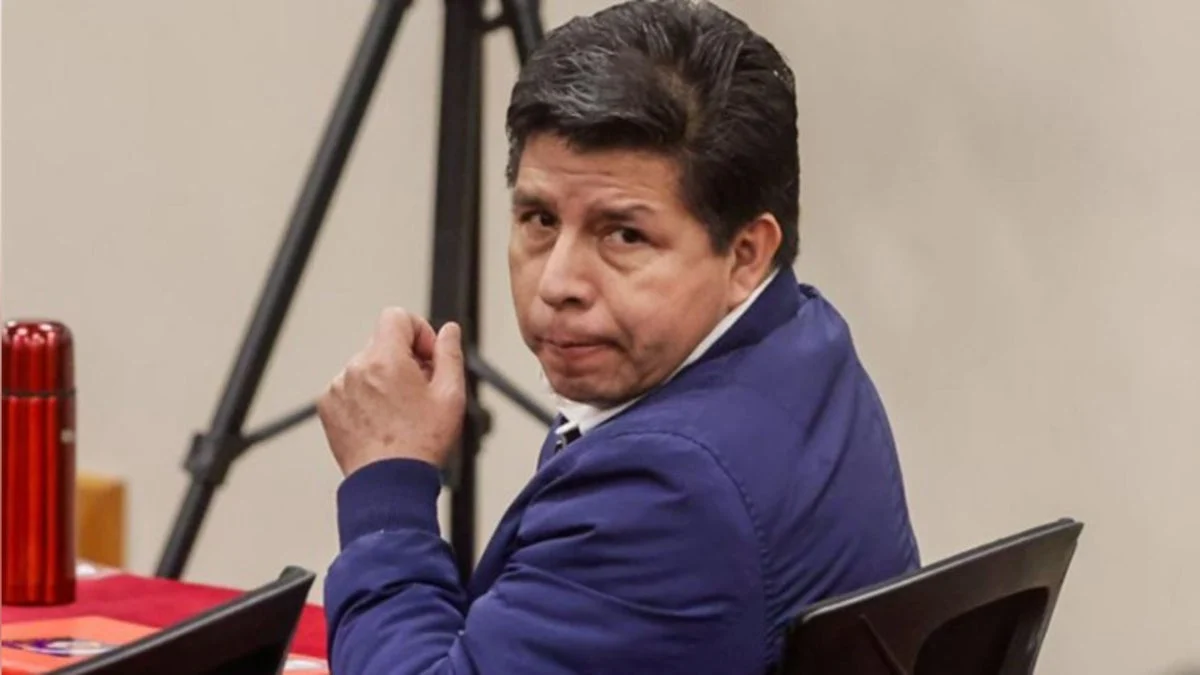
In a definitive legal ruling that reinforces the sovereignty of the Peruvian judicial system, Constitutional Judge Ana Osorio has declared the latest habeas corpus petition filed on behalf of former President Pedro Castillo to be "improcedente" (inadmissible). The petition, spearheaded by his defense attorney and former Minister of Defense, Walter Ayala, sought the immediate release of the former head of state, citing an international report that labeled his ongoing detention as arbitrary.
The ruling, issued on August 14 and reviewed by RPP, underscores a fundamental tension between international advisory opinions and national judicial autonomy. Judge Osorio’s decision effectively closes the door on using the United Nations Working Group on Arbitrary Detention (WGAD) as a legal lever to dismantle the domestic judicial proceedings currently underway against the former president.
The Core of the Dispute: International vs. National Jurisdiction
The legal battle stems from a specific report released by the UN’s Working Group on Arbitrary Detention. The group, acting under the mandate of the UN Human Rights Council, concluded that Castillo’s detention following his unsuccessful attempt to dissolve Congress on December 7, 2022, lacked a sufficient legal basis. Consequently, the international body issued a recommendation for his immediate liberation.
However, Judge Osorio’s ruling meticulously dismantles the defense’s argument that these recommendations should carry the force of law within Peru. Relying on precedent established by the Peruvian Constitutional Tribunal, the judge clarified that the WGAD’s opinions are non-binding. The court emphasized that the WGAD is an "extra-conventional" body created by a 1991 resolution of the former Commission on Human Rights, rather than a treaty-based tribunal to which Peru has explicitly ceded jurisdictional authority.
"The opinion of said working group does not constitute a decision of a jurisdictional nature that is binding on the Peruvian State," the resolution stated, effectively asserting that such reports cannot supersede the rulings of the Supreme Court of Peru.
Chronology of a Crisis: From Palace to Prison
To understand the weight of this judicial decision, it is necessary to revisit the sequence of events that brought the Peruvian state to this point of legal impasse.
December 7, 2022: The Failed Coup
In a nationally televised address, then-President Pedro Castillo announced his intention to dissolve Congress, declare a state of emergency, and install an "exceptional emergency government." The move was immediately condemned as a coup d’état by constitutional experts, the judiciary, the Public Ministry, and international observers. Within hours, Congress voted to impeach him for "permanent moral incapacity."
December 2022 – 2023: Initial Legal Fallout
Following his arrest, Castillo was subjected to a series of legal actions, including a preventive detention order related to the charge of conspiracy for rebellion. This was compounded by ongoing investigations into corruption, specifically the "PetroPerú," "Puente Tarata," and "Ministry of Housing" cases, which were later consolidated.
December 4, 2025: The Sentencing
A critical moment in this timeline occurred when the Special Criminal Chamber of the Supreme Court sentenced Castillo to 11 years, 5 months, and 15 days in prison. The court found him guilty of conspiracy for rebellion, a verdict that became a central target for the defense’s habeas corpus appeal.
August 14, 2026: The Current Ruling
Judge Ana Osorio’s recent decision serves as a rejection of the defense’s attempt to annul the 2025 conviction and the parliamentary resolutions that originally led to his removal from office.
Supporting Data: Understanding the Habeas Corpus Petition
The defense’s petition was broad in scope, aiming to dismantle the entirety of the legal framework currently holding the former president. According to the court documents, the defense requested the following:
- Annulment of Legislative Resolutions: The defense sought to strike down the congressional motions that approved Castillo’s impeachment and lifted his political immunity.
- Overturning the Criminal Conviction: They demanded the nullification of the 11-year sentence handed down in December 2025 for conspiracy for rebellion.
- Vacating Preventive Detention: The petition requested the immediate release of Castillo regarding the ongoing investigations into his alleged leadership of a criminal organization within the Ministry of Housing and infrastructure projects.
The court’s refusal to grant these requests signals that the Peruvian judiciary remains steadfast in upholding the convictions and detention orders established by the Supreme Court, regardless of external pressure or non-binding international advisories.
Official Responses and Perspectives
The Defense Strategy
Walter Ayala, acting as Castillo’s legal representative, has consistently maintained that the former president is a political prisoner. His strategy has relied heavily on internationalizing the conflict. By invoking the UN report, the defense aimed to paint the Peruvian judicial process as a violation of international human rights standards. Ayala argues that the initial detention was executed without proper adherence to the parliamentary antejuicio process, a claim that the Constitutional Court has now effectively dismissed for a second time.
The Judiciary’s Stance
Judge Osorio’s ruling reflects a growing consensus within the Peruvian judicial branch. By explicitly citing the nature of the WGAD’s origin—noting that it is not a body to which Peru has submitted via a formal treaty—the court is drawing a clear "red line." This approach preserves the supremacy of the Peruvian Constitution and the authority of the Supreme Court to adjudicate crimes committed by high-ranking officials within the national territory.
Implications for the Future of Peruvian Politics
The rejection of this habeas corpus petition has significant implications for both the legal and political landscape of Peru.
1. Reaffirmation of Judicial Independence
The ruling sends a clear message that the Peruvian judicial system is resistant to external interference. By prioritizing national law over non-binding international recommendations, the court is asserting that the political and criminal trials of former leaders will follow the domestic procedural code, free from the influence of non-binding UN working groups.
2. Legal Precedent for Future Appeals
This decision sets a rigorous precedent for any future attempts to use international human rights reports to challenge domestic criminal convictions. Defense teams will now find it increasingly difficult to argue that UN "opinions" provide a valid legal basis for annulling final, enforceable court sentences.
3. The Political Legacy of Pedro Castillo
For Castillo’s supporters, this ruling is likely to be framed as another instance of judicial bias. However, for his detractors, it is a necessary step toward the finality of the legal process. The case remains a focal point of polarization in Peru, as the country continues to grapple with the aftermath of the 2022 constitutional crisis.
4. International Relations and Human Rights
While this decision underscores sovereignty, it also invites scrutiny from international organizations. Critics of the ruling might argue that by disregarding the UN’s assessment of "arbitrary detention," Peru risks distancing itself from global human rights monitoring standards. Conversely, legal scholars in Lima argue that sovereignty is not in conflict with human rights; rather, that human rights must be adjudicated within the formal structures of the State, rather than through advisory bodies with no enforcement power.
Conclusion
The decision by Judge Ana Osorio is a landmark moment in the ongoing legal saga of Pedro Castillo. By categorizing the UN’s findings as non-binding, the court has effectively shielded the domestic judicial process from international legal challenges that threatened to undermine the authority of the Supreme Court. As the former president remains in custody, the legal path forward appears increasingly narrow for his defense, leaving the judiciary in a position of firm control over the proceedings that have defined the post-2022 political era in Peru.
The case serves as a stark reminder of the complexities of applying international human rights law within a domestic framework, a debate that is sure to continue as the nation seeks both accountability for the past and stability for its future.