By Mónica Belling
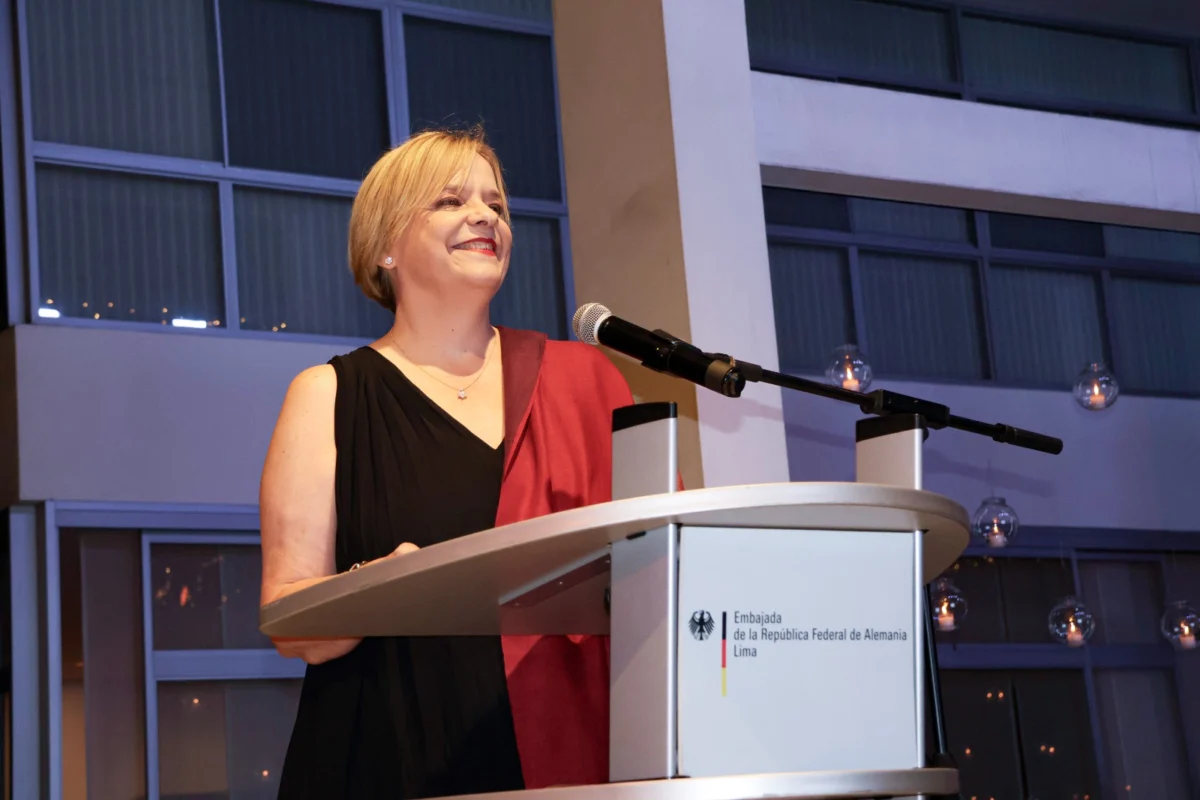
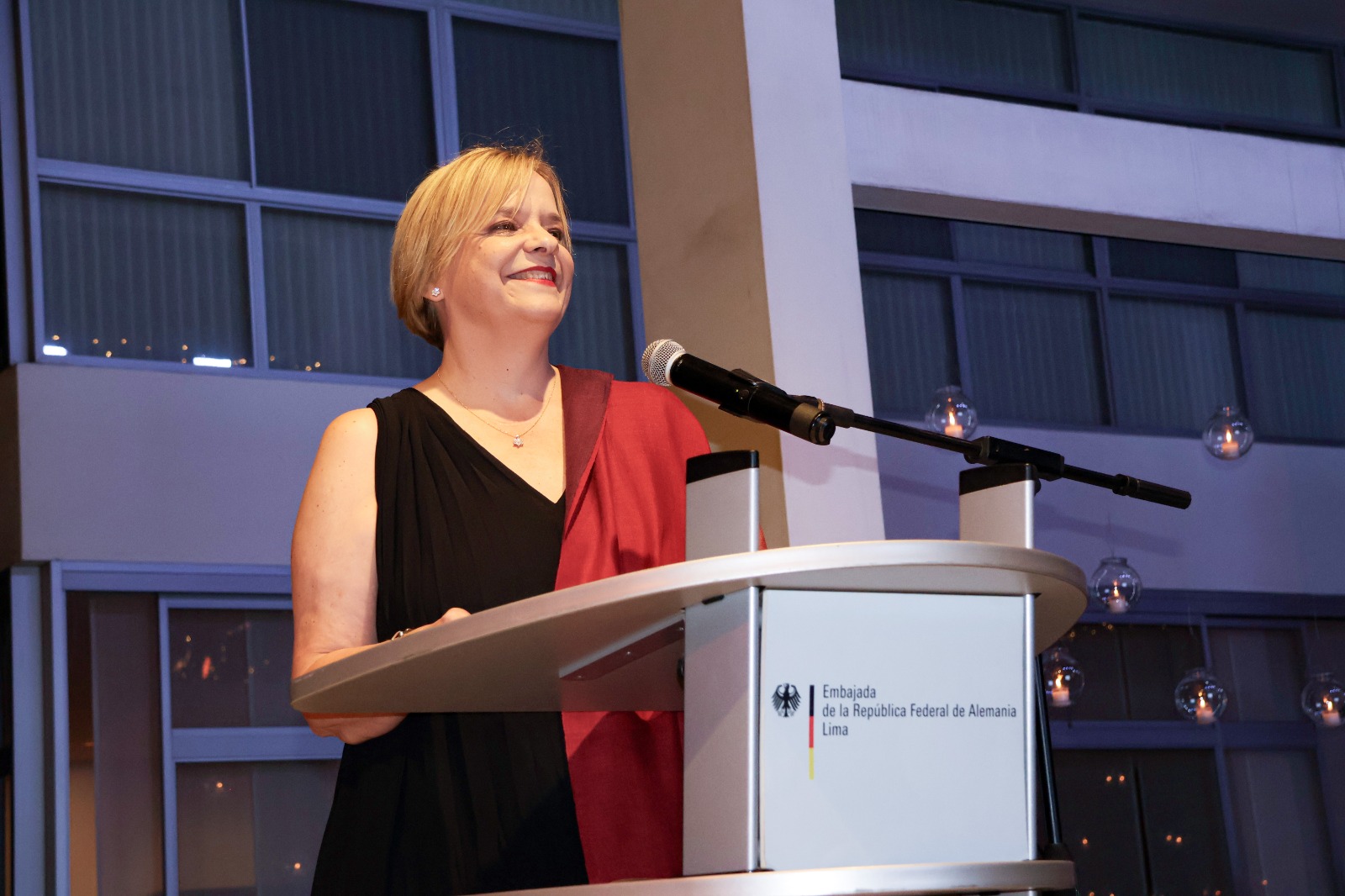
In a global landscape defined by shifting geopolitical alliances and escalating security concerns, the 36th anniversary of German Unity—commemorated on October 3—served as more than a traditional diplomatic protocol in Lima. At the official residence of the German Embassy, Ambassador Sabine Bloch and Peruvian Deputy Minister of Foreign Affairs Eric Anderson outlined a revitalized bilateral roadmap, focusing on critical pillars: infrastructure, climate resilience, sustainable biocommerce, and the joint fight against transnational organized crime.
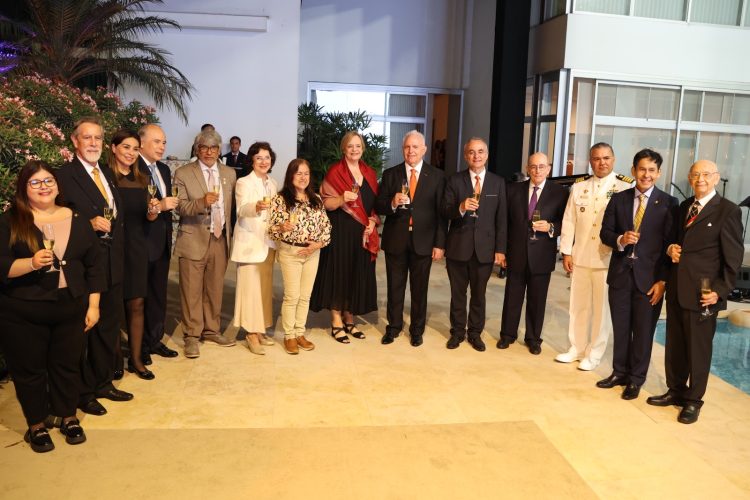
The event, attended by a distinguished array of diplomats, cultural icons such as singer Susana Baca, and esteemed scholars like Dr. Federico Kauffmann Doig, underscored the enduring relevance of the German-Peruvian partnership in an era of global volatility.
The Global Context: Democracy, Peace, and Security
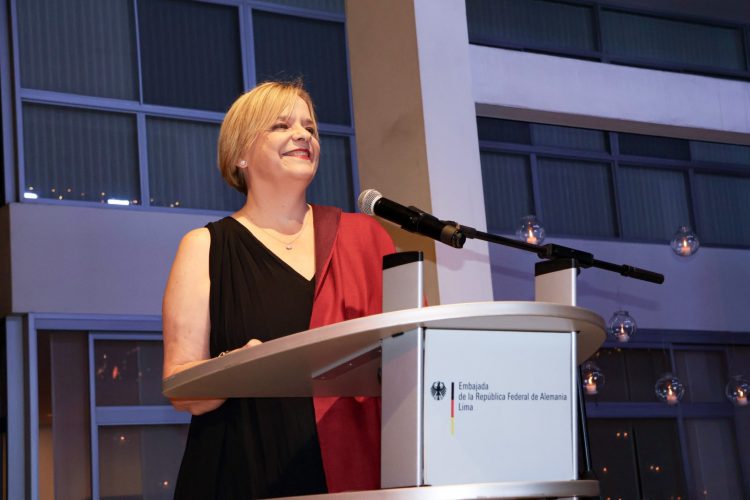
Ambassador Sabine Bloch’s address was marked by a sobering assessment of the international order. Referencing the 75th anniversary of the German Chancellery and the sesquicentennial of Konrad Adenauer’s birth, she emphasized that the peace and democracy restored to Germany 36 years ago are not merely historical achievements but active responsibilities in the present.
Confronting Authoritarianism and Disinformation
Ambassador Bloch did not shy away from the harsh realities of contemporary geopolitics. She explicitly linked the stability of global markets to the security crises currently unfolding in Europe. She provided a chilling example of the reach of modern hybrid warfare: the recent attempted sabotage of a cargo plane in Leipzig. "Experts have been able to attribute the drone attack with explosives to the Russian government," Bloch noted, highlighting how the proximity of such threats to critical infrastructure serves as a warning to all democratic nations.
Furthermore, she addressed the global ramifications of the ongoing war in Ukraine. Beyond the immediate regional impact, the conflict continues to disrupt the global food supply chain. "The ruthless war of aggression being waged by the Russian government against neighboring Ukraine prevents the export of a significant portion of the Ukrainian cereal harvest," she stated. "This will inevitably lead to higher prices and hunger in many countries around the world."
Chronology of Cooperation: A Historical Perspective
The relationship between Germany and Peru is deeply rooted in historical migration and decades of technical cooperation. The 2026 commemorations held a special significance, as they coincided with the official recognition of July 25th as the "Day of the Austro-German Settler."
The Legacy of Migration and Integration
Ambassador Bloch highlighted the unique historical contribution of the Austro-German migration to the central jungle of Peru, specifically in regions such as Oxapampa, Pozuzo, and Villa Rica. This historical chapter is characterized not merely by settlement, but by the successful integration with the local Yanesha people. This symbiosis has resulted in a unique cultural enrichment that remains a cornerstone of the bilateral relationship today.
In the modern era, the focus has shifted toward sustainable development. As part of this year’s celebrations, the Embassy showcased an initiative centered on rural beekeeping in the central jungle, aiming to foster economic development while simultaneously preserving delicate biodiversity hotspots.
Supporting Data: Economic and Bilateral Indicators
The partnership between Germany and Peru is underpinned by substantial economic flows. Deputy Minister Eric Anderson provided a clear snapshot of the current state of play, emphasizing that the relationship is moving toward a more sophisticated level of institutional and commercial integration.
Trade and Investment Figures
- Bilateral Trade: In 2025, trade between the two nations surpassed $2.7 billion USD, a figure that reflects the robust demand for both German industrial technology and Peruvian primary products.
- Foreign Direct Investment (FDI): German investment in Peru currently exceeds $2 billion USD. A standout example of this capital presence is the significant German involvement in the concession and modernization of the Jorge Chávez International Airport, a critical piece of infrastructure for Peru’s regional connectivity.
- Roadshow Initiatives: Both governments are currently coordinating a "Roadshow" in Germany to promote further investment opportunities in Peru, specifically focusing on raw materials and green energy projects.
Official Responses: Aligning Strategic Interests
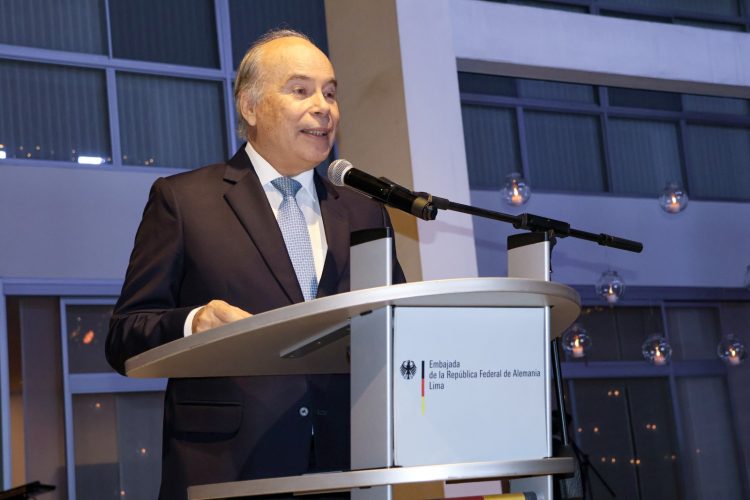
Deputy Minister Eric Anderson, an alumnus of the Humboldt German School and a former diplomat who served during the pivotal years of the fall of the Soviet bloc (1988–1992), offered a personal and professional perspective on the partnership. His remarks underscored a shared vision for the future of the two nations.
Combating Transnational Crime
A major highlight of the diplomatic agenda is the intensification of security cooperation. Recognizing the growing threat of organized crime and drug trafficking, the Peruvian government is preparing for a high-level mission from the German Parliament’s Committee on Internal Affairs. "We are working to boost the cooperation agreement against serious and organized crime," Anderson confirmed. This move reflects a shared realization that modern security threats cannot be managed within national borders alone.
Institutional Strengthening and Sustainable Development
The Deputy Minister lauded over six decades of technical assistance provided by German development agencies. He specifically pointed to three critical areas where this aid has been transformative:
- Sustainable Urban Development: Improving the livability and efficiency of Peru’s growing cities.
- Climate Mitigation: Supporting Peru’s transition to greener energy and sustainable land use.
- The OECD Path: Providing essential technical support for Peru’s ongoing efforts to align its institutional frameworks with OECD standards, a key objective for the country’s long-term economic maturity.
Anticipatory Action: The Climate Challenge
One of the most pressing topics addressed by Ambassador Bloch was the environmental crisis. Comparing the rapid melting of glaciers in the Alps and the Himalayas to the vulnerability of the Peruvian Andes, she stressed the need for proactive, rather than reactive, policies.
Helping the Vulnerable
"We know that Peru will face an especially strong El Niño phenomenon, which will primarily affect the most vulnerable populations," the Ambassador explained. To address this, Germany has committed to two new humanitarian aid projects focused on "anticipatory action." This approach uses meteorological data and early warning systems to release funds and aid before the disaster reaches its peak, significantly reducing the humanitarian impact on the most impoverished regions of the country.
Implications: The Triad of Optimism
In her concluding remarks, Ambassador Bloch summarized the diplomatic philosophy currently guiding Berlin’s engagement with Lima, drawing on the vision of Foreign Minister Johann Wadephul. The strategy is built on a "triad of optimism": Security, Freedom, and Prosperity.
A Call for Courage
The implementation of this vision requires, above all, the courage to defend core principles:
- Truth against the rising tide of disinformation.
- Democracy against the creeping influence of authoritarian regimes.
- The Rule of Law against the culture of impunity.
- Free Trade as the engine of global prosperity.
As the international community grapples with profound uncertainty, the relationship between Germany and Peru serves as a model of how democratic states can leverage their shared history to secure a more stable future. By intertwining their goals for security, sustainable development, and economic growth, both nations are positioning themselves to withstand the geopolitical shocks of the 21st century.
The message delivered in Lima was clear: the unity celebrated on October 3 is not a static memory, but a dynamic, evolving commitment to a world where liberty and law prevail over the forces of instability. Through concrete actions—from the protection of the Amazonian ecosystem to the fight against transnational crime—the German-Peruvian partnership is entering a new, more integrated, and highly strategic phase.