Executive Summary: A New Era for Public-Private Collaboration
In a landmark performance that underscores the growing efficacy of public-private partnerships in Peru, the "Obras por Impuestos" (OxI) mechanism has reached unprecedented heights. Between January and September 2026, the program successfully adjudicated 691 public investment interventions totaling a staggering S/9.409 billion. This figure represents more than triple the S/2.989 billion recorded during the same period in 2025, signaling a paradigm shift in how the country manages and executes its infrastructure development.
As the program rapidly approaches the historic psychological threshold of S/10 billion in a single calendar year, 2026 has already solidified its place in history as the most successful year since the mechanism’s inception in 2009. This surge is not merely a quantitative increase; it represents a qualitative strengthening of the synergy between the Peruvian state and the private sector, aimed at bridging the national infrastructure gap.
Chronology of an Extraordinary Year
The trajectory of OxI in 2026 has been marked by a steep upward curve, defying historical trends and demonstrating remarkable resilience.
First-Half Momentum
The year began with a proactive stance from both public entities and private firms. By May, the mechanism had already surpassed its annual expectations, setting the stage for the record-breaking months that followed. This early success created a "snowball effect," encouraging more regional and local governments to tap into their investment capacities.
The Historic Third Quarter
The most significant acceleration occurred between July and September 2026. During this period, 351 distinct interventions were finalized, totaling S/3.858 billion. According to data provided by ProInversión, this marks the single highest quarterly performance in the 18-year history of the program.
September’s Peak
The momentum reached a crescendo in September alone, with 105 interventions worth S/1.652 billion. To put this in perspective, this monthly total is nearly double the S/877 million reported in September 2025. This consistent performance—maintaining a monthly average of over S/1 billion in adjudications throughout the first nine months—suggests that the mechanism has reached a state of maturity and operational efficiency that was previously unseen.
Sectoral Distribution: Where the Investment Flows
The capital allocated through OxI is not distributed haphazardly; it is strategically directed toward sectors that provide the highest social and economic returns.
1. Transportation: The Backbone of Development
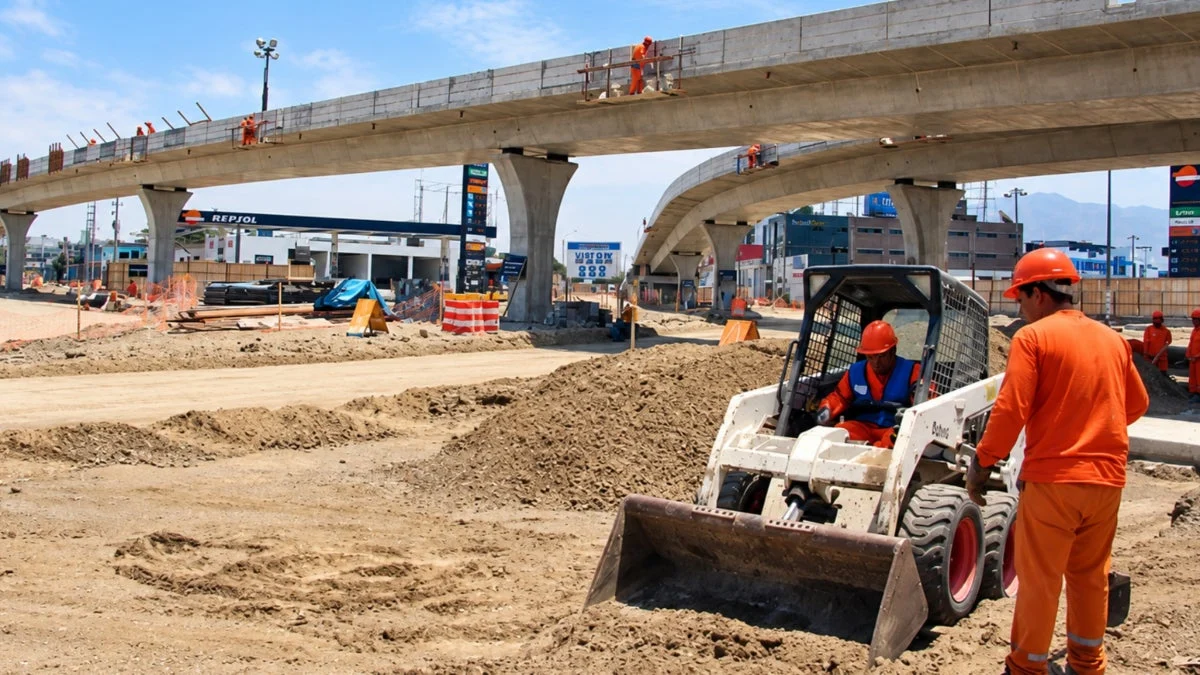
Leading the charge is the transportation sector, which secured S/3.242 billion. This focus is critical for a nation striving to improve connectivity, reduce logistics costs, and integrate remote provinces into the national economy.
2. Education: Investing in the Future
Education follows with S/1.552 billion in adjudications. By focusing on school infrastructure, the OxI mechanism is directly addressing the quality of learning environments, ensuring that students across the country have access to modern, safe, and functional facilities.
3. Institutional Planning and Management
"Planeamiento, Gestión y Reserva de Contingencia" accounted for S/1.270 billion. This category reflects the government’s effort to professionalize the management of public funds and ensure that contingency reserves are available for critical state operations.
4. Healthcare Infrastructure
Healthcare received S/873 million. Following the lessons learned in previous years regarding the importance of robust public health systems, the influx of capital into hospitals and clinics is a priority that directly impacts the well-being of the population.
Official Perspective: The Engine Behind the Growth
Luis Del Carpio, a lead representative for the initiative, attributes this historic achievement to a dual-pronged strategy: increased institutional agility and bolstered private-sector confidence.
"This advancement is a direct response to the dynamism of public entities, which are finally leveraging the new maximum limits of annual investment capacity," Del Carpio stated. "Simultaneously, we are witnessing a surge in trust from private companies. They no longer see this as an experimental process, but as a reliable, transparent, and high-impact way to contribute to the country’s development while optimizing their tax liabilities."
The administrative adjustments that allowed for higher spending caps have effectively removed the "glass ceiling" that previously hindered many large-scale regional projects, allowing local and regional governments to think bigger and act faster.
The Democratization of Infrastructure: New Actors in the Field
One of the most encouraging statistics from the 2026 report is the participation rate of new stakeholders. In the first nine months of the year, a total of 343 public entities and 408 private companies engaged with the mechanism.
The "First-Timer" Phenomenon
Perhaps the most telling indicator of the mechanism’s democratization is the number of newcomers:
- Private Sector: 282 companies used OxI for the first time in 2026, accounting for 69% of the total companies involved and committing S/3.043 billion in investment.
- Public Sector: 216 public entities—representing 63% of the total participating bodies—made their debut this year.
This influx of new participants suggests that the "Obras por Impuestos" model is becoming a standard tool in the toolkit of Peruvian regional governance, moving away from being an option only for large-scale national players.
Territorial Impact
While the number of interventions was highest at the local government level (471 projects), the financial weight remained concentrated in regional governments, which accounted for 50% of the total monetary volume. This balance ensures that both micro-local needs (such as neighborhood roads or local schools) and macro-regional needs (such as provincial hospitals or regional highways) are being addressed concurrently.
Implications: A Sustainable Path Forward?
Since its inception in 2009, the "Obras por Impuestos" program has accumulated a total of 1,761 interventions with a total investment value of S/26.392 billion. The fact that the first nine months of 2026 alone account for approximately 36% of the entire historical investment volume is a startling statistic that carries several implications:
1. Scaling the Model
The success of 2026 proves that the OxI model is scalable. By reducing bureaucratic friction and increasing the ceiling for tax-deductible infrastructure investment, the state has effectively unlocked a massive pool of capital that was previously stagnant.
2. Economic Stability
The heavy investment in transportation and healthcare provides a counter-cyclical boost to the economy. In times of potential market volatility, these infrastructure projects ensure continued employment and demand for raw materials and services, providing a stable foundation for economic growth.
3. Public Trust
The transparency inherent in the OxI process is arguably its greatest asset. By allowing the private sector to manage the execution of public works under strict oversight, the program mitigates many of the traditional risks associated with public procurement, such as delays and corruption. This increased trust is essential for maintaining the momentum seen in 2026.
4. Looking Toward 2027 and Beyond
The challenge now lies in sustainability. Can the momentum of 2026 be maintained? The "debut" of so many new public entities suggests that there is a growing pipeline of projects. However, the government must ensure that the institutional capacity to supervise these works grows at the same pace as the number of projects. If handled correctly, "Obras por Impuestos" could transition from being an auxiliary mechanism to the primary engine for infrastructure development in Peru.
Conclusion
The results through September 2026 represent a turning point. With S/9.4 billion already committed, the program has surpassed its annual meta with three months still to go in the calendar year. As the nation moves toward the final quarter, the focus will shift from "adjudication" to "execution." The eyes of the country are on these 691 projects, which promise not only to improve the physical landscape of Peru but also to rewrite the playbook on how public and private sectors can work together for the common good.
The success of this year proves that when the right incentives are aligned, the private sector is more than willing to serve as a partner in national development. For Peru, the record-breaking performance of 2026 is a testament to the fact that infrastructure is not just a government responsibility, but a shared national endeavor.