By ProActivo Editorial Team
The mining industry is undergoing a profound transformation, shifting from a traditional extraction-focused model to a partnership-driven approach that prioritizes long-term regional development. At the heart of this shift is Anglo American’s Quellaveco project in Moquegua, Peru. As the project celebrates four years of operation, it has become a case study in how large-scale mining can act as a catalyst for socio-economic progress, touching the lives of over 15,000 people through integrated initiatives in agriculture, health, education, and technical capacity building.
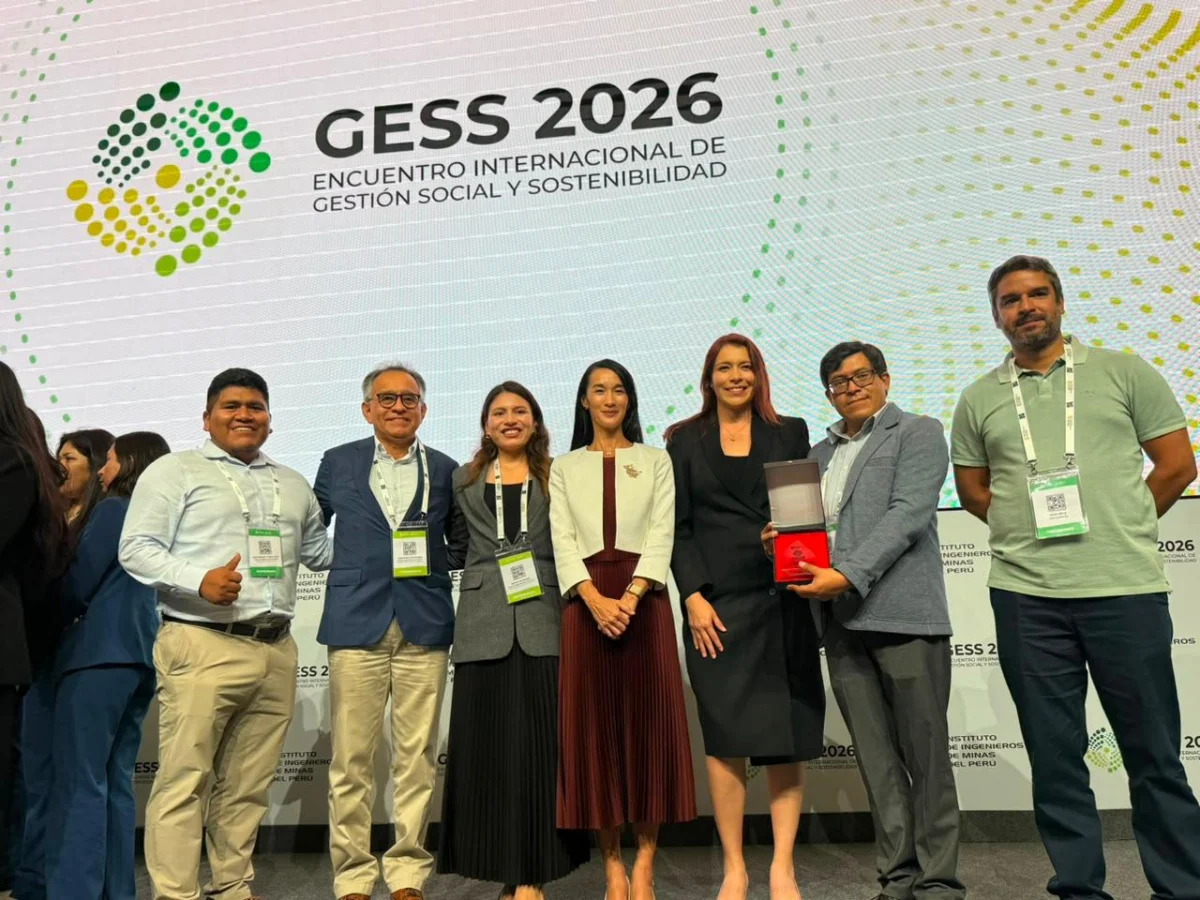
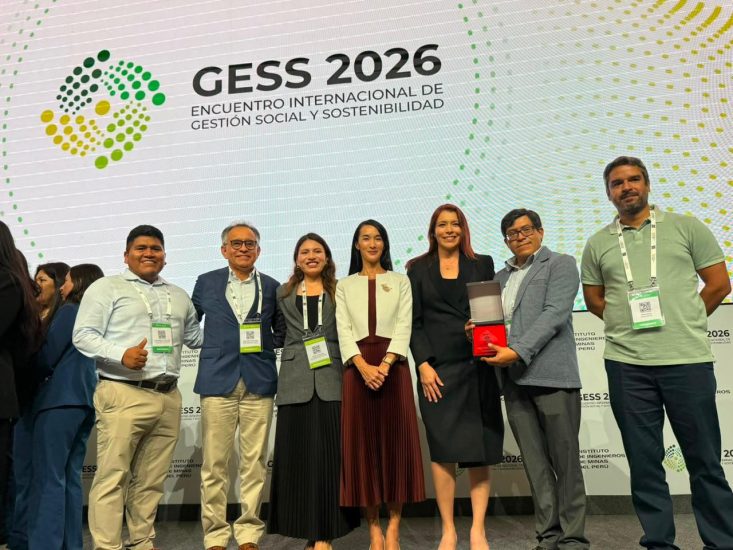
These achievements were recently brought to the forefront during the first International Meeting on Social Management and Sustainability (GESS 2026), hosted by the Institute of Mining Engineers of Peru (IIMP). The event served as a global stage to showcase how innovation, trust-building, and transparency can redefine the relationship between multinational corporations and local territories.
Core Pillars of Social Impact: Facts and Figures
Over the past four years, Anglo American has moved beyond simple corporate social responsibility (CSR) to create a model of "shared value." By aligning their operational goals with the specific needs of Moquegua, the company has managed to foster a sustainable ecosystem.

The "Innovagro" Success Story
Perhaps the most notable initiative presented at GESS 2026 is Innovagro. This project, developed in partnership with the National Institute of Agricultural Innovation (INIA), represents a holistic approach to rural development. It focuses on:
- Technological Integration: Introducing modern agricultural tools to local farmers.
- Circular Economy: Converting organic waste into compost and humus.
- Sustainability: Reducing dependency on synthetic fertilizers through the adoption of bio-inputs.
The impact has been quantifiable and impressive. By the end of 2025, the program had directly benefited 517 producers. Key performance indicators show that 90.8% of participants successfully reduced production costs, 91.3% reported an increase in total production, and 88.9% realized a net improvement in their income, with some producers seeing gains of up to 30%. Furthermore, the program has successfully diverted 38 tons of organic waste from landfills and secured over S/ 4 million in public funding, demonstrating a self-sustaining model that leverages both private investment and state resources.
A Chronology of Engagement: Beyond the Extraction Phase
The success of Quellaveco is not an accident of recent planning but the result of a long-term commitment that predates the first ton of copper extraction.
- Pre-Operational Phase: Anglo American initiated deep-dive studies into the cultural and social fabric of Moquegua. This involved mapping out the expectations, traditions, and economic realities of local communities years before construction began.
- Operational Launch (2022–2024): The initial years focused on establishing trust, complying with socio-environmental commitments, and launching capacity-building workshops. This period saw the stabilization of the relationship between the company and the local stakeholders.
- Consolidation (2025–2026): The current phase is defined by "Value Generation." The focus has shifted to scaling successful pilots—like Innovagro—and ensuring that the skills taught to the local workforce are transferable, ensuring that the community prospers regardless of the project’s life cycle.
Strategic Perspectives: The Philosophy of Social Management
At GESS 2026, leadership from Anglo American articulated a vision that moves away from conflict management toward proactive territory building.
The "Human-Centric" Approach
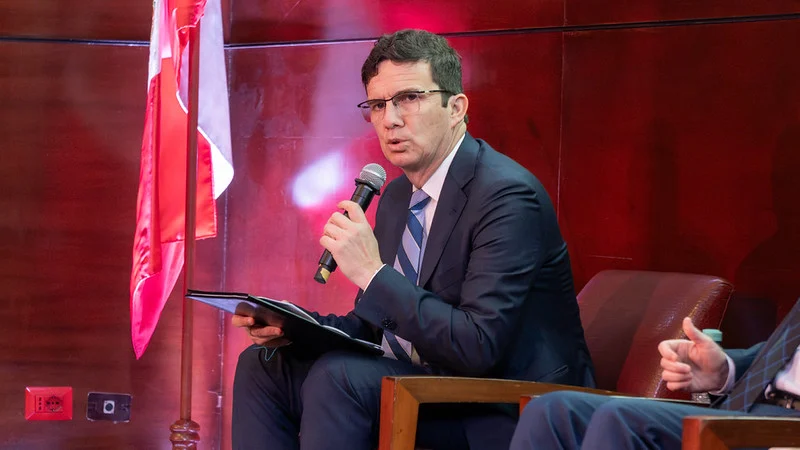
Magno Quispe, Manager of Social Management for Anglo American Peru, emphasized that sustainability is not merely the avoidance of conflict. "Sustainability is built by fulfilling commitments, participating in the life of the territory, and generating shared value," Quispe noted. He underscored that social teams must operate with "honesty, humanity, and humility." This philosophy acknowledges that communities are not just passive recipients of aid but active partners in the mining project’s success.
The Role of Transparency and Traceability
Wendy Retamozo, Coordinator of Sustainability and Innovation at Quellaveco, highlighted the importance of data-driven transparency. Through rigorous tracking and traceability standards, the company provides verifiable information regarding the origin of their minerals. This transparency serves a dual purpose: it reassures international stakeholders of the ethical conditions under which the copper is produced, and it allows the local management team to identify gaps in their social strategy. By monitoring these metrics, the company can pivot its resources to where they are needed most.
Institutional Collaboration
Tamiko Hasegawa, President of GESS 2026 and Head of Corporate Affairs, Communications, and Marketing at Anglo American, stressed that the true value of the GESS conference lies in its legacy. "The value of this encounter must transcend its three days," she stated. "It must translate into new alliances, strengthened capabilities, and actionable roadmaps that organizations can apply to their own territories."
Technical and Economic Implications
The integration of Quellaveco into the Moquegua economy has created a ripple effect that extends beyond the mine gates. By focusing on technical capacity building, the project has helped modernize local supply chains.
Capacity Building as a Permanent Asset
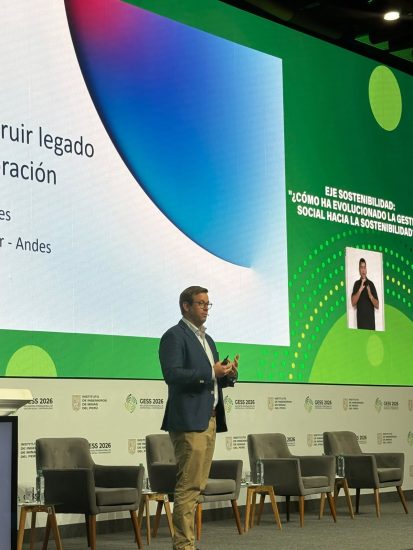
Alejandro Justiniano, Manager of Development and Social Management, explained that the company’s objective is to leave behind "capabilities that remain in the territory." This involves:
- Forming Local Talent: Training local residents for high-skill jobs, both within and outside the mining sector.
- Market Articulation: Connecting local producers to broader markets, ensuring that local farmers and SMEs are not just surviving, but thriving in competitive economic environments.
- Infrastructure and Public Funding: By leveraging public funds—as seen in the S/ 4 million secured for agricultural projects—Anglo American is teaching communities how to navigate the bureaucratic and financial systems required to sustain growth independent of the mining company’s presence.
The Future: A New Standard for Mining
The recognition of Innovagro at the GESS 2026 awards ceremony is more than a trophy; it is a validation of a model that the global mining industry is watching closely.
As the world transitions to a green economy, the demand for copper will continue to rise. However, the "social license to operate" is becoming as vital as the legal permit. Anglo American’s approach at Quellaveco demonstrates that the most effective way to secure this license is through the authentic empowerment of the local population.
Implications for the Industry
The lessons from Quellaveco suggest several key takeaways for the mining sector:
- Engagement must be continuous: It cannot stop at the end of the exploration or construction phase.
- Innovation is social, not just technical: Success depends on how technology is adapted to local traditions and existing economic structures.
- Credibility is currency: Through traceability and transparency, mining companies can prove that they are good neighbors and responsible actors in the global supply chain.
In conclusion, the story of Quellaveco is a story of evolution. It is a story of a mining project that has chosen to define its success not by the volume of copper produced, but by the tangible, lasting improvement in the quality of life for the people of Moquegua. By investing in the human capital of the region and fostering a culture of innovation and transparency, Anglo American is setting a high bar for what the future of sustainable mining should look like in the 21st century. The challenge ahead, as noted by the leadership at GESS 2026, is to ensure these gains are not just sustained, but scaled, creating a blueprint for mining projects across the globe.